
AetherCompute Secures $1.5B Series D to Deploy Liquid-Cooled Edge AI Micro-Datacenters Globally

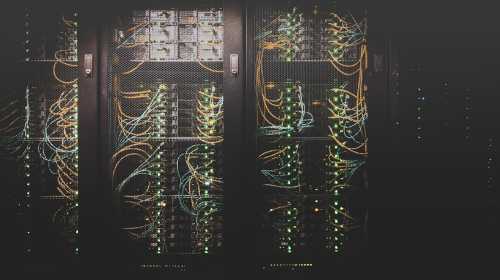
Redefining the Physical Architecture of Artificial Intelligence
In a landmark funding round that underscores the shifting infrastructure demands of the artificial intelligence boom, edge computing startup AetherCompute has officially closed a massive $1.5 billion Series D financing round. As reported by TechCrunch, the round was co-led by Sequoia Capital and Andreessen Horowitz, valuing the Silicon Valley-based company at $12 billion post-money. The capital injection will be used to accelerate the global deployment of the company’s proprietary "AetherPod" systems—fully autonomous, liquid-cooled micro-datacenters designed to process complex AI inference workloads within milliseconds of the end-user, effectively eliminating the latency bottlenecks inherent in traditional, centralized cloud architectures.
The technical brilliance of the AetherPod lies in its radical approach to thermal management and spatial efficiency. Traditional air-cooled data centers are rapidly reaching their thermodynamic limits when tasked with running next-generation AI accelerators, which can exceed 1,000 watts of power draw per chip. AetherCompute has abandoned air cooling entirely, utilizing a proprietary two-phase immersion cooling fluid that boils at a mere 50 degrees Celsius. As the AI chips compute, the fluid absorbs the heat, vaporizes, and is condensed back into a liquid state within a closed-loop micro-condenser. This physics-based approach allows the AetherPod to achieve a Power Usage Effectiveness (PUE) ratio of 1.02, meaning virtually 100% of the facility's energy is dedicated to compute rather than cooling. Furthermore, the physical footprint of an AetherPod is 80% smaller than a traditional server rack of equivalent compute density, allowing the units to be deployed in non-traditional spaces such as retail backrooms, cellular tower bases, and municipal utility closets.
The Edge Inference Economy and Strategic Partnerships
The primary catalyst for AetherCompute’s explosive valuation is the surging demand for edge inference. While the initial training of massive foundational models occurs in centralized, gigawatt-scale hyperscale data centers, the actual deployment of these models—generating real-time responses for autonomous vehicles, augmented reality headsets, and smart city infrastructure—requires ultra-low latency. AetherCompute has secured strategic off-take agreements with major telecommunications providers, including Verizon and Deutsche Telekom, to colocate AetherPods at the edge of their 5G networks. This symbiotic relationship allows telecoms to monetize their real estate and power assets while providing AetherCompute with the high-speed fiber backhaul necessary to synchronize the distributed edge nodes.
From a market perspective, AetherCompute is effectively creating a decentralized, physical layer for the AI economy. By distributing compute resources geographically, the company is also addressing the growing regulatory pressures regarding data sovereignty. Because the data is processed locally at the edge and only anonymized telemetry is sent back to the central cloud, AetherCompute’s architecture inherently complies with stringent privacy regulations like the GDPR and the EU AI Act. As the startup prepares to deploy its 10,000th AetherPod by the end of 2026, it is clear that the future of AI infrastructure will not be confined to massive, remote server farms, but will be deeply embedded into the physical fabric of our cities and communities.
Related Articles

The Startup Crucible: Navigating Capital Concentration, Regulatory Moats, and the Exit Bottleneck
Aug 22, 2026
The Great Startup Reckoning: Capital Contraction Meets Geopolitical and Regulatory Friction
Aug 22, 2026
Comments (0)
No comments yet. Be the first to share your thoughts!
Want to join the discussion?
Please log in to post a comment.
Login NoworCreate an Account