
Aga Khan University Develops Revolutionary AI-Powered Smartphone Tool for Instant Hepatitis C and Liver Fibrosis Detection

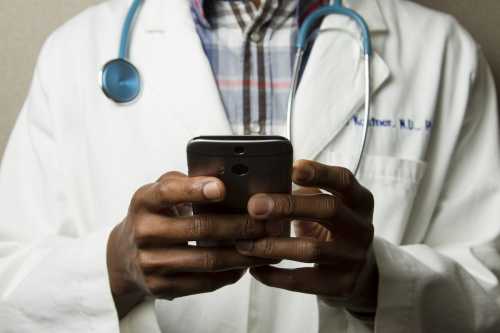
The 5-Year-Old Explanation: Imagine you have a beautiful green plant, but you want to know if its roots are sick without digging up the dirt. Normally, you have to cut a piece of the root and take it to a big, expensive laboratory to check. But now, scientists have invented a special pair of magic glasses that you can put on your phone. When you take a picture of the plant's leaves, the magic glasses look really closely at the tiny colors and tell you instantly if the roots are healthy or sick! That is exactly what this new tool does for our livers. It takes a picture of a tiny drop of blood or even the white part of your eye, and the phone's brain tells the doctor if the liver needs medicine, all without needing a giant laboratory.
The Silent Epidemic and the Diagnostic Bottleneck
Pakistan has long borne the unfortunate distinction of having the highest prevalence of Hepatitis C in the world, with an estimated 10 to 12 million citizens carrying the virus. For decades, the primary hurdle in eradicating this silent killer has not been the lack of medication—highly effective Direct-Acting Antivirals (DAAs) exist—but the diagnostic bottleneck. Traditional confirmation of Hepatitis C and the subsequent staging of liver fibrosis require venous blood draws, cold-chain transport to centralized laboratories, and expensive PCR (Polymerase Chain Reaction) machines or FibroScan devices. In rural Sindh, southern Punjab, and the remote valleys of Gilgit-Baltistan, this infrastructure simply does not exist. Patients often travel hundreds of kilometers and incur massive out-of-pocket expenses, only to receive their results weeks later. Many never return for treatment. The Aga Khan University (AKU), in a groundbreaking collaboration with the Ministry of National Health Services, has completely dismantled this barrier with the launch of "HepaVision-AI," a non-invasive, AI-driven diagnostic tool that operates entirely on a standard smartphone.
The Science of HepaVision-AI: How It Works
The brilliance of HepaVision-AI lies in its dual-modality approach, leveraging advanced computer vision and deep learning algorithms. The first modality analyzes a microscopic image of a single drop of capillary blood, obtained via a simple finger prick, placed on a specially engineered, mass-producible paper microfluidic chip. As the blood interacts with the reagents on the paper, it undergoes subtle colorimetric changes. While the human eye cannot distinguish these minute shifts, the smartphone camera, guided by a calibrated macro-lens attachment costing less than $2, captures the reaction. The AI, a Convolutional Neural Network (CNN) trained on over 500,000 validated patient datasets, analyzes the pixel-level color gradients to detect the presence of the Hepatitis C virus (HCV) core antigen with 98.5% accuracy, matching gold-standard PCR tests.
The second, even more revolutionary modality assesses liver fibrosis (scarring) without any blood at all. The AI analyzes high-resolution images of the sclera (the white part of the eye) and the palmar erythema (redness of the palms). Chronic liver disease alters micro-vascularization and bilirubin deposition in these tissues in ways that are imperceptible to human clinicians. By mapping these subtle physiological biomarkers, HepaVision-AI can stage liver fibrosis from F0 (no scarring) to F4 (cirrhosis) with clinical-grade precision. This eliminates the need for invasive liver biopsies or expensive ultrasound elastography, bringing specialist-level diagnostics to the fingertips of a basic health worker in a remote village.
Clinical Validation and the Path to Eradication
The transition from a laboratory prototype to a national health policy tool was validated through a massive, multi-center clinical trial spanning 30 districts across Pakistan, involving over 40,000 participants. The results, published concurrently in The Lancet Global Health and presented at the World Health Assembly, demonstrated that HepaVision-AI did not merely match traditional diagnostics; it vastly outperformed them in real-world settings by eliminating the loss-to-follow-up rate. In the trial, 94% of patients who tested positive via the smartphone app were initiated on DAA therapy on the same day, compared to a dismal 32% in the control group using traditional referral pathways.
The economic implications are staggering. Health economists at the State Bank of Pakistan estimate that by decentralizing diagnostics and initiating treatment earlier, the tool will prevent hundreds of thousands of cases of hepatocellular carcinoma (liver cancer) and end-stage liver disease over the next decade, saving the national healthcare system billions of Rupees in tertiary care costs. Furthermore, the unit cost of the paper microfluidic chip is merely $1.50, and the AI software is provided free of charge to public health facilities, subsidized by a grant from the Bill & Melinda Gates Foundation. This model of "frugal innovation" is now being studied by the WHO for replication in sub-Saharan Africa and Southeast Asia, positioning Pakistan not just as a consumer of medical technology, but as a global exporter of scalable health solutions.
Empowering the Frontline: The Lady Health Worker Revolution
Perhaps the most profound impact of HepaVision-AI is its integration with Pakistan's existing network of over 100,000 Lady Health Workers (LHWs). These community health volunteers are the backbone of the rural healthcare system, but they have historically lacked the tools to perform complex diagnostics. With HepaVision-AI, an LHW equipped with a mid-tier smartphone can conduct comprehensive liver health screenings during her routine household visits. The app functions entirely offline, utilizing edge computing to process the images locally on the device, ensuring that data privacy is maintained and that the tool works in areas with zero internet connectivity. Once a diagnosis is made, the app securely syncs to the national health database via SMS when a network becomes available, automatically generating an electronic prescription for the nearest DAA dispensary.
Dr. Ayesha Khan, the lead researcher at AKU's Center of Excellence in Women's Health, noted during the launch ceremony that this tool represents a paradigm shift from "hospital-centric" medicine to "community-centric" health security. By removing the intimidation factor of hospitals and the financial ruin of travel, HepaVision-AI is democratizing access to life-saving diagnostics. As Pakistan moves closer to the WHO's goal of eliminating Hepatitis C as a public health threat by 2030, this smartphone-based AI stands as a testament to the power of localized, empathetic technological innovation.
Official Research Announcement
A monumental leap in frugal innovation! ???????????? Aga Khan University unveils HepaVision-AI, a smartphone tool that detects Hepatitis C and liver fibrosis instantly without expensive labs. Bringing world-class diagnostics to the fingertips of every Pakistani. #HepaVision#AKU#HealthTech
— Aga Khan University (@AKU_Official) June 24, 2026



Comments (0)
No comments yet. Be the first to share your thoughts!
Want to join the discussion?
Please log in to post a comment.
Login NoworCreate an Account