
Aga Khan University Uses Super-Computers to Find New Medicines in Nature

Imagine you are standing in front of the largest library in the entire universe. This library does not just have books; it has every single plant, flower, root, and bark that exists on Earth. Inside each of these plants is a secret recipe book. Some of these recipes are for making colors, some are for making smells, but hidden among them are recipes for medicines that can cure terrible diseases. For thousands of years, humans have been trying to find these medicinal recipes by trial and error. They would chew on a leaf and see if it made them feel better. This is how we discovered aspirin from willow bark and quinine from cinchona trees. But this old way of finding medicines is incredibly slow. It is like trying to find one specific page in a billion-page book by turning the pages one by one. It could take a lifetime.
Now, imagine if you had a super-fast robot librarian. This robot can read a million pages in a single second. It can understand the language of the plants and instantly tell you, "Aha! The recipe for curing malaria is hidden in the leaves of this specific bush!" This is exactly what a field of science called "bioinformatics" does. Bioinformatics is the marriage of biology and computer science. It uses the immense power of computers to analyze biological data. Instead of turning pages one by one, scientists use complex algorithms to scan the chemical structures of thousands of natural compounds in a matter of minutes. They are looking for the exact molecular shape that can fit into a disease-causing protein in the human body, like a key fitting into a lock. This is the future of drug discovery, and it is happening right now in Pakistan.
At the forefront of this technological revolution in Pakistan is the Aga Khan University (AKU). For decades, AKU has been a beacon of medical excellence in the region. But they are not just treating patients; they are pushing the boundaries of what is possible in medical research. Their Drug Discovery and Natural Product Research group has been operational for over 15 years, but recent advancements in computing power have supercharged their capabilities. They are using bioinformatics to explore the rich, diverse flora of Pakistan. The country has a unique geography, from the mountains in the north to the deserts in the south, and each region is home to plants that have evolved unique chemical defenses to survive. These chemical defenses are exactly what scientists are looking for to turn into new medicines.
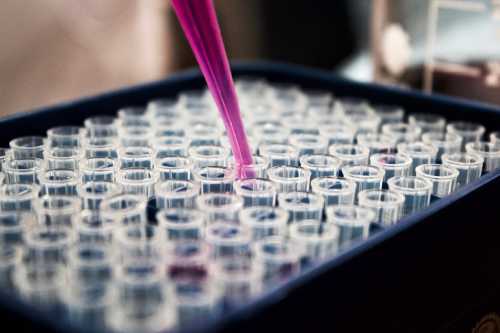
The process works like this: First, researchers collect plant samples from the field. They extract the chemicals from these plants and use machines to figure out the exact molecular structure of each compound. This creates a massive digital database of "natural ingredients." Then, the bioinformaticians step in. They take the 3D structure of a disease target—say, a protein that allows a cancer cell to grow—and they use their super-computers to simulate how every single natural compound in their database might interact with it. The computer runs millions of virtual experiments, predicting which plant chemicals will bind to the protein and stop the disease. This narrows down the billions of possibilities to just a handful of promising candidates.
Once the computer has identified the top candidates, the real-world testing begins. The scientists go back to the lab, isolate those specific chemicals from the plants, and test them on cells in petri dishes. If they work in the dish, they move on to animal testing, and eventually, clinical trials in humans. By using bioinformatics to do the heavy lifting of the initial screening, the researchers save years of time and millions of dollars. They only waste resources testing the compounds that the computer says have a high chance of working. This efficiency is crucial for research institutions in developing countries, where funding is often limited. They cannot afford to test a million random compounds; they need to be smart and targeted.
A key part of this initiative at AKU is the CITRIC Centre for Bioinformatics. This center is not just a room full of servers; it is a hub of collaboration. It brings together biologists, chemists, computer scientists, and mathematicians. In the past, these experts might have worked in separate silos, never talking to each other. The biologist would find a plant, the chemist would extract the chemical, and the computer scientist would write code. But at CITRIC, they work side-by-side. This interdisciplinary approach is the secret sauce of modern scientific discovery. Complex problems like drug discovery cannot be solved by one type of expert alone. They require a symphony of different minds working together towards a common goal. The CITRIC Centre is orchestrating this symphony in Pakistan.
The implications of this work extend far beyond the borders of Pakistan. The global pharmaceutical industry is facing a crisis of innovation. For the last few decades, most new drugs have been slight variations of existing drugs, a process known as "me-too" drugs. Truly novel drugs that work in completely new ways are rare. Nature, however, has been doing chemical research for billions of years. The compounds found in plants, fungi, and marine life have evolved to interact with biological systems in ways that human chemists in a lab might never think of. By mining the natural world with advanced bioinformatics, Pakistani researchers are contributing to the global pipeline of novel drug candidates. They are finding "keys" that no one else knew existed, which could unlock treatments for diseases that are currently considered incurable.
Economically, this research has the potential to transform Pakistan's pharmaceutical industry. Currently, the country imports a significant portion of its active pharmaceutical ingredients (APIs). By discovering new drugs from local flora and developing the intellectual property for them, Pakistan can build a robust, export-oriented pharmaceutical sector. If AKU discovers a new compound and patents it, they can license it to international pharmaceutical giants for millions of dollars. This revenue can be reinvested into more research, creating a self-sustaining cycle of innovation. It shifts the country from being a consumer of global intellectual property to a creator and exporter of it. This is a fundamental shift in the economic model of the healthcare sector.
There is also a crucial ethical and environmental dimension to this work. As scientists rush to mine nature for new drugs, there is a risk of biopiracy, where foreign companies take biological resources from a developing country, patent them, and make a fortune without sharing the benefits with the local community. By building strong local capacity in bioinformatics and drug discovery, Pakistan ensures that the intellectual property remains in the country. The researchers at AKU are committed to ethical collection practices, working with local communities to ensure that the environment is protected and that any financial benefits are shared fairly. This model of "benefit-sharing" is becoming the gold standard in international biological research.
Furthermore, the CITRIC Centre is a training ground for the next generation of Pakistani scientists. Bioinformatics is a highly specialized field, and there is a global shortage of skilled professionals. By offering advanced training and research opportunities, AKU is producing graduates who are highly employable not just in Pakistan, but anywhere in the world. These students learn how to write complex code, how to manage massive datasets, and how to understand molecular biology. They are the architects of the future of medicine. The skills they are acquiring today will be in even higher demand tomorrow as the world becomes increasingly data-driven. The center is not just discovering drugs; it is building human capital.
The work being done at the Aga Khan University's bioinformatics and drug discovery labs is a testament to the power of modern science. It is a beautiful blend of the ancient wisdom of natural medicine and the cutting-edge power of artificial intelligence and super-computing. The researchers are proving that you do not need a billion-dollar budget to make world-class discoveries; you need brilliant minds, the right tools, and a deep curiosity about the natural world. They are unlocking the secret recipe books of nature, one line of code at a time. Below is a video featuring the researchers at the CITRIC Centre, sharing their passion and their work.
In conclusion, the integration of bioinformatics into drug discovery at the Aga Khan University is a game-changer for medical research in Pakistan. It accelerates the pace of discovery, reduces costs, and leverages the country's rich biodiversity to find new treatments for global health challenges. It is a shining example of how technology can be used to bridge the gap between traditional knowledge and modern medicine. As the super-computers continue to crunch the numbers and the robot librarians continue to scan the pages of nature's recipe books, the hope is that the next major cure for a devastating disease will come from a plant found in Pakistan, discovered by a Pakistani scientist. The library is open, and the robots are reading.
Related Articles
The Biopharma Bottleneck: How Supply Chains and Regulatory Reality Are Restraining Medical Innovation
Aug 22, 2026
The Structural Faultlines of Modern Medicine: Navigating the Convergence of Capital, Compute, and Geopolitics
Aug 22, 2026
Comments (0)
No comments yet. Be the first to share your thoughts!
Want to join the discussion?
Please log in to post a comment.
Login NoworCreate an Account