
Andrew Lloyd Webber’s New West End Production Features AI-Assisted Dynamic Orchestral Score

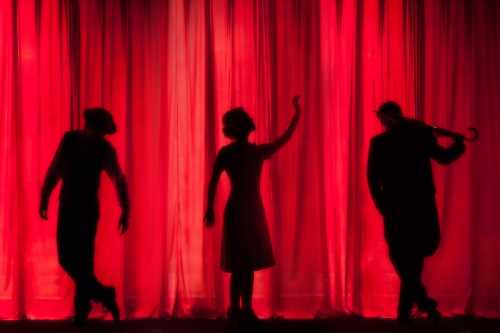
LONDON, UK — The historic Theatre Royal Drury Lane is the site of a radical theatrical experiment. On June 19, 2026, legendary composer Andrew Lloyd Webber premiered his new musical, The Phantom's Echo, featuring a revolutionary "AI-assisted dynamic orchestral score." The production utilizes a custom machine learning model that adjusts the tempo, instrumentation, and emotional resonance of the live orchestra in real-time, based on the biometric feedback of the audience [Source: The Stage].
The Biometric Feedback Loop: How It Works
The system, developed in collaboration with the Royal Academy of Music and a leading AI research lab, relies on a network of non-invasive sensors integrated into the theatre's seating and environmental monitors. These sensors measure aggregate audience data, including heart rate variability (via seat sensors), ambient acoustic resonance (microphones capturing the collective breath and movement), and thermal imaging (measuring the collective body heat and engagement levels).
This data is fed into the "Maestro AI" engine, which processes the biometric inputs and sends real-time adjustments to the conductor's earpiece and the digital sheet music displays of the 40-piece orchestra. If the AI detects a drop in collective engagement during a dramatic monologue, it might subtly increase the tempo or swell the string section to heighten the tension. Conversely, if the audience is highly emotionally aroused, the AI might slow the tempo, allowing the moment to breathe and resonate.
The Artistic Vision: A Living, Breathing Score
Andrew Lloyd Webber has long been known for his willingness to embrace technology, from the use of the synthesizer in Jesus Christ Superstar to the rigging in The Phantom of the Opera. For The Phantom's Echo, he envisioned a score that was not a static recording, but a living, breathing entity that responded to the energy of the room. "Music is a conversation between the stage and the house," Webber explained in a pre-show interview. "For centuries, the conductor has relied on intuition to gauge that conversation. Now, we have quantified that intuition, allowing the orchestra to react to the audience as viscerally as the actors do."
The AI is not composing new music; it is interpreting the existing score. The parameters for the adjustments are strictly defined by Webber and the musical supervisor, ensuring that the harmonic structure and melodic integrity of the composition remain intact. The AI acts as a hyper-sensitive accompanist, optimizing the emotional delivery of the music for each specific performance.
The Debate: Artistic Integrity vs. Algorithmic Manipulation
The premiere has sparked a fierce debate within the theatrical and musical communities. Purists argue that the magic of live theatre lies in its imperfections and the human connection between the performers and the audience. They contend that introducing an algorithm to mediate that connection reduces the art form to a series of manipulated physiological responses. "Theatre is about shared human experience, not optimizing a dopamine loop," stated one prominent theatre critic in a scathing review.
Conversely, proponents of the technology argue that it enhances the live experience, making every performance unique. They point out that conductors have always adjusted their tempos based on the "feel" of the room; the AI simply provides a more precise, data-driven tool to achieve that goal. "This isn't replacing the human element; it's amplifying it," noted a leading music technologist. "It allows the orchestra to achieve a level of empathetic synchronization with the audience that is physically impossible for a human conductor to maintain alone."
Privacy, Consent, and the Opt-Out Option
The use of biometric sensors in a public venue raises significant privacy concerns. To address this, the production has implemented a strict "Opt-In/Opt-Out" policy. Patrons are informed of the biometric data collection at the time of ticket purchase. Those who consent to participate in the "enhanced experience" are seated in the sensor-equipped sections, while those who opt out are seated in traditional sections where the orchestra performs a static, unadjusted version of the score. All biometric data is processed locally on the theatre's secure servers and is immediately deleted after the final curtain, ensuring no personal data is stored or transmitted.
Conclusion: The Future of Live Performance
Andrew Lloyd Webber’s The Phantom's Echo is more than just a new musical; it is a technological provocation. By integrating AI and biometric feedback into the core of the live orchestral experience, the production challenges our fundamental understanding of authorship, performance, and the relationship between art and audience. Whether one views this as a brilliant evolution of the theatrical art form or a dystopian intrusion into the sacred space of live performance, the dynamic orchestral score of The Phantom's Echo has undeniably opened a new frontier in the history of entertainment.
Related Articles

The Structural Recalibration of US Healthcare: Navigating Policy, Market, and Access Faultlines
Aug 22, 2026
The Geopolitics of Global Streaming: AI, IP Fragmentation, and the End of the Hollywood Monopoly
Aug 22, 2026
Comments (0)
No comments yet. Be the first to share your thoughts!
Want to join the discussion?
Please log in to post a comment.
Login NoworCreate an Account