
CPEC Phase 2 Shifts Focus to Agriculture and B2B Industrial Cooperation

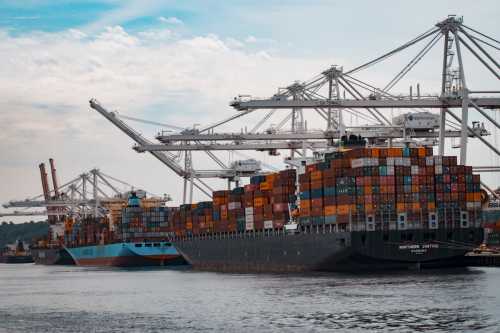
The Big Picture: Building the Water Slide and Delivering the Snacks
Imagine you and your best friend decide to build the most massive, incredible water slide in the history of your backyard. You spend months digging, pouring concrete, and pumping water. Finally, the slide is finished. It is a marvel of engineering. But then you realize a problem: the slide is completely empty. No one is sliding down it. A water slide is only useful if people are actually using it to transport fun from the top of the yard to the bottom. In the world of economics, the China-Pakistan Economic Corridor (CPEC) is that water slide. For the last ten years (CPEC Phase 1), Pakistan and China spent their time and money building the slide. They built massive highways, upgraded the Karakoram Highway through the mountains, built new power plants to keep the lights on, and developed the deep-sea port at Gwadar. These are the 'hard infrastructure' projects.
But as of 2026, the leadership of both countries realized that building the slide is not enough; now they need to send the 'snacks' down the slide. This is CPEC Phase 2. The focus has officially shifted from building roads and power plants to 'Industrial Cooperation, Agriculture, and Business-to-Business (B2B) partnerships.' In simple terms, they are now focusing on what actually travels on those roads. They want to use the new highways to move goods, create jobs in factories, and modernize the farms so that both countries can make money from the trade that flows through the corridor.
The Agricultural Revolution: Fixing the Farms
Agriculture is the backbone of Pakistan's economy, but for a long time, it has been struggling with old methods. Farmers use too much water, the seeds are not high-yield, and the crops get ruined before they even reach the market because there are no cold storage facilities. Under CPEC Phase 2, China is stepping in to help fix this. China has incredible agricultural technology. They have mastered drip irrigation (which gives water directly to the roots of the plant, saving millions of gallons), they have developed seeds that can survive extreme heat, and they have advanced machinery for harvesting.
Through joint ventures, Chinese agri-tech companies are partnering with Pakistani farmers and local businesses. They are setting up 'model farms' in provinces like Punjab and Sindh. Imagine a Pakistani cotton farmer who used to guess when to water his fields. Now, he uses Chinese soil sensors and drone technology to know exactly how much water and fertilizer each plant needs. His crop yield doubles. He makes more money, and the country exports more high-quality cotton to the world. Furthermore, they are building cold chain logistics—refrigerated trucks and storage warehouses. This means that a mango grown in Multan can be safely transported to China or the Middle East without rotting, fetching a much higher price in foreign markets.
B2B Cooperation and Special Economic Zones
The second major pillar of Phase 2 is Business-to-Business (B2B) cooperation through Special Economic Zones (SEZs). Think of an SEZ as a giant, fenced-in business park with special rules. The government says, 'If you build your factory inside this fence, we will give you cheap land, reliable electricity, and zero taxes for the first five years.' Pakistan has established several of these zones along the CPEC route, like Rashakai in Khyber Pakhtunkhwa and Dhabeji in Sindh.
Chinese manufacturers are facing a problem at home: their labor costs are going up, and it is getting expensive to make things in China. They are looking for new places to set up factories. Pakistan, with its young, hardworking, and relatively low-cost labor force, is the perfect destination. In these SEZs, Chinese companies are not just building factories; they are partnering with Pakistani businesses. A Chinese company that makes solar panels might partner with a local Pakistani firm. The Chinese bring the technology and the machinery, and the Pakistanis provide the land, the labor, and the management. Together, they manufacture the solar panels in Pakistan. This is called 'import substitution.' Instead of Pakistan buying expensive solar panels from China, they now make them at home. This saves the country millions of dollars in foreign exchange and creates thousands of high-quality engineering jobs for Pakistani youth.
The Geopolitical Masterpiece
Why is China so willing to share this technology and build these factories in Pakistan? It comes down to geography. Look at a map of Asia. China's western region, Xinjiang, is landlocked. It is surrounded by mountains. If China wants to send its goods to the Middle East, Africa, or Europe by sea, it currently has to send them all the way across China to the eastern ports, through the crowded Strait of Malacca, and around the entire continent of Asia. It takes weeks and costs a fortune.
CPEC provides a shortcut. Chinese goods can be loaded onto trains in Xinjiang, travel down through Pakistan via the upgraded Karakoram Highway, and arrive at the Gwadar Port in just a few days. From Gwadar, they are loaded onto ships and sent directly to the Middle East. For Pakistan, this means Gwadar transforms from a small fishing village into a massive, bustling international trade hub, just like Dubai or Singapore. The jobs, the hotels, the shipping companies, and the wealth that come with being a global trade hub will fundamentally change the economic destiny of the Balochistan province and the entire nation. Phase 2 is about ensuring that the water slide is fully operational, delivering prosperity to every corner of both countries.
Official CPEC Authority Update
CPEC Phase 2 enters high gear with a major focus on agriculture modernization, B2B industrial cooperation, and Special Economic Zones. Bringing prosperity through socio-economic development. @CPECPak
— CPEC Official (@CPECPak) June 23, 2026
Related Articles

The Macroeconomic Inflection Point: Navigating Sovereign Debt, Labor Recalibration, and Trade Fragmentation
Aug 22, 2026
The Macroeconomic Reckoning: Navigating the Convergence of Debt, Trade, and Technological Shifts
Aug 22, 2026
Comments (0)
No comments yet. Be the first to share your thoughts!
Want to join the discussion?
Please log in to post a comment.
Login NoworCreate an Account