
European Union Enforces Historic Migration and Asylum Pact, Reshaping Border Politics and National Sovereignty in 2026

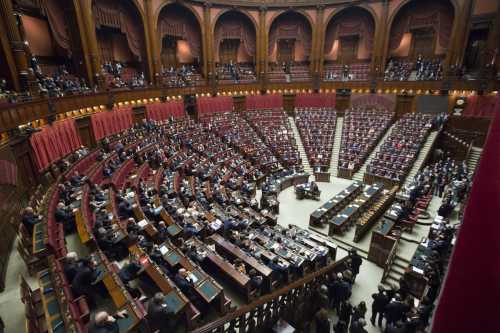
BRUSSELS — The European Union has officially entered the full, uncompromising enforcement phase of its New Pact on Migration and Asylum, marking the most radical transformation of the bloc's border and immigration policies since the creation of the Schengen Area . As of June 2026, the mandatory "solidarity mechanism" is legally active, requiring all 27 member states to either accept a quota of relocated asylum seekers or pay a substantial financial contribution of €20,000 per rejected migrant into a centralized EU border management fund . Simultaneously, the controversial "border procedures," which allow for the rapid processing and potential fictional non-entry of asylum seekers at the external borders, are being aggressively implemented by frontline states like Italy, Greece, and Poland . This monumental policy shift, finalized after years of bitter diplomatic wrangling, is fundamentally redrawing the political map of Europe, testing the limits of national sovereignty, and redefining the continent's humanitarian obligations in an era of rising right-wing populism and demographic decline.
The Neighborhood Clubhouse and the New Guest Rules: Understanding the Pact Simply
To understand the sheer complexity and controversy of the EU's New Migration Pact, we must look at it through the eyes of a child observing a shared neighborhood clubhouse. Imagine a massive, beautiful clubhouse shared by 27 different families. For years, the clubhouse only had one main entrance, and the families who lived closest to that entrance (representing Italy, Greece, and Spain) were forced to deal with every single new person who knocked on the door asking to join the club. The other 24 families, living in the back and sides of the clubhouse, could just ignore the knocking and continue their parties, leaving the front-door families overwhelmed and exhausted. Eventually, the front-door families threatened to lock everyone out and burn the clubhouse down. The new EU Migration Pact is like the 27 families finally signing a binding, unbreakable contract to share the burden. The contract says: "If someone knocks on the front door, the families at the front will check their IDs and see if they are allowed in. If they are approved, all 27 families must take turns hosting them in their rooms. But, if a family in the back absolutely refuses to let a guest stay in their room, they must pay a massive fine of €20,000 into the clubhouse's repair fund." This is the essence of the "mandatory solidarity" mechanism. It forces the entire neighborhood to share the responsibility of the guests, ensuring that the families at the front door are no longer left to drown in the crisis alone.
The Historical Context: From the 2015 Crisis to the 2026 Enforcement
The genesis of this draconian yet necessary pact lies in the traumatic memory of the 2015-2016 European migrant crisis, when over a million asylum seekers, primarily fleeing the Syrian civil war, poured into the continent. The chaotic, uncoordinated response shattered the unity of the EU, exposing deep fractures between the liberal, welcoming west and the conservative, resistant east. Countries like Hungary and Poland outright refused to accept any quotas, while Germany, under Angela Merkel, famously opened its doors, leading to a massive political backlash that fueled the rise of the far-right Alternative for Germany (AfD) party. For nearly a decade, the EU was paralyzed by this issue, unable to agree on a common framework. The New Pact on Migration and Asylum, politically agreed upon in late 2023 and legally enforced starting in 2024, represents the hard-fought compromise. It acknowledges that open borders are politically unsustainable for many member states, while also recognizing that abandoning the frontline countries to manage the crisis alone would destroy the Schengen visa-free zone entirely. The 2026 enforcement is the moment this delicate compromise is stress-tested in the real world.
The Mechanics of the Pact: Mandatory Solidarity and Border Procedures
The legal architecture of the 2026 enforcement rests on two massive pillars. The first is the "mandatory solidarity" mechanism. Under this rule, every time a migrant is rescued in the Mediterranean or arrives at an external border, the EU's asylum agency determines which member state must take responsibility. If a country like Austria or the Czech Republic, which has historically opposed mandatory quotas, refuses to accept the relocated individual, they are legally obligated to pay €20,000 to the EU budget for every person they reject. This financial penalty is designed to be painful enough to force compliance, but flexible enough to allow sovereign nations to maintain their domestic political red lines. The second pillar is the "border procedure." This allows member states to detain asylum seekers in transit zones at the external borders for up to 12 weeks while their claims are rapidly processed. If the asylum claim is rejected, or if the applicant is deemed a security risk, they are immediately returned to their country of origin without ever legally entering the Schengen area. This "fictional non-entry" legal fiction is designed to deter irregular migration by sending a clear message: if you do not qualify for asylum, you will not be allowed to cross the border.
The Geopolitical Shift: Italy's Victory and Germany's Dilemma
The enforcement of the pact has dramatically altered the balance of power within the European Council. For Giorgia Meloni, the right-wing Prime Minister of Italy, the pact is a massive political victory. For years, she had demanded that the EU stop treating Italy as the "refugee camp of Europe" and share the burden of the Mediterranean crossings. The mandatory solidarity mechanism and the aggressive externalization of border controls to nations like Tunisia and Libya are seen as the direct result of her relentless diplomatic pressure. Conversely, the pact presents a severe dilemma for Germany. Under the center-left government of Olaf Scholz, Germany has traditionally championed a more humanitarian approach to asylum. However, the rise of the AfD, which polls as the second most popular party in many eastern states, has forced the mainstream coalition to adopt much stricter border enforcement. The rapid border procedures and the increased deportations are a direct concession to domestic political pressures, signaling that even the economic engine of Europe is prioritizing border security over unrestricted humanitarian intake.
The Humanitarian Reality: What Happens at the Borders?
While the political and legal mechanics are fascinating, the human reality at the borders is grim and highly controversial. Human rights organizations, including Amnesty International and the UNHCR, have fiercely criticized the "border procedures," arguing that detaining vulnerable families, including children, in transit zones for weeks violates international human rights law. They point to the overcrowded, unsanitary conditions in the "hotspots" on the Greek islands and the Italian coast, where the rapid processing is taking place. Furthermore, the reliance on externalization—paying North African and Middle Eastern coast guards to intercept migrant boats and return them to often dangerous conditions—has led to a significant increase in "pushbacks" and alleged human rights abuses at sea. The EU defends these measures as necessary to dismantle the brutal business model of human smuggling networks, arguing that by making the journey virtually impossible, they are ultimately saving lives by preventing people from boarding unseaworthy vessels in the first place.
The Economic Imperative: Europe's Demographic Winter
Beneath the fierce political and humanitarian debates lies a stark, undeniable economic reality: Europe is running out of workers. The continent is facing a severe demographic winter, with an aging population and a shrinking workforce that threatens to collapse its pension systems and stall its economic growth. The European Commission's own internal reports acknowledge that the EU will need millions of new workers by 2030 just to maintain its current economic output. This creates a profound cognitive dissonance in EU policy. On one hand, the political pressure from the right forces the EU to build higher walls and deport those who arrive irregularly. On the other hand, the economic necessity requires the EU to actively recruit millions of economic migrants from Africa and Asia to fill critical labor shortages in healthcare, construction, and agriculture. The 2026 enforcement of the Migration Pact is essentially an attempt to create a highly regulated, strictly controlled "tap" of legal labor migration, while aggressively shutting down the "hose" of irregular, asylum-based migration. Whether this delicate balancing act is economically viable remains the great unanswered question of the decade.
The Rise of the Right: Populism and the Mainstream's Concession
The strict enforcement of the Migration Pact is widely seen as a massive concession by the centrist and center-left mainstream to the rising tide of right-wing populism across the continent. In France, the Netherlands, and Germany, mainstream parties have adopted the rhetoric and policies of the far-right in an attempt to win back voters who had defected to nationalist parties. By enforcing mandatory deportations, building physical barriers at the borders, and externalizing asylum processing to authoritarian regimes, the EU's political establishment is signaling that the era of multiculturalism and open-door humanitarianism is definitively over. However, political analysts warn that this strategy may be a trap. By adopting the far-right's policies, the mainstream parties are inadvertently validating the far-right's premise that migration is an existential threat, potentially ensuring that the populist parties continue to grow in influence, as they are no longer constrained by the need to defend their own extreme positions.
The Roadblocks: Smugglers, Legal Challenges, and "Fictional Non-Entry"
The implementation of the pact in 2026 is facing severe logistical and legal roadblocks. The human smuggling networks, which generate billions of euros annually, are highly adaptable. As the EU tightens the Mediterranean route, smugglers are shifting to much more dangerous, longer routes through the Atlantic to the Canary Islands, or through the heavily forested eastern borders of Poland and the Baltic states. Furthermore, the legal concept of "fictional non-entry" is being fiercely challenged in the European Court of Human Rights. Lawyers argue that you cannot legally pretend a person is not on your territory when they are physically detained in a cage on your soil. If the courts strike down the border procedures, the entire rapid-deportation mechanism of the pact could collapse. Additionally, the €20,000 financial penalty for refusing migrants is proving difficult to enforce, with several eastern member states simply refusing to pay, daring the EU to initiate lengthy infringement proceedings that could paralyze the bloc's decision-making.
The Global Ripple Effect: What This Means for Africa and the Middle East
The EU's fortress mentality is having profound ripple effects across the Global South. To enforce the externalization of its borders, the EU has signed massive financial deals with countries like Tunisia, Egypt, and Libya, providing billions of euros in aid in exchange for strict border crackdowns. However, this aid often ends up propping up authoritarian regimes and fueling human rights abuses, as these countries use the EU's money to build their own repressive border control apparatuses. Furthermore, by making legal migration nearly impossible for citizens of the Global South, the EU is inadvertently fueling a sense of resentment and desperation. The "brain drain" of skilled professionals from Africa and the Middle East continues unabated through legal channels, while the poor are forced into the hands of smugglers. The EU's policy is essentially attempting to solve a global demographic and economic imbalance by building a wall, a strategy that historians warn is ultimately unsustainable in a hyper-connected world.
Final Thoughts: The Ultimate Test of European Unity
The full enforcement of the New Pact on Migration and Asylum in 2026 is the ultimate stress test for the European project. It forces the continent to answer a fundamental question: Can 27 sovereign nations, with vastly different histories, cultures, and political systems, truly act as a single, unified entity when faced with an existential demographic and humanitarian challenge? The pact is a masterpiece of political compromise, balancing the moral imperatives of humanitarianism with the brutal realities of domestic politics and border security. It is not perfect; it is harsh, it is controversial, and it will undoubtedly result in tragic human rights violations at the margins. But it represents the EU's desperate attempt to regain control of its destiny in a chaotic world. The walls are being built, the fines are being levied, and the border procedures are active. The neighborhood clubhouse has new, very strict rules, and the entire world is watching to see if the 27 families can actually live together under them.
Official EU Policy Update: The following is the official statement from the European Commission regarding the full enforcement of the mandatory solidarity mechanism and the border procedures under the New Pact on Migration and Asylum.
As of June 2026, the EU's New Pact on Migration and Asylum is fully enforced. Mandatory solidarity is active: all member states must share responsibility through relocations or financial contributions. We are securing our borders while managing migration with unity and determination. ???????????? #EU#MigrationPact
— European Commission (@EU_Commission) June 20, 2026
Related Articles

The Biopharma Bottleneck: How Supply Chains and Regulatory Reality Are Restraining Medical Innovation
Aug 22, 2026
The Structural Faultlines of Modern Medicine: Navigating the Convergence of Capital, Compute, and Geopolitics
Aug 22, 2026
Comments (0)
No comments yet. Be the first to share your thoughts!
Want to join the discussion?
Please log in to post a comment.
Login NoworCreate an Account