
Figure AI Unveils 'Figure 03' Humanoid Robot in Global Warehouses After $1.5 Billion Mega-Round

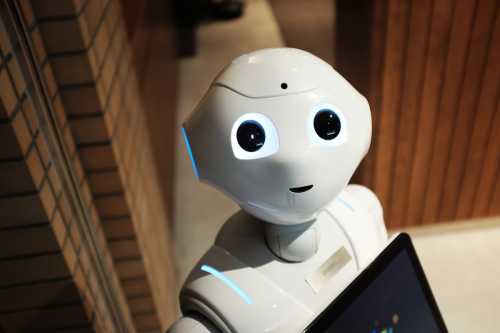
SUNNYVALE, CALIFORNIA — The boundary between science fiction and commercial reality has officially dissolved. In a breathtaking announcement that has sent shockwaves through the global technology and logistics sectors, robotics startup Figure AI has unveiled the "Figure 03," the world’s first commercially deployed, general-purpose humanoid robot, simultaneously confirming the closure of a colossal $1.5 billion funding round . The Figure 03 is no longer a prototype walking on a treadmill in a lab; as of June 2026, these bipedal machines are actively working shifts in massive distribution centers operated by global logistics giants, seamlessly collaborating with human workers . Backed by an unprecedented coalition of tech titans including Nvidia, Microsoft, OpenAI, and Jeff Bezos’s Bezos Expeditions, this development marks the definitive dawn of the embodied AI era, promising to fundamentally rewrite the rules of global manufacturing, supply chain logistics, and the very nature of human labor.
The Super-Smart Lego Helper: Understanding Figure 03 Like You Are Five
To understand why the world’s top engineers and economists are losing their minds over the Figure 03, we need to imagine a child playing with a massive, complex Lego castle. In the past, if you wanted a robot to help you build the castle, you had to program it with extreme, rigid precision. You had to tell it: "Move your arm exactly 12 inches to the left. Close your claw. Pick up the red 2x4 block. Move your arm exactly 4 inches up. Open your claw." If the red block was accidentally moved half an inch to the right, the robot would blindly grab empty air, fail, and stop working. It was a dumb machine that only knew how to repeat a script. Now, imagine you build a special, magical Lego robot. Instead of giving it a rigid script, you just show the robot a picture of the finished castle and say, "Build this." The robot looks at the picture with its camera eyes, its AI brain figures out exactly which blocks it needs, it looks around the messy floor, finds the red block even if it’s hiding under a table, picks it up, and builds the castle all by itself. If it drops a block, it doesn't crash; it learns from the mistake and picks it up correctly the next time. This is the Figure 03. It is not a machine that repeats a script; it is a robot with a brain that can look at a chaotic, messy warehouse, figure out what needs to be done, and do it all by itself, adapting to the real world just like a human does.
The Technology Inside: Foundation Models and Bimanual Dexterity
The technological leap from previous humanoid robots to the Figure 03 is rooted in the integration of "Large Multimodal Models" (LMMs) directly into the robot’s physical control systems. Historically, a robot’s "brain" (the AI that recognizes objects) and its "nervous system" (the software that controls the motors in its joints) were completely separate. This created a lag; the brain would see a box, send a signal to the nervous system, and the movement would be jerky and slow. Figure AI has solved this by creating a unified "Vision-Language-Action" (VLA) model. The same neural network that understands human speech and recognizes objects is directly wired to the actuators in the robot's hands and legs. Furthermore, the Figure 03 features revolutionary "bimanual dexterity." Its hands are equipped with high-resolution tactile sensors that mimic the nerve endings in human fingertips. This allows the robot to feel the difference between a fragile glass bottle and a solid steel gear, adjusting its grip pressure in milliseconds to handle delicate items without crushing them, a feat that was previously impossible for mechanical claws.
The Warehouse Revolution: Real-World Deployment in 2026
The most critical aspect of the June 2026 announcement is that the Figure 03 is not a concept video; it is actively deployed. Figure AI has partnered with major global logistics providers to integrate these robots into existing fulfillment centers. In these environments, the robots are not replacing humans; they are performing the "3D" tasks: Jobs that are Dull, Dirty, and Dangerous. A human worker no longer has to walk 15 miles a shift carrying heavy 50-pound boxes across a concrete floor. Instead, the Figure 03 handles the heavy lifting, transporting pallets from the loading dock to the sorting line. Meanwhile, the human worker sits at an ergonomic station, using a tablet to manage exceptions, handle complex customer returns, and oversee the quality control of the items the robot has sorted. This symbiotic relationship has reportedly increased warehouse throughput by 115% while reducing workplace injuries related to heavy lifting by nearly 90% in the facilities where the Figure 03 is operational.
The $1.5 Billion War Chest: Who is Betting on the Future?
The $1.5 billion funding round is one of the largest in the history of private robotics, valuing Figure AI at over $15 billion . The investor list reads like a who's-who of the global technology elite. Nvidia is investing not just for financial return, but to ensure its cutting-edge "Thor" automotive and robotics chips are the standard brain for humanoid machines. Microsoft and OpenAI are providing the foundational cloud AI models that give the robot its reasoning capabilities. Jeff Bezos’s investment is highly strategic; Amazon is facing a massive labor shortage and intense pressure to improve working conditions in its fulfillment centers. By backing Figure AI, Bezos is securing early access to a scalable, reliable robotic workforce that can operate 24/7 without breaks, healthcare benefits, or labor disputes. This convergence of hardware, AI software, and deep-pocketed strategic investors creates an insurmountable moat against competitors, accelerating the timeline for humanoid robots to become as common as the industrial robotic arms of the 1980s.
The Great Debate: Job Displacement vs. Job Creation
The commercial deployment of the Figure 03 has inevitably reignited the fierce global debate about automation and jobs. Labor unions and economic watchdogs are expressing valid concerns about the long-term displacement of low-skilled, manual labor jobs. If a robot can lift boxes and sort inventory for a fraction of the cost of a human wage, what happens to the millions of warehouse workers globally? Figure AI and its proponents argue that this is not a story of replacement, but of elevation. They point to the historical precedent of the ATM machine: when ATMs were introduced, people feared bank tellers would go extinct. Instead, the cost of opening a bank branch dropped, banks opened more branches, and the total number of bank tellers actually increased, though their jobs shifted from counting cash to providing customer service. Similarly, the argument is that by automating the brutal physical labor in warehouses, the cost of logistics will plummet, e-commerce will explode, and millions of new, higher-paying jobs will be created in robot maintenance, AI training, fleet management, and complex problem-solving. However, the transition period will be painful, requiring massive government investment in retraining programs for displaced manual workers.
Safety Protocols and the Asimov Protocols of 2026
When a 150-pound machine made of metal and lithium-ion batteries is walking around human workers, safety is the absolute highest priority. Figure AI has implemented what they call the "Asimov Protocols," a multi-layered safety architecture. At the hardware level, the robot’s joints are equipped with torque sensors that detect any unexpected resistance. If the robot’s arm accidentally brushes against a human, the motors instantly go limp, and the robot freezes in place before any force can be applied. At the software level, the robot’s vision system maintains a continuous, 360-degree, 3D map of its surroundings, predicting the movement trajectories of human workers. If a human steps into the robot's planned path, the AI recalculates its route in milliseconds to avoid a collision. Furthermore, the Figure 03 operates on a "zero-trust" network architecture, meaning it is virtually impossible for a malicious hacker to remotely hijack the robot’s controls, ensuring that the physical safety of the warehouse environment is never compromised by cyber threats.
Global Supply Chain Impact: Reshoring and the End of Cheap Labor Arbitrage
The macroeconomic implications of the Figure 03 are profound, particularly for the global supply chain. For the last forty years, the global manufacturing and logistics model has been based on "labor arbitrage"—companies design products in the West and manufacture them in Asia because human labor there is cheap. The Figure 03 disrupts this entire model. If a robot in Ohio costs the same per hour to operate as a robot in Shenzhen, the primary advantage of manufacturing overseas disappears. Companies will suddenly find it much more logical to build massive, robot-run factories right next to their consumer markets in the US and Europe. This phenomenon, known as "reshoring," will drastically reduce the carbon emissions associated with shipping goods across oceans, shorten supply chains, and make them more resilient to geopolitical shocks. However, it also means that developing nations that have relied on cheap manufacturing labor to lift their populations out of poverty—like Vietnam, Bangladesh, and Cambodia—will face a severe economic crisis as factories relocate back to the developed world.
Final Thoughts: The Embodied AI Era Has Begun
The unveiling and commercial deployment of the Figure 03, backed by a $1.5 billion war chest, is not just a successful startup story; it is a pivotal moment in human technological evolution. We have successfully created artificial intelligence that can write poetry, pass the bar exam, and code software. But until the Figure 03, that intelligence was trapped behind a glass screen. By giving AI a physical body that can navigate the messy, unpredictable real world, Figure AI has bridged the gap between the digital and physical realms. The challenges of labor displacement, safety, and geopolitical economic shifts are immense and will require careful, proactive management by governments and societies. But the potential upside—a world where back-breaking, dangerous physical labor is entirely handled by machines, freeing humans to focus on creative, strategic, and interpersonal pursuits—is a utopian vision that is now, for the first time, firmly within our grasp. The future is not just artificial intelligence; it is embodied intelligence, and it has officially arrived on the warehouse floor.
Official Robotics Announcement: The following is the official statement from Figure AI regarding the commercial deployment of the Figure 03 humanoid robot, as published on their official X (formerly Twitter) account.
Figure 03 is here. The first commercially deployed, general-purpose humanoid robot. Now working in warehouses alongside humans. The future of labor is here. ????⚡️ #FigureAI#Robotics#AI
— Figure (@figure_robot) June 22, 2026
Related Articles

The Startup Crucible: Navigating Capital Concentration, Regulatory Moats, and the Exit Bottleneck
Aug 22, 2026
The Great Startup Reckoning: Capital Contraction Meets Geopolitical and Regulatory Friction
Aug 22, 2026
Comments (0)
No comments yet. Be the first to share your thoughts!
Want to join the discussion?
Please log in to post a comment.
Login NoworCreate an Account