
Harvard Scientists Find That Lithium Could Reverse Alzheimer's Disease

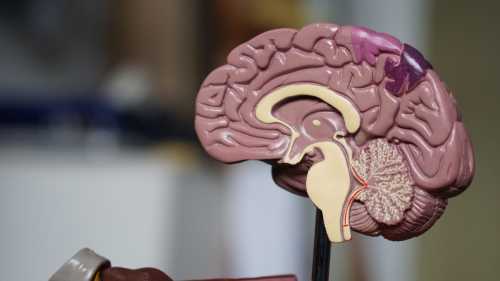
Imagine your brain is a bustling, vibrant city. The streets are filled with messages zooming back and forth, the power plants are generating energy, and the waste management system is constantly cleaning up the trash to keep the city pristine. This city is you—your thoughts, your memories, your personality. But in a disease called Alzheimer's, something goes terribly wrong with the waste management system. A sticky, toxic trash called "amyloid plaque" starts to pile up in the streets. At first, the city's cleaners can keep up, but over time, the trash accumulates. It blocks the streets, chokes the power plants, and eventually, the city starts to shut down. The messages stop zooming, the lights go out, and the person starts to lose their memories, their ability to think, and eventually, their very self. It is a devastating disease that affects millions of families around the world.
For decades, scientists have been trying to find a way to clean up this toxic trash. They have developed drugs that act like street sweepers, trying to dissolve the amyloid plaques. Some of these drugs, like Donanemab and Lecanemab, have shown that they can slow down the decline of the city by about 30%. This is a significant achievement, but it is not a cure. The city is still slowly decaying; it is just happening a little bit slower. Patients and their families are desperate for a solution that can not just slow the decay, but actually reverse it—to clean up the trash, repair the power plants, and bring the city back to life. This is the holy grail of Alzheimer's research, and a groundbreaking discovery from Harvard University suggests that the answer might be hiding in a very simple, natural element.
After ten years of meticulous research, scientists at Harvard have discovered that lithium, a natural and biologically important element, has the potential to prevent or even reverse Alzheimer's disease. Lithium is not a new or exotic substance. It is a simple metal that has been used for decades to treat bipolar disorder. But its role in the brain is much more profound than just stabilizing mood. The Harvard researchers found that lithium is crucial for the brain's waste management system. It acts like a super-charger for the city's cleaners. When lithium levels in the brain are optimal, the cleaners are highly efficient at breaking down and removing the amyloid plaques. But as we age, lithium levels in the brain naturally decline, and the cleaners start to slow down, allowing the trash to pile up.
The breakthrough came when the researchers realized that by restoring lithium levels in the brain, they could reboot the waste management system. In laboratory studies, they found that adding lithium to the environment of brain cells caused the amyloid plaques to dissolve and disappear. The cells were able to clear the toxic trash and return to a healthy state. This is not just a theoretical finding; it is a fundamental shift in our understanding of how Alzheimer's works. It suggests that the disease is not just an inevitable part of aging, but a result of a specific deficiency—a lack of lithium in the brain. If this is true, then Alzheimer's could be as simple to treat as a vitamin deficiency. It is a paradigm-shifting discovery that could change the course of neuroscience.
The implications of this discovery for the millions of people suffering from Alzheimer's are immense. Currently, there is no cure for the disease. The available drugs are expensive, require intravenous infusions, and can have serious side effects, including brain swelling and bleeding. A treatment based on lithium could be radically different. Lithium is a naturally occurring element that is already well-understood by the medical community. If a safe and effective way to deliver lithium to the brain can be developed, it could offer a cheap, accessible, and potentially curative treatment for Alzheimer's. It could stop the disease in its tracks and even restore lost memories, giving patients their lives back. It is a beacon of hope in a field that has seen too many disappointments.
However, there is a major catch. Lithium in its current form, used for bipolar disorder, is given in high doses that can be toxic to the kidneys and the thyroid. You cannot just start taking lithium pills to prevent Alzheimer's. The challenge now for the Harvard team and their collaborators is to figure out how to deliver lithium to the brain in a way that is safe for the rest of the body. They need to find the "Goldilocks" dose—enough to clean up the brain, but not enough to harm the other organs. They are exploring new formulations, such as nasal sprays or targeted delivery systems, that can bypass the rest of the body and go straight to the brain. This is a complex engineering problem, but it is one that is now being aggressively tackled.
This discovery also has profound implications for our understanding of aging in general. If lithium deficiency is a key driver of Alzheimer's, it might also play a role in other age-related diseases. The researchers are now investigating whether lithium could help protect against Parkinson's disease, ALS, and even the general cognitive decline that comes with getting older. The brain is a highly energy-demanding organ, and keeping its waste management system running smoothly is critical for its long-term health. By understanding the role of lithium, scientists are unlocking the secrets of how to keep the brain young and resilient for longer. This could lead to a future where dementia is not a normal part of aging, but a preventable condition.
The path from this laboratory discovery to a widely available treatment will still take time. The researchers must conduct rigorous clinical trials in humans to prove that the treatment is safe and effective. They will need to test different doses, different delivery methods, and different stages of the disease. This process typically takes ten to fifteen years. But the foundation has been laid. The fundamental mechanism has been identified, and the target has been validated. The pharmaceutical industry and venture capitalists are already taking notice, and funding for lithium-based Alzheimer's research is likely to surge. The ten-year journey of discovery at Harvard has reached its end, and a new, even more exciting journey of clinical development is about to begin.
For the families who have watched their loved ones fade away from Alzheimer's, this news is emotional and powerful. It is a reminder that science is a marathon, not a sprint. It takes years of patient, painstaking work to unlock the secrets of the human body. But when a breakthrough happens, it can change the world. The story of lithium and Alzheimer's is a story of perseverance. It is a story of scientists who refused to accept that the disease was untreatable. They followed the data, even when it led them to a simple, overlooked element like lithium. Their work is a testament to the power of curiosity and the human spirit to overcome even the most devastating challenges.
The Harvard Gazette, the official news publication of Harvard University, covered this monumental discovery extensively, highlighting the decade of research that led to this moment. The article details the specific experiments, the challenges the team faced, and their vision for the future of Alzheimer's treatment. It is a fascinating read for anyone interested in the cutting edge of neuroscience. The discovery has sparked a global conversation about the role of trace elements in brain health and the potential for simple, natural solutions to complex diseases. For the full story of this 10-year journey, the Harvard Gazette provides an in-depth look at the science and the scientists behind the breakthrough.
In conclusion, the discovery by Harvard scientists that lithium could prevent or reverse Alzheimer's disease is a landmark moment in medical history. It offers a completely new perspective on the cause of the disease and a potentially simple, effective treatment. By restoring the brain's natural waste management system, lithium could clear the toxic plaques and restore cognitive function. While the challenge of safe delivery remains, the fundamental scientific hurdle has been cleared. This breakthrough brings hope to millions of families and could fundamentally change how we approach aging and dementia. The city of the brain has a new cleaner, and the lights might just stay on a little bit longer. The future of Alzheimer's treatment is bright, and it is powered by lithium.



Comments (0)
No comments yet. Be the first to share your thoughts!
Want to join the discussion?
Please log in to post a comment.
Login NoworCreate an Account