
IMF Downgrades Global Growth Forecast to 3.1% Amid Policy Uncertainty

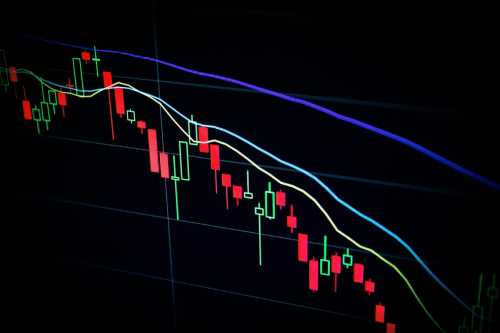
Imagine the entire world is a giant school, and every country is a student. At the end of every year, the strictest and smartest teacher in the school—the International Monetary Fund (IMF)—hands out the report cards. This report card tells everyone how much their "allowance" (their economy) grew over the past year and how much it is expected to grow next year. For a while, everyone was getting pretty good grades, and the teacher was predicting that next year would be even better. But, in April and June of 2026, the IMF teacher looked at the global situation, shook her head, and handed out a revised report card with lower grades. She downgraded the global growth forecast to just 3.1 percent for 2026, down from the 3.4 percent she predicted in 2025. While 3.1 percent might sound like a decent number to a student who usually gets Cs, in the world of global economics, a drop like this is a massive warning sign. It means the world economy is slowing down, and the "global garden" is not growing as fast as we need it to. Let us explore why the IMF made this gloomy prediction and what it means for the future.
Why Did the IMF Lower the Grade? The Three Big Problems
The IMF did not just pick these numbers out of thin air; they are based on massive amounts of data about trade, inflation, and government spending. According to the IMF's World Economic Outlook, the downgrade is primarily caused by three interconnected problems. The first problem is "policy uncertainty and trade fragmentation." This is a fancy way of saying that countries are not playing nicely together anymore. As we saw with the US-China trade war and the new AI export controls, major economies are putting up walls, tariffs, and sanctions against each other. When countries stop trading freely with each other, it becomes more expensive to make things. A smartphone that used to be designed in California, made with minerals from Africa, assembled in China, and sold in Europe now has to navigate a maze of taxes and restrictions. This inefficiency slows down global growth because businesses are afraid to invest money when they do not know what the rules will be next month.
The second problem is the lingering effects of "geopolitical oil shocks." As we discussed in the energy policy section, the conflicts in the Middle East and Eastern Europe have kept the prices of oil and gas incredibly high and volatile in 2026. Energy is the lifeblood of the economy; every single thing we buy requires energy to make and transport. When energy prices are high, it acts like a massive tax on every citizen and every business. People have less money to spend on other things, and businesses have higher costs, which means they hire fewer workers. The IMF noted that this "supply shock" is particularly damaging because central banks (the institutions that control interest rates) are stuck. If they raise interest rates to fight the inflation caused by high oil prices, they crush economic growth. If they lower rates to help growth, inflation spirals out of control. It is a lose-lose situation that is dragging the global numbers down.
The Divergence: Rich Countries vs. Poor Countries
One of the most alarming parts of the IMF's 2026 report is the "divergence" between the advanced economies (the rich countries like the US, UK, and Germany) and the emerging market and developing economies (the poorer countries like Pakistan, India, Nigeria, and Brazil). The report shows that the rich countries are actually doing slightly better than expected, largely because they have massive government budgets they can use to subsidize their industries and protect their consumers from high energy prices. The US economy, in particular, has shown "remarkable resilience" despite policy uncertainty, driven by a boom in AI-related investments and strong consumer spending.
However, the developing world is suffering immensely. These countries do not have the deep pockets to subsidize their economies. When the US and Europe raise their interest rates to fight their own inflation, it causes the value of the US Dollar to skyrocket. Since most global trade (like oil and food) is priced in dollars, it becomes incredibly expensive for developing countries to import the things they need to survive. Furthermore, investors get scared and pull their money out of the developing world to put it in the "safe" US banks. This causes the currencies of developing nations to crash, making their national debt (which is often owed in dollars) impossible to pay back. The IMF warned that for the developing world, the low growth forecast of 2026 translates directly into higher poverty, more hunger, and a lost generation of children who miss out on education and healthcare because their governments are spending all their money just paying interest on old loans.
Global growth is projected at 3.1% in 2026, revised down due to policy uncertainty, trade fragmentation, and geopolitical tensions. The divide between advanced and developing economies is widening.
— International Monetary Fund (@IMFNews) April 16, 2026
The Silver Lining: The AI Productivity Boom
Despite the gloomy forecast, the IMF report did highlight one massive "tailwind" (a positive force) that is keeping the global economy from falling into a full-blown recession: Artificial Intelligence. The report noted that the rapid adoption of AI technologies is starting to show up in the productivity data. Productivity is a measure of how much stuff a worker can produce in an hour. Historically, productivity growth had been very slow for the last 20 years. But in 2025 and 2026, as companies integrated AI into their software, coding, customer service, and logistics, productivity started to jump. The IMF estimates that AI could add trillions of dollars to the global economy over the next decade by making workers faster and smarter. This AI boom is the primary reason the global growth forecast is still at 3.1 percent and not something much worse, like 1 percent or zero. The tech sector is acting as a powerful engine, pulling the rest of the sluggish economy forward.
However, the IMF also warned about the "disruption" this will cause. The same AI that makes the economy grow will also replace millions of jobs in administration, coding, writing, and basic analysis. The benefits of the AI boom are likely to be concentrated in the hands of the few massive tech companies in the US and China, while the costs (lost jobs) will be spread across the rest of the world. This could make the wealth inequality problem even worse, both within countries and between countries. The IMF is urging governments to invest heavily in "social safety nets" and retraining programs to help the workers who are displaced by the AI revolution.
What This Means for the Future: A Weak but Stable Pace?
So, what is the bottom line for the average person? The IMF describes the current global economy as "weak but stable." This means we are not going to have a catastrophic global depression like we did in 2008, where banks collapsed and unemployment hit 25 percent. The financial system is much stronger now, and the central banks have learned from their past mistakes. However, "stable" does not mean "good." A 3.1 percent global growth rate is below the historical average of the 2000s and 2010s. It means that for the next few years, life is going to feel a bit tighter. Jobs might be a bit harder to find, wages might not grow as fast as we would like, and the prices of basic goods will remain stubbornly high. It is an era of "muddle through"—not a disaster, but certainly not a boom.
For countries like Pakistan, the IMF's downgrade is a harsh reality check. It means that the international financial markets will remain tight, and borrowing money will remain expensive. It means that Pakistan cannot rely on a rising tide of global trade to easily export its way to prosperity. Instead, the country must focus intensely on domestic reforms: fixing its energy sector, broadening its tax base, and creating an environment where local and foreign businesses feel safe enough to invest. The global wind is blowing against the developing world right now, and the only way to survive is to build a very strong, self-reliant economic ship. Read the full IMF World Economic Outlook April 2026 report.
In conclusion, the IMF's decision to downgrade the global growth forecast to 3.1 percent for 2026 is a sobering reflection of a world fractured by geopolitical rivalry, energy shocks, and policy uncertainty. While the miraculous rise of AI provides a crucial lifeline for productivity and keeps the global economy from stalling completely, the benefits are unevenly distributed, leaving the developing world to struggle with high debt and expensive imports. The era of easy, hyper-globalized growth is over, replaced by a more fragmented, cautious, and technologically driven economic landscape. Navigating this new reality will require immense resilience, smart domestic policies, and a willingness to adapt to a world where the rules of global trade and technology are being rewritten every single day.
Related Articles
The Policy Paradox: Navigating Industrial Subsidies, Carbon Border Adjustments, and Fiscal Constraints
Aug 22, 2026
The Redrawn Regulatory Seascape: Navigating the Convergence of Global Policy Faultlines
Aug 22, 2026
Comments (0)
No comments yet. Be the first to share your thoughts!
Want to join the discussion?
Please log in to post a comment.
Login NoworCreate an Account