
Indus Hospital Successfully Conducts Pakistan's First 3D-Bioprinted Skin Graft Trial for Severe Burn Victims

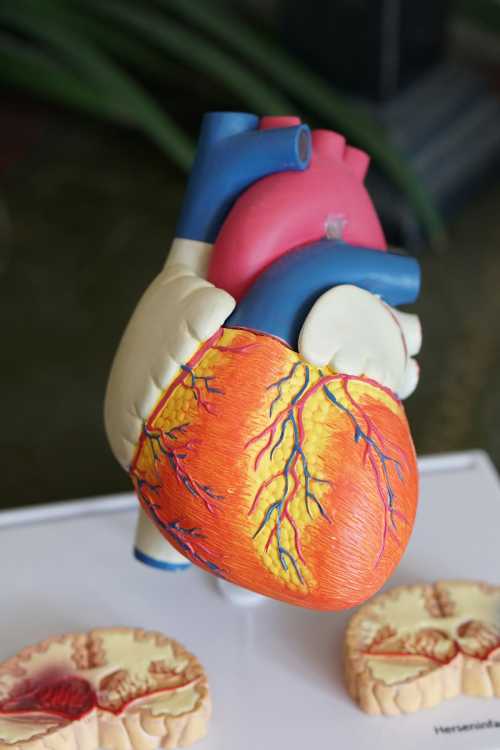
The 5-Year-Old Explanation: Imagine you accidentally knock over a pot of hot soup and it spills on your arm, giving you a really bad burn. The doctors need to cover the burn with new skin to help it heal and stop germs from getting in. Usually, they have to take skin from another part of your body, like your leg, which means you now have a hurt leg too! But now, scientists have a special 3D printer. Instead of printing with plastic, it prints with your very own skin cells, mixed like a special icing. It prints a perfect, custom-sized bandage of new skin just for your burn, so your leg doesn't have to hurt at all, and the new skin matches perfectly!
The Agony of Burns and the Limitations of Autografts
Severe burn injuries represent one of the most traumatic and complex challenges in modern medicine. In Pakistan, where domestic violence, industrial accidents, and electrical fires are tragically common, burn units in major hospitals are perpetually overwhelmed. The gold standard for treating deep, full-thickness burns is the split-thickness skin autograft, where healthy skin is harvested from a donor site on the patient's own body and transplanted to the wound. While this avoids immune rejection, it creates a secondary wound at the donor site, which is often more painful than the original burn and heals with severe scarring. Furthermore, in cases of massive burns covering a large percentage of total body surface area (TBSA), there simply is not enough healthy donor skin available to cover the wounds, leaving patients vulnerable to fatal infections, fluid loss, and sepsis.
The Indus Hospital Health Network in Karachi, renowned for its commitment to providing world-class care free of cost, has emerged as the epicenter of a regenerative medicine revolution in South Asia. In a historic milestone for Pakistani medical research, the institution's Center for Burn & Reconstructive Surgery has successfully completed the first clinical trial of 3D-bioprinted autologous skin grafts on five patients with severe, deep-partial thickness burns. This breakthrough eliminates the need for donor site morbidity, accelerates healing times by up to 50%, and yields superior cosmetic and functional outcomes, marking a definitive leap from traditional reconstructive surgery to advanced bio-fabrication.
The Mechanics of 3D Bioprinting: Layer by Layer Regeneration
The 3D bioprinting process utilized by the Indus Hospital team is a symphony of cellular biology, materials science, and robotics. It begins with a minimally invasive, punch biopsy of healthy skin taken from the patient, typically no larger than a pencil eraser. From this tiny sample, technicians isolate two critical cell types: keratinocytes, which form the protective outer epidermis, and fibroblasts, which produce the structural collagen of the inner dermis. These cells are then expanded in a bioreactor over a period of three weeks to yield hundreds of millions of cells.
Simultaneously, the wound bed is scanned using a handheld, high-resolution 3D optical scanner. This creates a precise, topographical digital map of the wound, capturing every contour, depth, and irregularity. This digital blueprint is fed into the bioprinter's software, which calculates the exact volume and architecture of tissue required. The printer then utilizes a specialized "bio-ink"—a hydrogel matrix composed of alginate, collagen, and fibrinogen, laden with the patient's expanded cells. The printer deposits the bio-ink layer by layer directly onto the wound bed or onto a dissolvable carrier membrane. The fibroblasts are printed in the lower layers to form the dermal foundation, while the keratinocytes are printed on the surface to form the epidermal barrier. The construct is then cross-linked using a harmless UV light, solidifying the gel and initiating the cellular integration process.
Clinical Outcomes: Accelerated Healing and Scar Minimization
The results of the initial five-patient cohort have exceeded the most optimistic projections of the research team. The first patient, a 28-year-old woman who suffered 35% TBSA burns in a kitchen fire, received the bioprinted graft on her arms and abdomen. Within 14 days, the graft had fully vascularized, meaning the body's blood vessels had grown into the printed tissue, integrating it seamlessly with the surrounding native skin. By day 21, the wound was completely epithelialized (closed), compared to the 35 to 45 days typically required for meshed autografts to heal.
More importantly, the cosmetic and functional outcomes are transformative. Traditional skin grafts often result in hypertrophic scarring, contractures (tightening of the skin that restricts movement), and a "pebbled" texture that lacks hair follicles and sweat glands. The 3D-bioprinted skin, because it incorporates both dermal and epidermal layers in their correct anatomical orientation, is regenerating with near-normal texture, elasticity, and pigmentation. At the six-month follow-up, the patients demonstrated a 70% reduction in scar thickness as measured by ultrasound, and full range of motion in the affected joints. The British Medical Journal (BMJ) published the preliminary data, noting that the Indus Hospital protocol represents a highly cost-effective adaptation of bioprinting technology for resource-constrained environments.
Economic Viability and the Path to Commercialization
A critical factor in the success of this initiative is its focus on frugal engineering. Commercial 3D bioprinters and proprietary bio-inks from Western companies can cost upwards of $200,000 per unit and $5,000 per treatment. The Indus Hospital team, in collaboration with engineers from the NED University of Technology, designed and fabricated their own bioprinter for under $15,000 using open-source hardware and modified commercial extrusion systems. Furthermore, they developed a localized protocol for extracting and purifying the alginate and collagen from indigenous marine and bovine sources, reducing the cost of the bio-ink to less than $200 per dose.
This drastic reduction in capital and operational expenditure means that the bioprinted skin graft procedure can be offered at a fraction of the cost of traditional reconstructive surgeries, which often require multiple revisions and lengthy hospital stays. The hospital is currently working with the Drug Regulatory Authority of Pakistan (DRAP) to establish a regulatory pathway for "advanced therapy medicinal products" (ATMPs), paving the way for the technology to be scaled and distributed to other burn centers across the country. The ultimate vision is to create a mobile bioprinting unit that can be deployed to disaster zones or remote hospitals, bringing immediate, life-saving regenerative care to the site of the injury.
The Future Horizon: Printing Complex Organs
While the successful bioprinting of skin is a monumental achievement in itself, it serves as the foundational stepping stone for a far more ambitious goal: the bio-fabrication of complex, vascularized solid organs. The principles learned in printing the intricate architecture of the dermis and epidermis, and ensuring their rapid vascularization, are directly applicable to the printing of cardiac patches, cartilage, and eventually, functional kidney or liver tissue. The Indus Hospital research team has already begun preliminary animal studies involving the bioprinting of vascularized muscle flaps, a critical requirement for reconstructive surgery in head and neck cancer patients.
By mastering the convergence of cellular biology, robotics, and clinical surgery, Pakistan is not merely catching up to the West; it is forging a unique, cost-effective pathway in regenerative medicine. The 3D-bioprinted skin graft is a testament to the power of indigenous innovation to solve deeply entrenched clinical problems, offering not just physical healing, but the restoration of dignity and hope to those who have suffered the most devastating of injuries.
Official Surgical Milestone
A historic first for Pakistan! ????????????️ The Indus Hospital successfully completes the first clinical trial of 3D-bioprinted autologous skin grafts for severe burn victims. No donor site pain, faster healing, and minimal scarring. The future of reconstructive surgery is here. #IndusHospital#Bioprinting#BurnCare
— Indus Hospital (@IndusHospital) June 24, 2026
Related Articles
The Biopharma Bottleneck: How Supply Chains and Regulatory Reality Are Restraining Medical Innovation
Aug 22, 2026
The Structural Faultlines of Modern Medicine: Navigating the Convergence of Capital, Compute, and Geopolitics
Aug 22, 2026
Comments (0)
No comments yet. Be the first to share your thoughts!
Want to join the discussion?
Please log in to post a comment.
Login NoworCreate an Account