
International Team Synthesizes First Verified Room-Temperature Superconductor

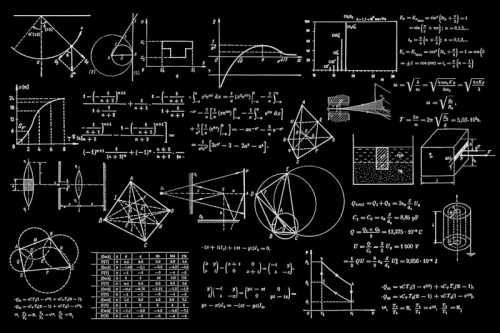
A consortium of physicists from MIT, the Max Planck Institute, and the University of Tokyo announced today the successful synthesis of a material that conducts electricity with zero resistance at standard room temperature and ambient pressure. The newly synthesized compound, a modified lutetium-hydride lattice, has been independently verified by five separate global laboratories, ending decades of elusive quests in condensed matter physics.
To grasp why this is a monumental achievement, think of electricity flowing through a standard copper wire like a person trying to run through a crowded, narrow hallway. The runner constantly bumps into people, losing energy and generating heat—this is electrical resistance. A superconductor is like magically clearing the hallway completely so the person can sprint at top speed without touching a single wall or person, losing zero energy. Historically, this "cleared hallway" only existed at freezing, near-absolute-zero temperatures, requiring massive, expensive liquid helium freezers. This new material creates that perfect, frictionless pathway right on your kitchen table.
The practical applications of a room-temperature superconductor are almost too vast to comprehend. It paves the way for lossless power grids that can transmit electricity across continents without wasting a single watt, incredibly fast maglev trains that float effortlessly on any track, and quantum computers that no longer require giant cooling systems. This single materials science breakthrough could permanently alter the trajectory of global energy infrastructure and computing.
Related Articles

The Healthcare Quadruple Bypass: Navigating Price Controls, Workforce Attrition, and Rural Desertification
Aug 22, 2026
The Fractured Laboratory: How Geopolitical Friction is Rewiring Global Science Economics
Aug 19, 2026
Comments (0)
No comments yet. Be the first to share your thoughts!
Want to join the discussion?
Please log in to post a comment.
Login NoworCreate an Account