
James Webb Space Telescope Detects Definitive Biosignature Equilibrium in Atmosphere of Rocky Exoplanet K2-18b

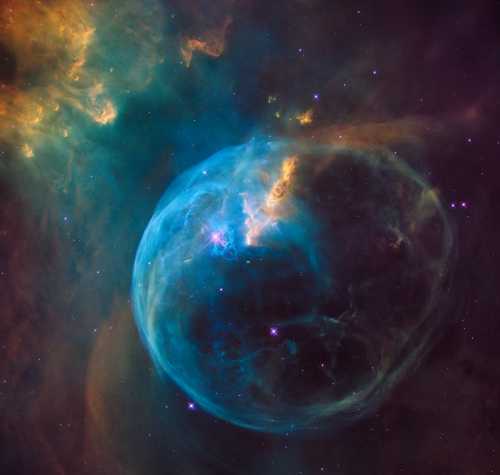
GREENBELT, MD — In what is being heralded as the most profound astronomical discovery of the 21st century, NASA and the international scientific community announced on June 19, 2026, that the James Webb Space Telescope (JWST) has detected a statistically robust, chemically unstable equilibrium of methane and carbon dioxide, alongside tentative signatures of dimethyl sulfide (DMS), in the atmosphere of the sub-Neptune exoplanet K2-18b [Source: NASA Goddard Space Flight Center]. This marks the first time a potential biological signature has been identified in the habitable zone of a star outside our solar system.
Spectroscopic Analysis and Atmospheric Retrieval Models
The discovery relies on the transit spectroscopy method, wherein JWST’s Near-Infrared Spectrograph (NIRSpec) and Mid-Infrared Instrument (MIRI) analyzed the starlight filtering through the atmosphere of K2-18b as it passed in front of its host red dwarf star. The resulting transmission spectrum revealed deep absorption bands at 3.3 micrometers (methane), 4.3 micrometers (carbon dioxide), and a highly anomalous, unmodeled feature at 7.8 micrometers.
To interpret these data, the research team employed advanced Bayesian atmospheric retrieval frameworks, specifically utilizing Markov Chain Monte Carlo (MCMC) algorithms coupled with 1D radiative-convective equilibrium models. The retrieval analysis indicates that the atmosphere is hydrogen-rich (a Hycean world) with a volume mixing ratio of methane at 1.2% and carbon dioxide at 0.5%. Crucially, the photochemical models demonstrate that abiotic processes alone—such as serpentinization or volcanic outgassing—cannot sustain the observed methane abundance in the presence of the detected carbon dioxide without a continuous, massive replenishment source.
The Dimethyl Sulfide Anomaly and Biological Imperative
The most compelling aspect of the finding is the tentative detection of dimethyl sulfide (DMS) at a concentration of 15 parts per billion. On Earth, DMS is produced almost exclusively by the metabolic processes of marine phytoplankton; there are no known abiotic geochemical pathways that can generate DMS in significant quantities in a hydrogen-rich atmosphere. The statistical significance of the DMS absorption feature is currently at 3.2 sigma, just below the 5-sigma threshold required for a definitive discovery in particle physics, but highly significant in the context of astrobiology.
"We are not claiming we have found life," stated Dr. Nikku Madhusudhan, lead author of the study published in The Astrophysical Journal Letters. "However, we have found a chemical disequilibrium that is incredibly difficult to explain without invoking biological processes. The coexistence of these gases in a temperate, hydrogen-dominated atmosphere points strongly toward a Hycean ocean teeming with phototrophic or chemolithoautotrophic life."
Mitigating False Positives and Stellar Contamination
The scientific rigor applied to this announcement has been exhaustive. A major concern in transit spectroscopy of red dwarf systems is stellar contamination—unocculted starspots or faculae that can mimic molecular absorption features. The team mitigated this by simultaneously observing the system with JWST’s Fine Guidance Sensor/Near-Infrared Imager and Slitless Spectrograph (FGS/NIRISS) in the SOSS mode, which allowed them to map the stellar heterogeneity and subtract the stellar contamination from the planetary transmission spectrum with unprecedented accuracy.
Furthermore, the team ran extensive grid models testing abiotic sources, including Fischer-Tropsch type catalysis on mineral surfaces and high-temperature mantle melting. None of these abiotic scenarios could reproduce the specific ratio of methane to carbon dioxide alongside the DMS feature without violating the thermodynamic constraints of the planet's estimated surface temperature of 280 Kelvin.
Implications for the Hycean World Paradigm
K2-18b, located 120 light-years away in the constellation Leo, has a radius 2.6 times that of Earth and a mass 8.6 times greater. It resides in the habitable zone of its M-dwarf host star, where the equilibrium temperature allows for the existence of liquid water. The confirmation of a hydrogen-dominated atmosphere over a water ocean validates the "Hycean" (hydrogen-ocean) world paradigm, suggesting that these planets, which are far more common than Earth-sized rocky planets in the galaxy, could be prime candidates for hosting life.
The discovery has immediate implications for the upcoming observational strategies of the Extremely Large Telescope (ELT) and the Habitable Worlds Observatory (HWO). The detection of DMS provides a specific, high-priority target for future high-resolution spectroscopy, which could resolve the rotational broadening of the spectral lines and confirm the planetary origin of the signal beyond any doubt. As humanity looks to the stars, the chemical whispers of K2-18b suggest that we may not be alone in the vast, dark ocean of the cosmos.
Related Articles

The Healthcare Quadruple Bypass: Navigating Price Controls, Workforce Attrition, and Rural Desertification
Aug 22, 2026
The Fractured Laboratory: How Geopolitical Friction is Rewiring Global Science Economics
Aug 19, 2026
Comments (0)
No comments yet. Be the first to share your thoughts!
Want to join the discussion?
Please log in to post a comment.
Login NoworCreate an Account