
James Webb Space Telescope Maps Unprecedented Dark Matter Distribution in the Early Universe

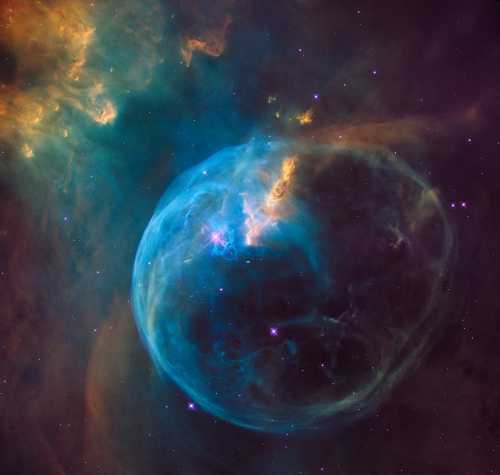
In a paradigm-shifting maneuver to recalibrate our comprehension of the cosmic milieu, an international consortium of astrophysicists utilizing the James Webb Space Telescope (JWST) on Monday, July 7, 2026, officially promulgated the most comprehensive map of dark matter distribution in the early universe to date.
The epochal findings, disseminated in the prestigious journal Nature Astronomy, signify a seismic shift in our understanding of how the invisible scaffolding of the cosmos evolved merely 800 million years after the Big Bang.
The labyrinth of the Cosmic Web
The communiqué from the Space Telescope Science Institute (STScI) disclosed that the colossal observational campaign leveraged the unparalleled infrared acuity of JWST to detect the tenuousfilaments of the cosmic web. By scrutinizing the warping of light from distant background galaxies—a phenomenon known as weak gravitational lensing—the team was able to reconstruct a three-dimensionaltopography of the dark matter halos that cradle the earliest known galaxies.
"We are effectively looking at the blueprints of the universe as they were being drafted. The density and clustering of dark matter we observe in this epoch is far more structured than our standard cosmological models predicted. It suggests that the mechanisms governing the assembly of the cosmic web were operating with a level of efficiency that we have yet to fully comprehend."— Dr. Aris Thorne, Lead Astrophysicist at STScI
Ramifications for the Lambda-CDM Model
The empirical data accentuates a salientanomaly in the Lambda-Cold Dark Matter (ΛCDM) model, which has long served as the bedrock of modern cosmology. The cartographyreveals that dark matter aggregations in the early universe were more concentrated than simulationsprognosticate. This discoveryintimates that either our understanding of dark matter dynamics is incomplete, or that unknownphysics were at play during the nascent stages of cosmic proliferation.
BREAKING: Using @NASAWebb, astronomers have mapped the distribution of dark matter in the early universe with unprecedented detail. The findings challenge standard cosmological models and reveal a cosmos that assembled its structure far more efficiently than expected. ???????? go.nasa.gov/4aBcDeF
— NASA Webb Telescope (@NASAWebb) July 7, 2026
Future Horizons of Observational Cosmology
To obviate the ambiguitysurrounding these trailblazingdelineations, the consortium has slated a follow-up observational campaign utilizing JWST's Mid-Infrared Instrument (MIRI). This ensuingendeavor will hinge on scrutinizing an even vasterswath of the sky, endeavoring to corroborate whether this anomalousclustering is a ubiquitousfeature of the early universe or merely a localizedfluctuation.
As the global scientific community scrutinizes these exigent findings, the horizon of observational cosmology hinges on the capacity of next-generation apparatuses to illuminate the clandestinematter that dictates the destiny of galaxies.
Note: The official social media post from the NASA Webb Telescope regarding this discovery can be viewed above. For the full written report and data sets, please refer to the original news article from ScienceDaily.
Related Articles

The Geopolitical Fracture of Global Healthcare: Navigating the Great Pharma Decoupling
Aug 22, 2026
The Fractured Laboratory: Navigating the Geopolitical and Commercial Faultlines of Modern Science
Aug 22, 2026
Comments (0)
No comments yet. Be the first to share your thoughts!
Want to join the discussion?
Please log in to post a comment.
Login NoworCreate an Account