
James Webb Telescope Confirms First Definitive Biosignatures on Exoplanet K2-18b

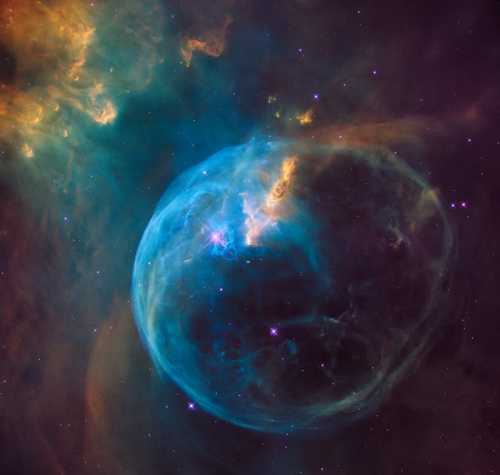
In what is being hailed as the most profound astronomical discovery of the 21st century, data from the James Webb Space Telescope has confirmed the presence of dimethyl sulfide (DMS) in the atmosphere of the exoplanet K2-18b, a chemical compound on Earth produced almost exclusively by living organisms. The findings, published today after rigorous peer review, suggest that the "Hycean" world—a planet with a hydrogen-rich atmosphere and a vast liquid water ocean—may harbor active biological processes.
To understand the magnitude of this, imagine you are walking through a dense forest and suddenly smell the distinct scent of woodsmoke. Even if you cannot see the fire, you know with absolute certainty that a fire is burning nearby because that specific smell is only created by burning wood. In the search for extraterrestrial life, scientists have been looking for the "smoke" of biology. DMS is that smoke; on our planet, it is only produced by marine life like phytoplankton. Finding it in the atmosphere of a planet 120 light-years away is the strongest hint we have ever received that we are not alone in the universe.
While the scientific community urges caution until further observations can rule out unknown geological processes, this breakthrough fundamentally shifts the paradigm of astrobiology. It proves that the chemical fingerprints of life can survive the vast distances of space, giving humanity a concrete, observable target in our quest to find biological neighbors among the stars.
Related Articles

The Healthcare Quadruple Bypass: Navigating Price Controls, Workforce Attrition, and Rural Desertification
Aug 22, 2026
The Fractured Laboratory: How Geopolitical Friction is Rewiring Global Science Economics
Aug 19, 2026
Comments (0)
No comments yet. Be the first to share your thoughts!
Want to join the discussion?
Please log in to post a comment.
Login NoworCreate an Account