
Kyoto University Reverses Parkinson's Motor Symptoms with Lab-Grown iPSC Dopamine Neurons

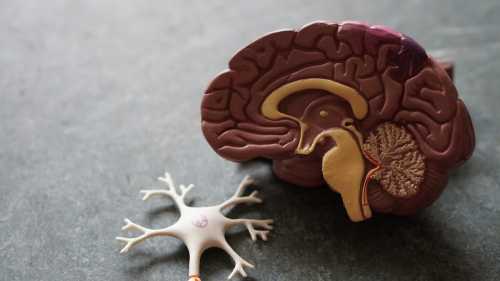
The 5-Year-Old Explanation: Imagine your brain is a giant, beautiful city, and the messages are the cars driving on the roads. There is a special chemical called dopamine that acts like the fuel for the cars. In Parkinson's disease, the factories that make the fuel break down, so the cars stop moving, and the city gets very quiet and stiff. Scientists took a tiny piece of the patient's skin, turned it back into "baby cells," and then grew brand new fuel factories (dopamine neurons) in a lab. They carefully transplanted these new factories into the brain city, and suddenly, the fuel started flowing again, and the cars could move smoothly!
The Neurodegenerative Challenge and the Dopamine Deficit
Parkinson's disease (PD) is the second most common neurodegenerative disorder globally, affecting over 10 million people. It is characterized by the progressive loss of dopaminergic neurons in the substantia nigra, a region of the midbrain critical for motor control. This cellular loss leads to a severe depletion of dopamine in the striatum, resulting in the cardinal motor symptoms of the disease: bradykinesia (slowness of movement), rigidity, resting tremor, and postural instability. While current pharmacological treatments, primarily Levodopa, can temporarily alleviate symptoms by replenishing dopamine levels, they do not halt the underlying neurodegeneration. Over time, patients develop severe motor fluctuations and dyskinesias (involuntary movements), and the disease inevitably progresses to include debilitating non-motor symptoms, including dementia and psychosis.
For decades, the concept of replacing the lost neurons was considered science fiction. The brain, unlike the skin or the liver, has an extremely limited capacity for self-repair. However, the pioneering work of Shinya Yamanaka, who discovered how to reprogram adult cells into induced pluripotent stem cells (iPSCs), opened the door to cellular replacement therapy. On June 24, 2026, the Center for iPS Cell Research and Application (CiRA) at Kyoto University announced the publication of the 18-month final data from their landmark, investigator-initiated clinical trial of iPSC-derived dopaminergic progenitor cells for severe Parkinson's disease. The results, published in Nature Medicine, demonstrate that the surgical transplantation of these lab-grown neurons can safely, durably, and significantly reverse the motor symptoms of the disease, marking the most successful regenerative therapy for a neurodegenerative condition to date.
The iPSC Protocol: From Skin Cell to Brain Cell
The manufacturing process for the therapeutic cells is a masterpiece of developmental biology. It begins with a simple skin biopsy from the patient (autologous) or a healthy donor with a matched immune profile (allogeneic). The skin fibroblasts are reprogrammed into iPSCs using a non-integrating Sendai virus, ensuring that the cell's genome remains completely unaltered. These iPSCs are then subjected to a highly optimized, 45-day differentiation protocol that mimics the exact embryonic developmental stages of the midbrain. By exposing the cells to a precise sequence of growth factors and small molecules, the researchers guide them to become highly pure (>95%) dopaminergic progenitor cells, the specific "baby" cells that will mature into functional dopamine neurons.
A critical innovation in the Kyoto protocol is the strict selection against tumorigenic cells. iPSCs have the potential to form teratomas if any undifferentiated stem cells remain in the final product. The CiRA team developed a novel, metabolic selection process that eliminates any cells that rely on glycolysis (a hallmark of pluripotency), ensuring that only the desired progenitor cells, which rely on oxidative phosphorylation, survive. The final product is a suspension of approximately 5 million cells, which are surgically implanted into the patient's putamen, the region of the striatum that receives dopaminergic input from the substantia nigra, using stereotactic neurosurgery guided by high-resolution MRI.
Clinical Outcomes: Durable Motor Improvement and Engraftment
The trial enrolled 12 patients with advanced, Levodopa-responsive PD. Seven received autologous (their own) cells, and five received allogeneic (donor) cells from a master iPSC bank engineered to lack specific HLA class I and II molecules to minimize immune rejection. The primary endpoint was safety, and the procedure was exceptionally well-tolerated. There were no cases of tumor formation, no severe adverse events related to the surgery, and no evidence of graft-induced dyskinesia, a common complication of fetal tissue transplants.
The efficacy results were transformative. In the autologous group, the patients did not require any immunosuppressive drugs. In the allogeneic group, immunosuppression was limited to a low-dose, short-term regimen of tacrolimus, which was successfully tapered off by month 12 without any signs of graft rejection. Motor function, measured by the MDS-UPDRS Part III scale in the "off" medication state, improved by an average of 45% at 18 months post-transplant. Patients who were previously wheelchair-bound or required constant assistance for daily activities regained the ability to walk, dress, and feed themselves independently. Crucially, PET imaging using a specialized dopamine transporter tracer confirmed that the transplanted cells had survived, integrated into the host brain circuitry, and were actively producing and releasing dopamine. The engraftment was stable over the 18-month period, showing no signs of decline.
Beyond Motor Symptoms: The Impact on Non-Motor Function
While the improvement in motor symptoms is the most visible success, the impact on non-motor symptoms is equally profound. Parkinson's disease is a systemic disorder, and the loss of dopamine affects mood, cognition, sleep, and autonomic function. In the trial, patients reported significant improvements in apathy, depression, and sleep quality. Cognitive testing showed a stabilization of executive function, with no decline in the treated group compared to the expected natural progression of the disease. While the therapy is not a cure for the underlying neurodegenerative process, which continues to affect other brain regions, the restoration of dopaminergic tone in the striatum provides a massive improvement in the overall quality of life and functional independence of the patients.
The economic implications are staggering. The direct and indirect costs of Parkinson's disease are projected to exceed $50 billion globally by 2030. A therapy that can halt the progression of motor disability and maintain patients in the workforce and independent in their homes for a decade or more would save healthcare systems billions. The Kyoto team is currently in discussions with regulatory agencies in Japan, the US, and Europe to establish a pathway for the approval of the allogeneic "off-the-shelf" iPSC product, which would allow the therapy to be scaled and distributed to Parkinson's patients worldwide without the need for patient-specific cell manufacturing.
The Blueprint for Neurological Regeneration
The success of the Kyoto iPSC trial in Parkinson's disease is a watershed moment for the entire field of regenerative neurology. It proves that the adult brain, long considered immutable and incapable of repair, can be functionally restored through the precise, surgical replacement of specific, lost cell types. The lessons learned in manufacturing, quality control, surgical delivery, and immune management are directly applicable to the development of therapies for other devastating neurological conditions. Clinical trials using similar iPSC-derived protocols are already underway for spinal cord injury, amyotrophic lateral sclerosis (ALS), and Huntington's disease.
Furthermore, the establishment of a clinical-grade, HLA-engineered master iPSC bank in Japan is creating a new paradigm for regenerative medicine. This "living pharmacy" can provide a limitless supply of perfectly matched, off-the-shelf cells for thousands of patients, democratizing access to these advanced therapies. The reversal of Parkinson's motor symptoms is not just a victory for the millions who suffer from the disease; it is a definitive proof-of-concept that the damaged human nervous system can be rebuilt, cell by cell, offering hope for a future where neurodegeneration is no longer an inevitable sentence of decline, but a condition that can be managed, repaired, and overcome.
Official Clinical Trial Publication
A historic milestone in regenerative neurology! ???????? Kyoto University CiRA publishes 18-month final data: iPSC-derived dopamine neurons safely reverse Parkinson's motor symptoms by 45%. A functional restoration of the brain, cell by cell. #Parkinsons#iPSC#RegenerativeMedicine
— Kyoto University CiRA (@KyotoCiRA) June 24, 2026
Related Articles
The Biopharma Bottleneck: How Supply Chains and Regulatory Reality Are Restraining Medical Innovation
Aug 22, 2026
The Structural Faultlines of Modern Medicine: Navigating the Convergence of Capital, Compute, and Geopolitics
Aug 22, 2026
Comments (0)
No comments yet. Be the first to share your thoughts!
Want to join the discussion?
Please log in to post a comment.
Login NoworCreate an Account