
Lockheed Martin and SpaceX Secure $35B Joint Contract for Cislunar Logistics and Orbital Manufacturing

The Commercialization of the Deep Space Economy
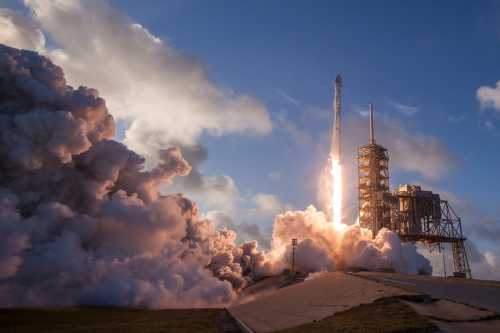
In a landmark agreement that formally merges the traditional defense industrial base with the commercial space economy, Lockheed Martin and SpaceX have been awarded a joint $35 billion contract by the Department of Defense and NASA to establish the "Cislunar Logistics Network" (CLN). As reported by Bloomberg, the CLN is a comprehensive infrastructure initiative designed to create a permanent, sustainable supply chain between Earth orbit, the lunar gateway, and cislunar space. The contract leverages SpaceX’s unmatched heavy-lift launch capabilities and Starship orbital refueling technology, combined with Lockheed Martin’s decades of expertise in deep-space habitat manufacturing, advanced robotics, and military-grade secure communications. This public-private partnership represents a fundamental shift in space policy, moving away from government-owned, contractor-operated models to a commercially owned, government-serviced architecture.
The technical scope of the $35 billion contract is vast. Over the next seven years, the joint venture will deploy a constellation of autonomous orbital transfer vehicles (OTVs), establish a permanent propellant depot at the Earth-Moon Lagrange Point 1 (EML-1), and construct the first commercial orbital manufacturing facility capable of producing advanced fiber-optic cables and pharmaceuticals in microgravity. SpaceX will be responsible for the "tug" logistics, utilizing uncrewed Starship variants to ferry up to 100 tons of cargo per mission to the lunar gateway and cislunar construction sites. Lockheed Martin will provide the "destination" infrastructure, including the habitation modules, robotic assembly arms, and the secure, quantum-encrypted communication arrays required for both scientific research and national security applications.
Market Valuation and the Space Industrial Base
The financial implications of the CLN contract are reshaping the valuation models for the aerospace and defense sector. For Lockheed Martin, the deal provides a massive, guaranteed revenue stream that diversifies its portfolio away from the politically volatile traditional defense budget and into the high-growth commercial space economy. Shares of LMT rallied 8% on the news, with analysts at Morgan Stanley upgrading the stock, citing the company's successful pivot to becoming the primary "systems integrator" for the cislunar economy. For SpaceX, which remains privately held, the contract validates its astronomical private market valuation and provides the steady, long-term cash flow necessary to fund its ambitious Mars colonization timeline without relying solely on the volatile Starlink consumer broadband market.
Beyond the immediate corporate beneficiaries, the CLN contract is expected to spawn an entire ecosystem of secondary suppliers and space-based service providers. The requirement for in-space manufacturing and orbital refueling will drive massive investments in advanced materials science, robotics, and autonomous navigation systems. Venture capital firms are already scrambling to fund startups focused on space-based supply chain logistics, orbital debris removal, and in-situ resource utilization (ISRU). By establishing a reliable, high-volume logistics route to the Moon and cislunar space, the U.S. government is effectively building the "interstate highway system" for the space economy, lowering the barrier to entry for future commercial enterprises and cementing American dominance in the next great frontier of human economic activity.



Comments (0)
No comments yet. Be the first to share your thoughts!
Want to join the discussion?
Please log in to post a comment.
Login NoworCreate an Account