
Marine Biologists Discover Thriving 'Alien' Ecosystem in the Mariana Trench Powered by New Chemical Process

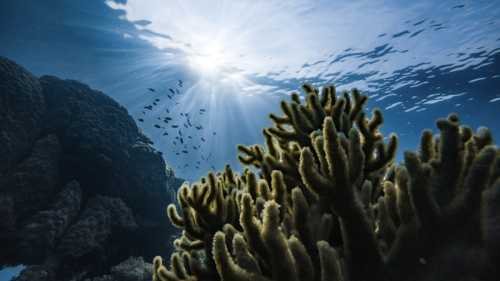
An expedition using the deepest-diving autonomous submersible ever built has discovered a sprawling, thriving ecosystem in a previously unexplored crevice of the Mariana Trench, operating on a completely novel form of chemosynthesis. The community, located nearly 35,000 feet below the ocean surface, consists of bizarre, translucent organisms that derive their energy not from sunlight or known chemical vents, but from the radiolysis of heavy minerals in the trench walls.
Almost all life on Earth is part of a massive food chain that starts with the sun; plants catch sunlight, and animals eat the plants. But deep underground, in the pitch black of the ocean trench, there is no sunlight at all. Previously, we thought life down there survived by eating chemicals from hot underwater volcanoes. These new creatures, however, are like a factory running on nuclear fuel. They eat the energy released when natural radiation splits water molecules apart inside the rocks. It is a completely alien way of living, thriving in a place we thought was a barren desert.
This discovery has profound implications for our understanding of biology and the search for life beyond Earth. If life can sustain itself in the crushing, freezing, pitch-black depths of our own ocean by simply eating the radiation from rocks, it dramatically increases the likelihood that similar life forms could exist in the subsurface oceans of icy moons like Europa or Enceladus. It proves that life is far more resilient, adaptable, and creative than we ever dared to imagine.
Related Articles

The Healthcare Quadruple Bypass: Navigating Price Controls, Workforce Attrition, and Rural Desertification
Aug 22, 2026
The Fractured Laboratory: How Geopolitical Friction is Rewiring Global Science Economics
Aug 19, 2026
Comments (0)
No comments yet. Be the first to share your thoughts!
Want to join the discussion?
Please log in to post a comment.
Login NoworCreate an Account