
Meta Launches Consumer Edition Orion AR Glasses: The Dawn of True Spatial Computing

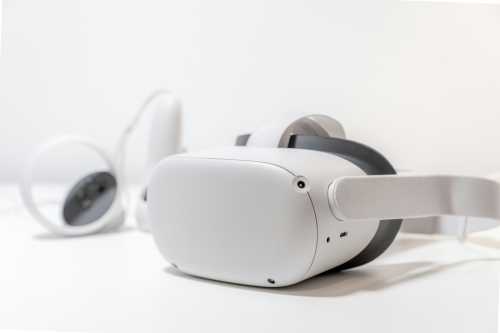
The Holy Grail of Consumer Augmented Reality is Finally Here
In a monumental announcement that fundamentally shifts the trajectory of personal computing, Meta has officially launched the consumer edition of its highly anticipated Orion augmented reality glasses. Priced at a premium but accessible $1,499, the Orion consumer release marks the first time a major tech giant has brought true, wide-field-of-view AR glasses to the mass market. Unlike previous "smart glasses" that merely functioned as audio accessories or simple heads-up displays, the new Orion utilizes breakthrough micro-LED display technology and ultra-thin glass waveguides to overlay high-resolution, full-color digital interfaces directly onto the user's physical environment. The device, which weighs a mere 78 grams, represents a decade of intensive R&D and signals the beginning of the post-smartphone era, where digital information is seamlessly integrated into our physical reality rather than confined to a rectangular screen in our pockets.
ELI5: How Do AR Glasses Put Digital Objects in the Real World?
Imagine you are wearing a pair of sunglasses, but the lenses are actually made of millions of microscopic, transparent mirrors. When you look through them, you see the real world perfectly clearly. But at the same time, a tiny projector hidden in the frame shoots light into these microscopic mirrors, which then bounce that light directly into your eyes. Because the light is focused at the exact same distance as the real world around you, your brain combines the two images. It looks exactly as if a digital hologram is floating in the air in front of you. You can walk around it, look behind it, and interact with it, just like a real physical object. That is the magic of the waveguide displays in the Orion glasses; they trick your brain into seeing digital light as if it were physical matter.
The Neural Wristband: Controlling the Invisible Interface
Perhaps the most revolutionary component of the Orion launch is not the glasses themselves, but the accompanying Neural Wristband. Traditional AR interfaces struggle with input methods; voice commands are awkward in public, and hand tracking fails when your hands are in your pockets or under a desk. Meta’s solution is an electromyography (EMG) wristband that reads the electrical signals traveling from your brain, down your nerves, to your fingertips. By detecting these microscopic neuromuscular signals, the wristband allows users to control the AR interface with sub-millimeter precision using only the slightest twitches of their fingers. You can type on a virtual keyboard, scroll through menus, or click buttons without ever moving your hands more than a fraction of an inch. It is the most natural, intuitive input method ever devised for spatial computing, effectively turning your nervous system into a wireless mouse.
On-Device AI and the Spatial Operating System
Under the hood, the Orion glasses are powered by a custom-designed Meta Silicon chip that handles both the intense rendering requirements of spatial computing and the processing of local AI models. Because the glasses are tethered wirelessly to a pocket-sized compute puck (or a paired smartphone), the thermal and battery constraints of the glasses themselves are minimized. The integrated AI assistant, Meta AI Spatial, understands the context of your physical environment. If you look at a broken bicycle chain, the AI recognizes the object and instantly overlays a step-by-step 3D repair tutorial directly onto the bike. This contextual awareness, powered by multimodal AI running locally on the device, ensures that the AR experience is not just a gimmick, but a profoundly useful tool for navigation, translation, and real-time problem solving.
Market Disruption and the Developer Ecosystem
The launch of the consumer Orion is expected to send shockwaves through the tech industry, forcing competitors like Apple and Google to accelerate their own AR roadmaps. Meta has also announced a $500 million developer fund to incentivize the creation of "spatial apps." Unlike traditional mobile apps, these spatial experiences are anchored to physical locations or objects. Imagine leaving a virtual review on a restaurant's actual front door, or playing a board game on your physical kitchen table where the pieces are digital holograms. As developers rush to build this new ecosystem, the Orion glasses are poised to become the defining gadget of the late 2020s, fundamentally altering how we interact with information and each other.
The future is here. Meta Orion consumer AR glasses are officially available. Experience true spatial computing with the Neural Wristband. Watch the keynote
— Meta (@Meta) June 19, 2026
Related Articles

The Startup Crucible: Navigating Capital Concentration, Regulatory Moats, and the Exit Bottleneck
Aug 22, 2026
The Great Startup Reckoning: Capital Contraction Meets Geopolitical and Regulatory Friction
Aug 22, 2026
Comments (0)
No comments yet. Be the first to share your thoughts!
Want to join the discussion?
Please log in to post a comment.
Login NoworCreate an Account