
Microsoft Acquires Liquid Cooling Pioneer 'ThermalCore' in $18B Deal to Secure AI Data Center Infrastructure

Securing the Physical Foundation of the AI Supercycle
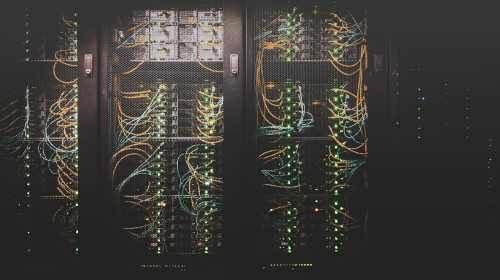
In a move that underscores the physical constraints of the artificial intelligence boom, Microsoft has announced a definitive agreement to acquire ThermalCore Technologies, a leading innovator in direct-to-chip liquid cooling systems, for $18 billion in cash and stock. The acquisition, reported first by Bloomberg, represents the largest hardware infrastructure purchase in Microsoft’s history, bypassing traditional semiconductor suppliers to secure the critical thermal management technology required to run next-generation AI accelerators. As Nvidia’s Rubin GPUs and custom ASICs push power densities beyond 150 kilowatts per rack, traditional air cooling has become physically obsolete, making advanced liquid cooling a mandatory prerequisite for data center operations.
ThermalCore’s proprietary two-phase immersion cooling technology allows data centers to operate at a Power Usage Effectiveness (PUE) of 1.03, compared to the industry standard of 1.25 for air-cooled facilities. This efficiency gain is not merely an environmental metric; it is a fundamental economic driver. By reducing the parasitic power load required for cooling, Microsoft can allocate a higher percentage of its gigawatt-scale power budgets directly to compute operations. The acquisition includes ThermalCore’s entire patent portfolio, its manufacturing facilities in Austin, Texas, and its exclusive supply agreements with major cold-plate manufacturers in Asia. This vertical integration ensures that Microsoft Azure will have priority access to the cooling infrastructure required to deploy the millions of AI chips it has on order through 2028.
Market Reaction and the Hyperscaler Arms Race
The financial markets reacted swiftly to the announcement, with Microsoft shares rising 4% in pre-market trading as investors recognized the strategic necessity of the deal. Conversely, pure-play data center cooling stocks experienced a mixed reaction; while competitors like Vertiv and Schneider Electric saw their valuations surge on acquisition speculation, smaller, pre-revenue startups in the thermal management space faced sell-offs as Microsoft’s deep pockets effectively validated the technology while simultaneously cornering the market on the best engineering talent. Analysts at Goldman Sachs note that this acquisition marks a shift in the AI infrastructure war: the bottleneck is no longer just the silicon chips, but the physical ability to keep those chips from melting under their own computational load.
For Microsoft’s cloud competitors, Amazon Web Services (AWS) and Google Cloud, this deal is a clarion call to accelerate their own infrastructure consolidation strategies. AWS is reportedly in advanced talks to acquire a major electrical transformer manufacturer, while Google is exploring joint ventures with nuclear energy startups to secure baseload power. The $18 billion price tag for ThermalCore also sets a new valuation benchmark for physical AI infrastructure assets. As the hyperscalers race to build out the physical footprint of the AI economy, the cost of capital and the strategic value of specialized engineering firms will continue to escalate, fundamentally altering the M&A landscape in the technology sector for the remainder of the decade.


Comments (0)
No comments yet. Be the first to share your thoughts!
Want to join the discussion?
Please log in to post a comment.
Login NoworCreate an Account