
NASA Announces Artemis III Crew as New Discovery Challenges Planet Nine Hidden Planet Theory

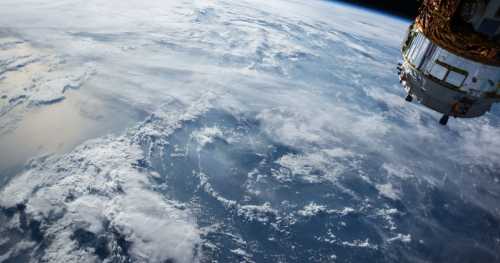
The month of June 2026 has witnessed two monumental, yet vastly different, milestones in the exploration of our cosmic neighborhood, highlighting the dual nature of modern space science: the human drive to return to the Moon and the relentless robotic probe into the deepest, darkest edges of the solar system. On June 9, 2026, NASA officially announced the highly anticipated Artemis III crew, the four astronauts tasked with executing the first human lunar landing since 1972 and the first-ever landing on the lunar south pole www.esa.int . This announcement marks the culmination of years of rigorous training, hardware development, and mission planning, bringing the Artemis program's goal of establishing a sustainable lunar presence closer to reality than ever before. Simultaneously, in a development that has sent shockwaves through the planetary science community, a new discovery has caused the Planet Nine mystery to deepen, fundamentally challenging the long-held hidden planet theory that has dominated astronomical discourse for the past decade www.sciencedaily.com . These twin stories—one of human ambition and one of celestial mechanics—define the current frontier of space exploration, demonstrating that as we prepare to walk on the Moon again, our understanding of the solar system's outermost reaches continues to evolve in unexpected ways.
The ELI5 Breakdown: Moon Walkers and the Ghost Planet
Let's break down these two huge space stories. First, NASA just picked the four brave astronauts who are going to fly to the Moon and land on its south pole for the Artemis III mission. This is a massive deal because no human has been to the Moon in over 50 years! They are going to look for water ice hidden in the deep, permanent shadows of lunar craters, which could be used to make drinking water and rocket fuel for future trips to Mars. Second, out at the very edge of our solar system, where it's incredibly cold and dark, astronomers have been looking at the orbits of tiny, icy rocks. For years, they thought a giant, hidden "Planet Nine" was pulling on these rocks, making their orbits look weird. But a brand-new discovery suggests that these icy rocks might actually just be pulling on each other! This means the ghost planet we've been searching for might not exist after all, and the edge of our solar system is a lot more crowded and interactive than we thought.
Deep Technical Dive: Artemis III and the Lunar South Pole Challenge
The selection of the Artemis III crew is the final human element in a vastly complex, multi-billion-dollar logistical equation. The mission profile for Artemis III is exponentially more complex than the Apollo landings. The crew will launch aboard the Orion spacecraft, powered by the Space Launch System (SLS) Block 1 rocket, before docking with the SpaceX Human Landing System (HLS) in low lunar orbit. The HLS will then perform a translunar injection burn to descend to the lunar south pole, specifically targeting the rim of the Shackleton crater. This region is of immense scientific and strategic interest due to the presence of permanently shadowed regions (PSRs) where temperatures remain below 40 Kelvin, allowing water ice to remain stable over geological timescales. The technical challenges of landing in this terrain are formidable. The south pole is characterized by extreme topography, with steep crater walls and deep, pitch-black shadows that complicate the terrain-relative navigation (TRN) systems of the HLS. Unlike the flat maria of the Apollo sites, the south pole requires precise, autonomous hazard avoidance to ensure a safe touchdown on a sloped, regolith-covered surface. Furthermore, the crew's surface stay of approximately one week will involve multiple extravehicular activities (EVAs) utilizing the advanced xEMU spacesuits, which are specifically designed to handle the highly abrasive, electrostatically charged lunar dust. The primary scientific objective is the in-situ resource utilization (ISRU) prospecting, where the crew will deploy instruments to quantify the concentration and depth of the water ice, validating the resource models necessary for the future Artemis Base Camp.
The Planet Nine Paradigm Shift: Self-Gravity vs. The Hidden Perturber
While Artemis focuses on the inner solar system, a profound shift is occurring in our understanding of the trans-Neptunian region. For nearly a decade, the "Planet Nine" hypothesis has been the leading explanation for the observed orbital clustering of extreme Kuiper Belt Objects (ETNOs). The theory posited that a massive, undiscovered planet, roughly five to ten times the mass of Earth, orbiting at a distance of 400 to 800 astronomical units (AU), was gravitationally shepherding these distant icy bodies into their peculiar, aligned orbits www.sciencedaily.com . However, the new discovery challenging this theory relies on high-fidelity N-body simulations and the latest data from the Vera C. Rubin Observatory's Legacy Survey of Space and Time (LSST). The research demonstrates that the cumulative self-gravity of the Kuiper Belt itself, if the total mass of the belt is significantly higher than previously estimated, can reproduce the observed orbital clustering without the need for a massive external perturber. This is a classic application of secular perturbation theory, where the long-term gravitational interactions between the numerous, smaller bodies in the disk cause their orbital nodes and arguments of perihelion to librate (oscillate around a fixed value). The new models show that as the ETNOs interact and exchange angular momentum, they can spontaneously self-organize into the clustered configurations previously attributed to Planet Nine. This does not entirely rule out the existence of a distant planet, but it drastically reduces the statistical significance of the anomaly, suggesting that the "ghost" in the data may simply be the collective gravitational whisper of the Kuiper Belt itself.
Implications for Planetary Formation and Deep Space Exploration
The potential dissolution of the Planet Nine hypothesis has profound implications for our models of solar system formation. If the outer solar system is not dominated by a massive, scattered planet, it suggests that the protoplanetary disk from which the solar system formed was less massive or dynamically different than previously thought. It also implies that the Kuiper Belt is a more dynamically active, self-gravitating environment, which affects our understanding of how volatile ices and organic materials were distributed in the early solar nebula. Conversely, the Artemis III mission represents the practical application of our understanding of planetary bodies. By successfully landing on the lunar south pole and prospecting for water ice, NASA will validate the ISRU technologies that are critical for the next giant leap: human missions to Mars. The knowledge gained from the regolith mechanics and thermal environments of the south pole will directly inform the design of the habitats and rovers needed for the Martian surface. Together, these stories illustrate the full spectrum of space science: the meticulous, theoretical work of untangling the gravitational history of our solar system's edge, and the bold, physical endeavor of sending humans to walk on the surface of our closest celestial neighbor.
Space Science Insight: June 2026 marks a fascinating dichotomy in space exploration. As NASA finalizes the crew for the technically daunting Artemis III lunar south pole landing, the planetary science community is simultaneously re-evaluating the very edges of our solar system. The potential debunking of the Planet Nine hypothesis in favor of Kuiper Belt self-gravity reminds us that the universe often favors complex, collective interactions over the presence of a single, hidden monster.
Key Developments in Space Exploration and Planetary Science:
- Artemis III Crew Selection: NASA announced the four astronauts who will execute the first human landing on the lunar south pole, targeting the Shackleton crater rim for ISRU prospecting.
- Lunar South Pole Challenges: The mission requires advanced terrain-relative navigation and autonomous hazard avoidance to safely land in the extreme, shadowed topography of the lunar pole.
- Planet Nine Theory Challenged: New discoveries and high-fidelity N-body simulations suggest that the orbital clustering of ETNOs is caused by the self-gravity of the Kuiper Belt, not a hidden massive planet.
- Secular Perturbation Dynamics: The revised models demonstrate that the cumulative angular momentum exchange among Kuiper Belt Objects can spontaneously reproduce the observed orbital anomalies.
- Solar System Formation: The shift away from the Planet Nine hypothesis necessitates a revision of the mass and dynamical history of the early protoplanetary disk.
For official biographies of the Artemis III crew and detailed mission architecture, visit the NASA Artemis III Mission Page. To follow the latest research on Kuiper Belt dynamics and the Planet Nine debate, explore the preprints at arXiv Earth and Planetary Astrophysics. The final frontier is both within our reach and deeper than we ever imagined.
Related Articles

The Healthcare Quadruple Bypass: Navigating Price Controls, Workforce Attrition, and Rural Desertification
Aug 22, 2026
The Fractured Laboratory: How Geopolitical Friction is Rewiring Global Science Economics
Aug 19, 2026
Comments (0)
No comments yet. Be the first to share your thoughts!
Want to join the discussion?
Please log in to post a comment.
Login NoworCreate an Account