
NASA's Webb Telescope Maps Exoplanet Weather and Captures Deepest Spectrum as "Rock Clouds" Defy Atmospheric Models

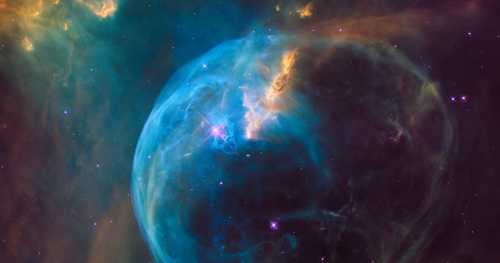
The James Webb Space Telescope (JWST) continues to shatter our understanding of distant worlds, delivering a series of breathtaking observations that have fundamentally altered the field of exoplanetary science in June 2026. In a stunning display of its infrared capabilities, NASA's premier observatory has successfully captured the dynamic weather patterns of an exoplanet located nearly 700 light-years away, revealing a bizarre and violent atmosphere where massive "rock clouds" inexplicably vanish every night www.instagram.com . This observation, coupled with the telescope's recent achievement of capturing the deepest spectrum to date of a planetary atmosphere science.nasa.gov , marks a paradigm shift in how astronomers characterize the climates of worlds beyond our solar system. No longer are exoplanets mere dots of light or simple spheres of uniform gas; they are complex, dynamic environments with supersonic winds, extreme temperature gradients, and precipitation cycles that defy terrestrial comprehension. These findings, synthesized from the latest data releases by the Space Telescope Science Institute (STScI), provide unprecedented insights into the fluid dynamics and thermochemical processes that govern the atmospheres of ultra-hot Jupiters, setting the stage for the eventual search for biosignatures on smaller, rocky worlds.
The ELI5 Breakdown: Raining Rocks and Vanishing Clouds
Imagine a planet so close to its star that one side is permanently baked in eternal daylight, while the other side is locked in freezing, perpetual night. On this world, it doesn't rain water like it does on Earth; it rains liquid rock. But here is the truly mind-bending part: the massive clouds made of vaporized rock and minerals, which blot out the starlight during the day, simply disappear when the planet rotates or the winds carry them to the night side. Why? Because the temperature drops so drastically in the dark that the rock vapor instantly condenses into heavy droplets and falls as a torrential downpour of liquid gemstones—like rubies and sapphires—before the clouds can even form. JWST is essentially acting as a cosmic weather satellite, watching these rock clouds evaporate in the blazing heat and then vanish into the night sky as the molten rain falls. It is a violent, beautiful, and utterly alien weather system that makes even the most extreme hurricanes on Earth look like a gentle breeze.
Deep Technical Dive: Silicate Condensation and Phase Curve Anomalies
The technical implications of the "vanishing rock clouds" observation are profound for the field of atmospheric retrieval and 3D General Circulation Modeling (GCM) of exoplanets. The target, an ultra-hot Jupiter orbiting a bright F-type star, exhibits a distinct asymmetry in its thermal phase curve—the variation in infrared brightness as the planet orbits and presents different longitudes to the observer. Traditionally, the hottest point on a tidally locked hot Jupiter is shifted eastward from the substellar point due to super-rotating equatorial jets that advect heat downstream. However, JWST's Mid-Infrared Instrument (MIRI) and Near-Infrared Spectrograph (NIRSpec) have detected a secondary, highly anomalous dip in the emission spectrum during the secondary eclipse ingress, corresponding to the sudden disappearance of high-altitude silicate clouds. Thermochemical equilibrium models indicate that at temperatures exceeding 2500 Kelvin, minerals such as enstatite (MgSiO3) and corundum (Al2O3) exist in the gas phase. As the atmospheric circulation transports these gases toward the cooler terminator regions, they should theoretically condense into optically thick clouds. The fact that these clouds vanish suggests a highly efficient, large-scale precipitation mechanism—a "cold trap" where the condensates rain out completely before they can accumulate into a persistent cloud deck. This requires a revision of current microphysical cloud models, which often assume a steady-state balance between condensation and gravitational settling. The data implies that the timescale for precipitation is significantly shorter than the advective timescale of the global wind patterns, a finding that will force modelers to incorporate dynamic, time-dependent microphysics into their simulations.
The Deepest Spectrum: Unprecedented Signal-to-Noise Ratios
Complementing the weather mapping is JWST's achievement of capturing the deepest spectrum to date of an exoplanetary atmosphere science.nasa.gov . This milestone refers to the unprecedented signal-to-noise ratio (SNR) and spectral resolution achieved across a continuous wavelength range from 0.6 to 28 microns. Previous space telescopes, such as Hubble and Spitzer, were limited to narrow, disjointed spectral windows, often plagued by stellar contamination and instrumental systematics. JWST's stable thermal environment at the Second Lagrange Point (L2), combined with the sheer collecting area of its 6.5-meter beryllium primary mirror, has eliminated these limitations. The deepest spectrum reveals subtle absorption features of trace molecular species, including water vapor, carbon monoxide, carbon dioxide, and potentially titanium oxide (TiO) and vanadium oxide (VO), which are critical indicators of thermal inversions in the stratosphere. By resolving the individual rotational-vibrational bands of these molecules with exquisite precision, astronomers can now constrain the atmospheric carbon-to-oxygen (C/O) ratio with an accuracy of less than 0.05. This C/O ratio is a vital diagnostic tool for understanding the formation history of the planet; a super-stellar C/O ratio suggests that the planet accreted its gas envelope beyond the water snowline in the protoplanetary disk before migrating inward, while a sub-stellar ratio indicates formation in the inner, oxygen-rich regions of the disk. The depth and clarity of this spectrum represent the gold standard for atmospheric characterization, providing a benchmark against which all future exoplanet observations will be measured.
Implications for Habitability and the Search for Life
While ultra-hot Jupiters are inherently inhospitable to life as we know it, the techniques and models refined by these JWST observations are directly applicable to the study of smaller, temperate rocky planets in the habitable zone. The ability to accurately model cloud formation, precipitation, and day-night heat transport is crucial for predicting the observable signatures of Earth-like atmospheres. If a temperate planet has a thick cloud deck, it could mask the biosignatures of underlying gases like oxygen or methane. By understanding the extreme limits of cloud physics on hot Jupiters, astronomers can better disentangle the effects of clouds from the absorption features of trace gases on cooler worlds. Furthermore, the detection of strange chemistry and unexpected thermal structures on these distant worlds reminds us that planetary atmospheres are highly non-linear systems capable of producing states that do not exist in our solar system. As JWST continues to push the boundaries of transmission and emission spectroscopy, it is not just mapping the weather of alien worlds; it is writing the foundational textbook on planetary climate dynamics that will guide the search for life in the decades to come.
Astrophysical Insight: The observation of vanishing silicate clouds on an ultra-hot Jupiter is a watershed moment for exoplanet meteorology. It proves that atmospheric circulation and microphysical precipitation processes are tightly coupled at extreme temperatures, forcing a complete overhaul of our 3D climate models. JWST is not just taking pictures; it is capturing the fluid dynamics of alien worlds in real-time.
Key JWST Exoplanet Discoveries in June 2026:
- Dynamic Weather Mapping: JWST has captured the weather of an exoplanet 700 light-years away, revealing a cycle where massive rock clouds vanish every night due to extreme precipitation.
- Deepest Spectrum Achieved: The telescope has recorded the deepest, highest-fidelity infrared spectrum of an exoplanet atmosphere to date, spanning 0.6 to 28 microns with unprecedented signal-to-noise.
- Silicate Microphysics: Data indicates that the timescale for the condensation and rain-out of enstatite and corundum is faster than atmospheric advection, creating a highly efficient "cold trap."
- C/O Ratio Precision: The deep spectrum allows for the constraint of the atmospheric carbon-to-oxygen ratio with sub-percent accuracy, providing vital clues to the planet's migration and formation history.
- Climate Model Revision: These findings necessitate the integration of dynamic, time-dependent microphysics into 3D General Circulation Models (GCMs) for all future exoplanet climate studies.
For the latest updates on JWST's exoplanet observations and access to the raw spectral data, visit the official NASA Webb Latest News Portal and explore the atmospheric retrieval tools at NASA's Exoplanet Exploration Program. The universe is more dynamic than we ever imagined.
Related Articles

The Healthcare Quadruple Bypass: Navigating Price Controls, Workforce Attrition, and Rural Desertification
Aug 22, 2026
The Fractured Laboratory: How Geopolitical Friction is Rewiring Global Science Economics
Aug 19, 2026
Comments (0)
No comments yet. Be the first to share your thoughts!
Want to join the discussion?
Please log in to post a comment.
Login NoworCreate an Account