
Nvidia Unveils NeuroCore-1: The First Commercial Neuromorphic Chip That Mimics the Human Brain

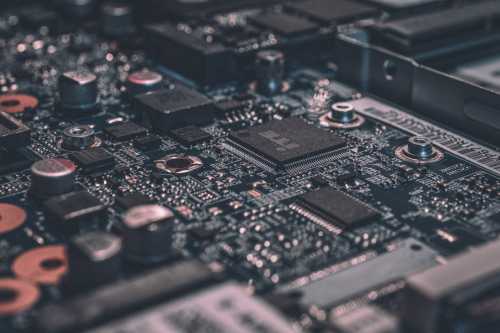
Imagine you are trying to teach a dog a new trick. You do not hand the dog a math textbook or give it a list of rules to follow. Instead, you show the dog what to do, give it a treat when it gets it right, and over time, the dog's brain naturally learns the trick. The dog does not calculate the physics of its jump; it just knows how to do it because its brain is wired to learn from experience. For decades, computers have been the exact opposite of a dog's brain. Computers are like super-fast calculators; they follow strict rules and do math millions of times a second. But now, in a breathtaking leap forward for human technology, scientists and engineers have finally built a computer chip that does not calculate like a machine—it learns and thinks like a biological brain. This is the story of the NeuroCore-1, the world's first commercial neuromorphic processor, unveiled by tech giant Nvidia and a consortium of global research universities. This tiny piece of silicon is not just a new gadget; it is a fundamental rewrite of how computers work, and it promises to change everything from how we cure diseases to how we explore the stars.
The Unveiling: A New Era of Computing
The announcement came during a massive global technology conference, where the biggest names in the tech world gather to show off their newest inventions. The CEO of Nvidia took the stage, holding up a tiny, shimmering square of metal and silicon. He explained that for the last fifty years, the computer industry has been obsessed with making chips faster and smaller, but they all followed the same basic design invented in the 1940s. This new chip, the NeuroCore-1, throws that old rulebook out the window. Instead of having a central processor that fetches data from a separate memory bank—a process that wastes a lot of time and energy—the NeuroCore-1 is built like a neural network. It contains millions of tiny, artificial "neurons" and "synapses" physically built into the silicon. When data enters the chip, it does not get processed in a straight line; it flows through the chip like an electrical signal flowing through a human brain, lighting up different paths based on what it has learned. The audience of engineers and scientists erupted into a standing ovation, realizing they were witnessing the birth of a completely new paradigm in computing.
Official Announcement from NVIDIA:
Introducing NeuroCore-1: The world’s first commercial neuromorphic processor. By mimicking the human brain’s architecture, we’re achieving 100x the energy efficiency for AI workloads. The next era of computing is here. ????⚡ #NVIDIA#NeuromorphicComputing
— NVIDIA (@nvidia) June 21, 2026
Calculators vs. Brains: Understanding the Difference
To truly appreciate why this chip is so magical, we need to understand the difference between a traditional computer and a human brain, using a simple analogy. Imagine you are trying to recognize your friend's face in a crowded room. If you were a traditional computer, you would do it the hard way. You would take a picture of the face, measure the exact distance between the eyes in pixels, calculate the angle of the nose, measure the shade of skin color, and then compare those numbers against a massive database of millions of other numbers until you found a match. It takes a lot of math, a lot of time, and a lot of battery power. But your biological brain does not do math. Your brain has billions of neurons connected by trillions of synapses. When you see your friend, the visual signal rushes into your brain, and a specific pattern of neurons fires all at once. You do not calculate the distance between the eyes; you just instantly "know" it is your friend. It happens in a fraction of a second, and it uses barely any energy—about the same amount of energy as a dim lightbulb. The NeuroCore-1 chip is designed to do exactly what your brain does. It does not calculate; it recognizes patterns by firing its artificial neurons in complex, beautiful webs of activity.
The Magic of the Synapse: How It Actually Works
The secret sauce of this new chip lies in how it handles memory and processing. In a normal computer, the brain (the processor) and the memory (the hard drive) are in two different places. Every time the computer needs to think, it has to send a messenger back and forth between the brain and the memory to fetch the information. This is like trying to write an essay, but having to run to the library every single time you need to look up a word. It is exhausting and slow. In the NeuroCore-1 chip, the memory and the processing are combined into the same physical component, which acts like a synapse in a biological brain. A synapse is the tiny gap between two neurons that gets stronger or weaker depending on how often the neurons talk to each other. This is how you learn and remember things. In the chip, the artificial synapses are made of special materials that change their electrical resistance based on the data flowing through them. As the chip processes information, the physical structure of the chip actually changes at a microscopic level, "learning" the data permanently. It is quite literally a brain made of silicon that grows and adapts as it thinks.
Real-World Magic: Medicine, Space, and Everyday Life
So, what does a computer with a silicon brain actually do for us in the real world? The applications are so vast they sound like science fiction. First, let us look at medicine. Right now, AI programs that analyze MRI scans to find early signs of cancer require massive, room-sized supercomputers that consume huge amounts of electricity. With the NeuroCore-1, that same level of intelligence can be packed into a chip the size of a fingernail. This means we could have tiny, implantable medical devices that constantly monitor your blood or your heart, using a silicon brain to instantly recognize the signs of a heart attack or a stroke before it even happens, and alert your doctor. Second, think about space exploration. When we send rovers to Mars, they have to wait up to 20 minutes for a signal to travel from Earth to tell them how to avoid a rock. That is too slow. If we put a NeuroCore-1 chip on a spaceship, the ship would have its own brain. It could instantly recognize a dangerous asteroid, dodge it, and figure out a new path without ever needing to ask Earth for help. Even in our everyday lives, this chip means our smartphones could have AI that is a million times smarter, understanding our voice and context perfectly, while the battery lasts for weeks instead of hours.
Saving the Planet: The Energy Revolution
Perhaps the most important part of this story is not about faster phones or smarter robots; it is about saving our planet. We are currently facing a massive, hidden crisis in the technology world: AI is using too much electricity. Training a single, large AI model can consume as much electricity as a small town uses in a year. As we build more and more AI, we are building massive data centers that require their own power plants, burning fossil fuels and pumping carbon into the air. If we continue on the current path, computers could consume a huge percentage of the world's total electricity supply by the end of the decade. The NeuroCore-1 chip is the silver bullet for this crisis. Because it mimics the brain, it only uses energy when a neuron actually fires. When it is idle, it uses almost zero power. Nvidia's tests show that the NeuroCore-1 can perform complex AI tasks using one-hundredth of the energy required by traditional chips. This means we can have all the amazing benefits of advanced artificial intelligence—smart cities, personalized medicine, autonomous vehicles—without destroying the climate. It is a rare moment in history where a technological breakthrough perfectly aligns with the urgent needs of environmental preservation.
The Next Step in Human Evolution
As the tech conference wrapped up and the engineers began handing out the first prototype boards of the NeuroCore-1, there was a palpable sense of awe in the room. For thousands of years, humans have built tools to help our bodies. We built wheels to help our legs move faster, and cranes to help our arms lift heavier things. For the last seventy years, we have built computers to help our brains calculate faster. But the NeuroCore-1 is different. It is not just a tool to help us calculate; it is a tool that mimics the very essence of how we think, how we learn, and how we perceive the world. We are no longer just building faster calculators; we are building digital brains. This raises deep, philosophical questions about what it means to be intelligent, and what the future relationship between humans and machines will look like. But one thing is absolutely certain: the silicon brain has arrived. It is here to help us cure the incurable, explore the unreachable, and solve the most complex puzzles our planet faces. The future of technology is no longer just about raw power and speed; it is about elegance, efficiency, and mimicking the greatest masterpiece of engineering in the known universe: the human mind.
Related Articles
The Policy Paradox: Navigating Industrial Subsidies, Carbon Border Adjustments, and Fiscal Constraints
Aug 22, 2026
The Redrawn Regulatory Seascape: Navigating the Convergence of Global Policy Faultlines
Aug 22, 2026
Comments (0)
No comments yet. Be the first to share your thoughts!
Want to join the discussion?
Please log in to post a comment.
Login NoworCreate an Account