
OrbitalLogistics Secures $800M to Build Autonomous Orbital Refueling Depots Using In-Space 3D Printing

Architecting the Supply Chain of the Cislunar Economy
The commercialization of deep space has reached a critical infrastructure milestone as space logistics startup OrbitalLogistics has secured an $800 million financing package, comprising both equity and venture debt, to construct the first commercial autonomous propellant depots in Low Earth Orbit (LEO). As reported by SpaceNews, the funding round was anchored by Lux Capital and the Space Force’s In-Q-Tel, recognizing the strategic necessity of in-space refueling for both national security and commercial lunar operations. The startup’s unique value proposition lies in its use of advanced in-space 3D printing to manufacture the delicate cryogenic fluid handling components directly on orbit, bypassing the extreme costs and launch volume constraints of sending fully assembled, Earth-manufactured hardware into space.
The technical challenge of storing and transferring cryogenic propellants like liquid oxygen and liquid methane in the microgravity and high-radiation environment of space is immense. Traditional metal valves and pumps are heavy, expensive to launch, and prone to failure due to thermal cycling. OrbitalLogistics has developed a proprietary "OrbitalForge" system, a robotic manufacturing module that utilizes stereolithography with advanced, radiation-hardened polymer-ceramic composites to print complex, monolithic fluid manifolds directly on the depot’s chassis. This in-situ manufacturing capability allows the company to iterate and repair hardware designs on the fly, drastically reducing the mass requirements per launch. The depots will be serviced by a fleet of autonomous "tug" vehicles that harvest water ice from lunar polar craters, electrolyze it into hydrogen and oxygen, and liquefy it using solar-powered cryocoolers, creating a closed-loop, off-Earth supply chain.
Enabling the Lunar Economy and Deep Space Exploration
The establishment of orbital propellant depots is the missing link in the architecture of deep space exploration. Rockets launched from Earth must carry all the fuel required to reach their destination, a constraint known as the tyranny of the rocket equation, which severely limits payload capacity. By refueling in orbit, spacecraft can launch with maximum payload and minimum fuel, topping off their tanks once they reach the safety of space. This capability is absolutely critical for NASA’s Artemis program, which requires the massive Starship lunar lander to be refueled in LEO before it can descend to the lunar surface. OrbitalLogistics has already secured multi-year, multi-billion dollar off-take agreements with both NASA and SpaceX to provide the initial propellant volume required to validate the depot’s operations.
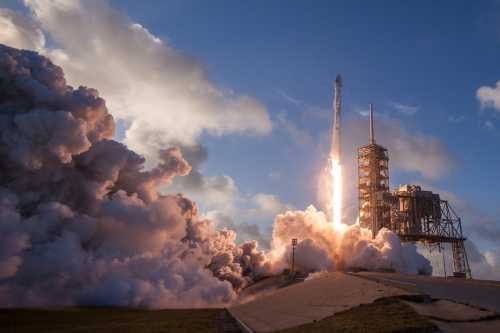
Beyond government contracts, the commercial market for orbital logistics is poised for exponential growth. Satellite operators are increasingly designing spacecraft with electric propulsion, which is highly fuel-efficient but provides low thrust, requiring months to reach geostationary orbit. Orbital depots will allow these satellites to be launched into lower, cheaper orbits and then "topped off" with chemical propellant for rapid maneuvering and station-keeping. As the first OrbitalForge module prepares for launch aboard a Falcon Heavy in Q1 2027, OrbitalLogistics is not just building a gas station in space; it is laying the foundational infrastructure for a permanent, multi-planetary human civilization, transforming space from a destination into a connected, accessible economic zone.
Related Articles

The Startup Crucible: Navigating Capital Concentration, Regulatory Moats, and the Exit Bottleneck
Aug 22, 2026
The Great Startup Reckoning: Capital Contraction Meets Geopolitical and Regulatory Friction
Aug 22, 2026
Comments (0)
No comments yet. Be the first to share your thoughts!
Want to join the discussion?
Please log in to post a comment.
Login NoworCreate an Account