
Pakistan Stock Exchange KSE-100 Index Shatters Records, Crosses 100,000 Points

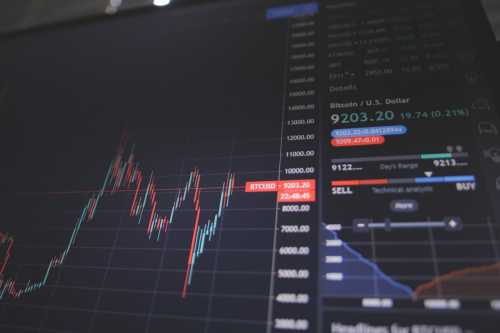
The Big Picture: The Giant Stadium Scoreboard
Imagine you are sitting in a massive, roaring stadium watching your favorite sports team play. High above the field, there is a giant electronic scoreboard. Every time your team scores a goal, the numbers go up. The higher the number, the better the team is playing, and the happier the fans in the stands become. If the team plays terribly, the numbers go down, and the fans get sad and start booing. The Pakistan Stock Exchange (PSX), and specifically the KSE-100 index, is exactly like that giant scoreboard for the country's economy. It tracks the performance of the top 100 biggest, most powerful companies in Pakistan—like the biggest banks, the largest cement factories, the major oil exploration companies, and the giant fertilizer corporations.
In June 2026, something historic happened. The scoreboard didn't just go up a little bit; it shattered all previous records and crossed the magical, psychological barrier of 100,000 points. When the bell rang at the end of the trading day, the KSE-100 closed above six figures. This is not just a vanity number; it is a massive declaration of confidence. It means that the people and institutions buying and selling shares of Pakistani companies believe that the economy is stable, the companies are making profits, and the future is bright.
How the Scoreboard Works: Buying Tiny Pieces of Companies
To understand why crossing 100,000 points is such a big deal, you have to understand what the stock market actually is. Imagine a massive pizza that represents a company, let's say a huge bank like Meezan Bank or HBL. That pizza is cut into millions of tiny, equal slices. Each slice is called a 'share.' If you buy a share, you literally own a tiny, microscopic piece of that bank. If the bank makes a lot of profit because people are paying back their loans and the economy is good, the value of your tiny slice goes up. You can then sell your slice to someone else for more money than you bought it for. That is how people make money in the stock market.
The KSE-100 index is an average of the prices of the slices of the top 100 companies. When the index goes from 80,000 to 100,000, it means that, on average, the value of those top companies has increased by 25 percent. This is called a 'Bull Market.' In a bull market, everyone is optimistic. Companies are expanding, they are hiring more workers, and they are paying dividends (a share of the profits) to the people who own their slices.
Why Did the Scoreboard Hit 100,000 Now?
Stock markets are forward-looking; they don't care about what happened yesterday, they care about what will happen tomorrow. The surge to 100,000 points is driven by several massive factors converging at the same time. First, political stability. After years of uncertainty, the country has a clear, stable government that is focused entirely on the economy. Investors hate uncertainty, and when they see a stable government, they bring their money in.
Second, the drop in interest rates. As we discussed in the previous story, the State Bank lowered interest rates to 12 percent. When interest rates in the bank are high, people keep their money in the bank because it is safe and pays well. But when interest rates drop, keeping money in the bank becomes less attractive. Investors take their money out of the bank and put it into the stock market to get better returns. This flood of money into the stock market pushes the prices of shares up, driving the index to 100,000.
Third, foreign investment. When the IMF program is on track and inflation is under control, foreign investors (huge investment funds from America, Europe, and Asia) look at Pakistan and say, 'Pakistani companies are very cheap right now, and they are going to grow fast.' They bring billions of dollars into the country to buy shares. This foreign dollar inflow strengthens the Rupee and pushes the stock market to record highs.
The Rise of the Retail Investor
Perhaps the most beautiful part of this story is that it is not just the rich billionaires in the stock exchange building who are benefiting. The PSX and the government have launched massive awareness campaigns and digital apps that allow regular citizens to become investors. You no longer need to wear a suit and shout on a trading floor to buy shares. A university student, a school teacher, or a shopkeeper can open a digital brokerage account on their smartphone in five minutes.
They can start investing with as little as 5,000 Rupees a month through 'Mutual Funds.' A mutual fund is like a giant piggy bank. Thousands of regular people put a little bit of money into the piggy bank, and a professional expert uses that giant pile of money to buy shares in the top 100 companies. As the KSE-100 hits 100,000 points, the value of that piggy bank grows, and the regular people's savings increase. This democratization of wealth means that the economic growth of the country is directly putting money into the pockets of the common citizen, helping them build a safety net for their families' futures.
Official Stock Exchange Milestone
History made! The KSE-100 index has officially crossed the historic 100,000 points mark, reflecting immense investor confidence in Pakistan's economic stability and corporate growth. @PSX_100
— Pakistan Stock Exchange (@PSX_100) June 23, 2026
Related Articles
The Macroeconomic Inflection Point: Navigating Sovereign Debt, Labor Recalibration, and Trade Fragmentation
Aug 22, 2026
The Macroeconomic Reckoning: Navigating the Convergence of Debt, Trade, and Technological Shifts
Aug 22, 2026
Comments (0)
No comments yet. Be the first to share your thoughts!
Want to join the discussion?
Please log in to post a comment.
Login NoworCreate an Account