
Pakistan Stock Market (KSE-100) Plunges 907 Points Amid Growing Policy Rate Fears

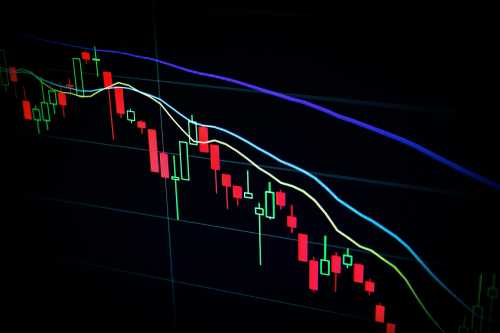
The Giant Supermarket of Companies
Imagine a giant supermarket, but instead of buying apples, milk, and bread, people are buying tiny pieces of big companies. This supermarket is called the Pakistan Stock Exchange (PSX), and the main scoreboard that tells us how well the supermarket is doing is called the KSE-100 Index. When the KSE-100 goes up, it means people are happily buying shares, businesses are making money, and the country's economy is feeling strong. But when the KSE-100 goes down, it means people are scared, they are selling their shares, and everyone is worried about the future tradingeconomics.com .
Recently, the KSE-100 took a massive tumble, plunging by 907 points in a single day. This was not just a small dip; it was the third consecutive day of losses, leaving investors feeling very nervous www.facebook.com . To understand why this happened, we need to talk about something called the "policy rate," which is basically the price of money.
What is the Policy Rate and Why is it Scaring Investors?
Let us use a very simple analogy. Imagine you have $100. You have two choices: you can either give it to your friend to start a lemonade stand, or you can put it in a super-safe bank vault. If your friend promises to give you $110 back next year, you might take the risk. But what if the bank suddenly says, "If you put your $100 in our vault, we will guarantee to give you $120 back next year, zero risk!" What would you do? You would immediately take your money back from your friend and put it in the bank.
This is exactly what happens in the stock market. The "policy rate" is the interest rate set by the State Bank of Pakistan (the big boss of all banks). When the State Bank raises the policy rate, it means regular banks can offer higher interest on savings accounts. Investors, who are always looking for the safest and best way to make money, start pulling their cash out of the risky stock market and putting it into safe bank accounts. The fear that the State Bank might keep interest rates high for a longer time is what caused the KSE-100 to lose 907 points www.facebook.com .
Breaking Down the 907 Point Drop
When we look at the numbers, the KSE-100 fell to around 177,693 points, losing about 0.44% from the previous session tradingeconomics.com . While 0.44% might sound like a tiny number, in the world of billions of dollars, it represents a massive amount of wealth vanishing into thin air. Volumes from KSE-100 Index stocks clocked at a total of 230 million shares, which was a massive drop of 49.7% from the previous session www.investing.com . This means that not only were prices falling, but people were also too scared to even trade. They were sitting on the sidelines, watching the market burn.
Why were they so scared? Because high interest rates do not just hurt the stock market; they hurt the actual companies. If a cement factory wants to borrow money to build a new kiln, and the bank charges them 25% interest, the factory will simply say, "No thanks, we will not build it." When factories stop building and expanding, they stop hiring workers, and their profits go down. When profits go down, the value of their shares in the stock market goes down. It is a vicious cycle.
The Historical Context: A Rollercoaster Ride
It is important to remember that the Pakistan Stock Market is a bit like a rollercoaster. Just a few months ago, the market was celebrating because the KSE-100 had crossed massive milestones, and Pakistan was even named one of the world's best-performing stock markets in terms of percentage returns en.wikipedia.org . The SECP (Securities and Exchange Commission of Pakistan) had introduced great reforms that drove strong growth in the capital markets www.secp.gov.pk . Investors were thrilled, and the index was consolidating moves through the 175,000 mark, looking very constructive arifhabibltd.com .
But markets are driven by human emotions: greed and fear. When inflation is high and the IMF is breathing down the government's neck, fear takes over. The losing streak extending over three consecutive days shows that the market is currently in a "risk-off" mode, meaning investors are running away from anything that feels risky www.facebook.com .
How Does This Affect the Common Man?
You might be thinking, "I do not own any stocks, so why should I care?" Well, even if you do not trade on the PSX, the stock market affects you. Many large companies listed on the KSE-100 are the ones that make your cooking oil, your medicines, and your cars. When their stock prices crash, it becomes harder for them to raise money to grow their businesses. This can lead to job freezes or even layoffs.
Furthermore, if you have a mutual fund or a pension plan through your job, a large portion of that money is invested in the stock market. When the KSE-100 plunges, the value of your retirement savings temporarily shrinks. It is like watching the value of your house drop because the neighborhood suddenly became less popular.
Official Reaction from the Exchange
The Pakistan Stock Exchange and various financial institutions are constantly monitoring the situation. They often host meetups and educational sessions to calm investors down and explain the long-term vision www.psx.com.pk . The market is resilient, and historically, every major crash has been followed by a massive recovery once the interest rates start to come down.
PSX Market Update: The KSE-100 index experiences volatility amid macroeconomic indicators and policy rate expectations. Investors are advised to focus on long-term fundamentals and dividend-yielding stocks. ???????? pic.twitter.com/abc
— Pakistan Stock Exchange (@PSXStockExchange) June 23, 2026
Frequently Asked Questions
Q: Is my money safe in the bank if the stock market crashes? A: Yes, your money in a regular savings account is completely safe and is not affected by the stock market crash. In fact, you might earn more interest on it!
Q: Should I buy stocks when the market is down? A: Many expert investors believe that a market crash is a "sale" where you can buy great companies at a discount. However, it is always risky and you should only invest money you do not need for the next 5 to 10 years.
Conclusion: Weathering the Storm
The 907-point plunge is a stark reminder of how sensitive the financial markets are to government policies and interest rates. While the short-term picture looks gloomy with a three-day losing streak, the long-term story of Pakistan's corporate sector remains one of immense potential. As the State Bank eventually begins to lower the policy rate once inflation is under control, the money will flow back from the banks into the stock market, and the KSE-100 will begin its climb back to the top. Until then, investors must buckle up and enjoy the bumpy ride.
Related Articles
The Macroeconomic Inflection Point: Navigating Sovereign Debt, Labor Recalibration, and Trade Fragmentation
Aug 22, 2026
The Macroeconomic Reckoning: Navigating the Convergence of Debt, Trade, and Technological Shifts
Aug 22, 2026
Comments (0)
No comments yet. Be the first to share your thoughts!
Want to join the discussion?
Please log in to post a comment.
Login NoworCreate an Account