
Pakistani Scientists Discover a New Way to Teach the Body How to Fight Breast Cancer

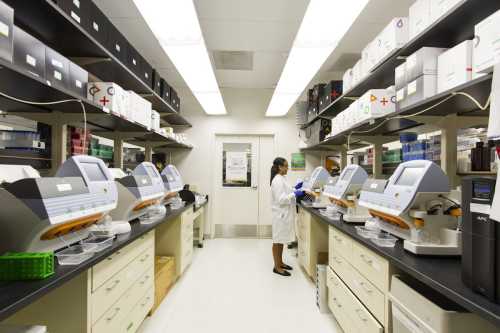
Imagine your body is a massive, bustling city, filled with millions of tiny citizens working together to keep everything running smoothly. This city has a highly trained police force, known as your immune system, whose job is to patrol the streets and catch any bad guys trying to cause trouble. Usually, these police officers are incredibly good at their jobs. They can spot a criminal from a mile away and stop them before they can do any harm. But sometimes, the bad guys are very clever. They put on disguises, like fake mustaches or silly hats, and walk right past the police. In the human body, these disguised criminals are cancer cells. They hide from the immune system, allowing them to grow and build their own criminal empires inside the city. This is exactly what happens in breast cancer, a disease that affects millions of women around the world, including many in Pakistan.
For a long time, the way doctors tried to stop these disguised criminals was by using a method called chemotherapy. Imagine if, instead of just catching the bad guys, the police decided to bomb the entire city to make sure the criminals were destroyed. While this might get rid of the bad guys, it also destroys the buildings, the roads, and harms the innocent citizens. This is what chemotherapy does to the body. It kills the cancer cells, but it also damages healthy cells, causing terrible side effects like hair loss, extreme tiredness, and sickness. For decades, scientists have been searching for a better way—a way to help the police officers see through the disguises so they can catch only the bad guys and leave the innocent citizens unharmed. This is the holy grail of cancer research, and it is a quest that requires brilliant minds and tireless dedication.
In a groundbreaking development that has sent waves of hope through the medical community, Pakistani scientists have introduced a promising new experimental treatment that could change the way breast cancer is treated in the future. This is not just a minor improvement; it is a fundamental shift in how we understand and fight the disease. The researchers have discovered a way to "teach" the body's immune system to recognize the specific disguises worn by breast cancer cells. By doing this, they are essentially giving the police officers a pair of super-glasses that can instantly see through the fake mustaches and silly hats. Once the immune system can see the cancer cells for what they really are, it can launch a targeted, precise attack to destroy them without harming the surrounding healthy tissue. This is the promise of immunotherapy, and Pakistani researchers are now at the forefront of this exciting field.
To understand how this works, we have to look deep inside the laboratory. The scientists have been studying the unique proteins that breast cancer cells use to create their disguises. Every type of cancer has a slightly different disguise, which is why a treatment that works for lung cancer might not work for breast cancer. The Pakistani team has identified the specific molecular "masks" used by breast cancer cells. They have then developed an experimental treatment that acts like a chemical solvent, dissolving these masks and exposing the cancer cells to the immune system. In early tests, this approach has shown remarkable success. The immune cells, once blinded by the disguises, are now able to swarm the cancer cells and eliminate them with incredible efficiency. This is a massive leap forward in the fight against one of the most common and deadly cancers in the world.
The context of this research within Pakistan is incredibly significant. For many years, the narrative around medical research in developing nations was that they were merely consumers of science created in the West. They imported drugs, imported equipment, and imported knowledge. But this breakthrough shatters that outdated narrative. Pakistani scientists are not just applying existing knowledge; they are creating new, original knowledge that has the potential to change global medical practices. The laboratories where this work is being done are equipped with state-of-the-art technology, but the true power lies in the intellect and determination of the researchers. They are working long hours, often with limited resources, driven by a deep desire to solve a problem that affects their own communities. Breast cancer rates are rising in Pakistan, and having a local, homegrown solution is a matter of national health security.
From a global perspective, this research places Pakistan on the map of international oncology. The fight against cancer is a global endeavor, with thousands of labs around the world competing to find the next big breakthrough. When a team from Pakistan publishes a promising new experimental treatment, it catches the attention of the global scientific community. It opens doors for collaboration, funding, and knowledge exchange. International partners are now more likely to want to work with Pakistani institutions, knowing that they have the capability to produce high-quality, cutting-edge research. This integration into the global scientific network is crucial for the long-term development of Pakistan's healthcare infrastructure. It proves that talent and innovation are not bound by geography, and that brilliant ideas can come from anywhere.
The economic implications of this discovery are equally profound. Traditional cancer treatments, especially the newer forms of immunotherapy developed in the West, are astronomically expensive. They can cost hundreds of thousands of dollars per patient, putting them out of reach for the vast majority of people in Pakistan and other developing nations. If this experimental treatment can be refined and manufactured locally, it could drastically reduce the cost of care. By utilizing local expertise and local facilities, the price of the treatment could be a fraction of the cost of imported drugs. This would democratize access to life-saving cancer care, ensuring that a woman's ability to survive breast cancer is not determined by the size of her bank account. It is a step towards health equity, a core principle of any just society.
Beyond the science and the economics, we must never forget the human element. Behind every statistic about breast cancer is a mother, a sister, a daughter, or a friend. The diagnosis of cancer is a terrifying moment that shakes the foundations of a family. The current treatments, while effective, come with a heavy physical and emotional toll. The side effects of chemotherapy can be so severe that some patients choose to stop treatment altogether. A new treatment that is more targeted and has fewer side effects is not just a medical advancement; it is a beacon of hope for these families. It means a better quality of life during treatment, a faster recovery, and a higher chance of returning to a normal, happy life. The emotional relief that this news brings to patients and their loved ones is immeasurable.
However, as professional journalists, we must also temper this excitement with a dose of scientific realism. The term "experimental" is key here. While the early results are incredibly promising, this treatment is not yet available at your local hospital. It must go through rigorous, multi-phase clinical trials to prove that it is not only effective but also safe for long-term use in humans. These trials take years to complete. There is always a risk that a treatment that works perfectly in a petri dish or in mice might have unexpected side effects in humans. The scientists know this, and they are proceeding with caution. The regulatory authorities in Pakistan, such as the Drug Regulatory Authority of Pakistan (DRAP), will closely monitor every step of this process to ensure that patient safety is the absolute top priority.
This breakthrough also serves as a powerful inspiration for the next generation of Pakistani students. When young people see that scientists from their own country are making world-class discoveries, it changes their perception of what is possible. It shows them that they do not need to move to America or Europe to do important work; they can do it right at home. This can lead to a "brain gain" rather than a "brain drain," where top talent chooses to stay in Pakistan to build the country's scientific capacity. The universities and research institutes that produce these scientists will likely see an increase in applications and funding, creating a positive feedback loop of innovation and discovery. The ripple effects of this single breakthrough could transform the entire educational and scientific landscape of the country.
The official announcement of this promising new experimental treatment has been shared widely, highlighting the dedication of the Pakistani scientific community. The researchers and their institutions are proud to share this milestone with the world, inviting collaboration and feedback from the global medical community. It is a testament to the transparency and openness of modern science, where discoveries are shared for the benefit of all humanity. Below is the official social media post detailing this incredible advancement, straight from the source.
In conclusion, the development of this new experimental breast cancer treatment by Pakistani scientists is a monumental achievement. It represents a shift from traditional, destructive therapies to smart, targeted immunotherapies. It demonstrates the power of local research to solve local and global health challenges. It offers hope to millions of patients who suffer from the devastating effects of cancer and its treatments. While the road from the laboratory to the pharmacy is long and filled with challenges, the first steps have been taken with confidence and brilliance. Pakistan is no longer just a participant in the global fight against cancer; it is becoming a leader. The police officers of the immune system are getting their super-glasses, and the days of the cancer cells hiding in the shadows are numbered. The future of oncology is bright, and it is being forged in the laboratories of Pakistan.



Comments (0)
No comments yet. Be the first to share your thoughts!
Want to join the discussion?
Please log in to post a comment.
Login NoworCreate an Account