
Pakistan's IT and Freelance Exports Cross Historic $5 Billion Milestone

The Big Picture: Selling Invisible Lemonade
Imagine you and your friends decide to open a lemonade stand. For decades, your family has only ever sold physical things: bags of cotton, sacks of rice, and boxes of surgical tools. These are great products, but they have problems. The cotton gets wet in the rain, the rice takes up a lot of space on the truck, and the trucks cost a lot of money for petrol. Plus, the people buying your rice can always find someone else selling it cheaper. One day, you realize there is a better way. Instead of selling physical lemons, you decide to sell 'invisible lemonade.' You sell your brainpower. You write a computer program, design a beautiful logo, or manage a store's accounting from your bedroom. You send this invisible lemonade over the internet in one second, it never gets wet, it costs zero petrol to deliver, and people all over the world pay you in dollars for it.
This is exactly what Pakistan's Information Technology (IT) and freelance sector is doing. For a long time, Pakistan's economy relied heavily on textiles and agriculture. But in 2026, the country has hit a massive, historic milestone: IT and IT-enabled services (ITeS) exports have officially crossed the $5 billion mark in a single year. This is not just a number; it is a fundamental transformation of how Pakistan earns money from the rest of the world. It means that the youth of Pakistan, sitting in cities like Lahore, Karachi, Islamabad, and even smaller towns like Faisalabad and Sialkot, are competing with the best minds in Silicon Valley, London, and Dubai, and winning.
The Power of the Youth and the Digital Shift
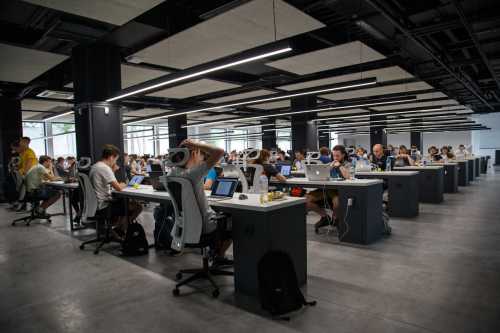
Why is this happening now? Pakistan has one of the largest youth populations in the entire world. Millions of young people have smartphones and affordable 4G and 5G internet. Over the last five years, the government and private sector have invested heavily in digital literacy. Coding bootcamps, freelancing academies, and university tech incubators have sprung up everywhere. Young Pakistanis are learning high-income skills: artificial intelligence programming, blockchain development, digital marketing, and complex software engineering. They are registering on global platforms like Upwork, Fiverr, and Toptal, and they are dominating the leaderboards.
But it is not just individual freelancers. Pakistan is also exporting full-scale software houses. Companies in Pakistan are building the backend systems for banks in the Middle East, creating e-commerce apps for retail giants in Europe, and developing healthcare management software for clinics in the United States. The shift from 'freelancing' to 'company-level IT exports' is what pushed the total over the $5 billion mountain. These companies hire hundreds of people, providing high-paying, white-collar jobs that keep the best talent from leaving the country.
Government Support and Special Zones
This growth did not happen by accident. The government realized that to sell invisible lemonade, you need a very good internet connection and a friendly business environment. They introduced the Special Technology Zones (STZs). Think of these STZs as special, VIP play areas for tech companies. If a software company sets up its office in an STZ, they get massive tax breaks for a decade, they get one-click regulatory approvals, and they are guaranteed uninterrupted, high-speed fiber optic internet. The government also simplified the process for repatriating profits, meaning a foreign investor who puts money into a Pakistani tech startup knows they can easily take their profits out of the country if they want to. This removed the fear of getting money 'stuck' in the banking system.
Furthermore, the SBP and the Ministry of IT have worked together to ensure that when these freelancers and companies earn dollars, they can easily bring those dollars into Pakistan through official banking channels. In the past, many freelancers used informal methods (like Hawala) because the banks were too slow or took too high a commission. By making the banking system faster and cheaper for IT exporters, the government ensured that every single dollar earned is recorded, boosting the country's official foreign exchange reserves.
The Macroeconomic Magic of IT Exports
Why does the government care so much about earning dollars? Because Pakistan needs dollars to buy things it cannot make itself, like petroleum, cooking oil, and advanced machinery. When Pakistan exports textiles, it earns dollars, but it costs a lot of money to grow the cotton, run the factories, and ship the goods. IT exports have almost zero 'import content.' A software engineer just needs a laptop and electricity. The profit margin is incredibly high. When $5 billion of pure, clean dollars flow into the country from IT exports, it strengthens the Pakistani Rupee. A stronger Rupee means that the imported petrol and cooking oil become cheaper for the common man. It also helps keep inflation down. In short, the kid selling invisible lemonade from their bedroom is directly helping to lower the price of gas at the petrol pump for the entire nation.
This $5 billion milestone is a beacon of hope. It proves that Pakistan does not have to rely solely on foreign loans or traditional agriculture to survive. The minds of its youth are its greatest natural resource, and by tapping into the global digital economy, Pakistan is building a resilient, modern, and unstoppable economic engine for the 21st century.
Official Ministry of IT Update
Historic milestone! Pakistan's IT and IT-enabled services exports have officially crossed the $5 Billion mark, driven by our talented youth and freelancers. The digital future of Pakistan is here. @MoITT_PK
— Ministry of IT & Telecom (@MoITT_PK) June 23, 2026
Related Articles

The Macroeconomic Inflection Point: Navigating Sovereign Debt, Labor Recalibration, and Trade Fragmentation
Aug 22, 2026
The Macroeconomic Reckoning: Navigating the Convergence of Debt, Trade, and Technological Shifts
Aug 22, 2026
Comments (0)
No comments yet. Be the first to share your thoughts!
Want to join the discussion?
Please log in to post a comment.
Login NoworCreate an Account