
Pakistan's Macro Mirage: The Hidden Risks Behind the Foreign Capital Inflow Surge

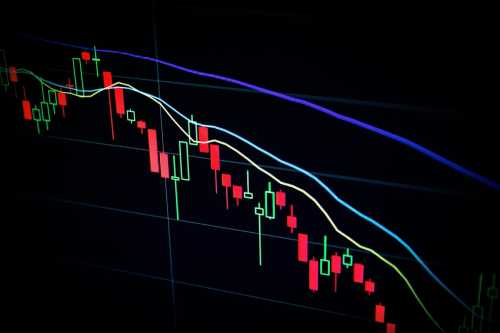
The Tightrope Walk of Emerging Markets
Think of Pakistan’s current macroeconomic posture not as a recovering patient, but as a sprinter who has just injected a potent stimulant before a marathon. The initial burst of energy is undeniable, but the physiological debt incurred will dictate whether the runner finishes the race or collapses at mile twenty. This analogy perfectly captures the dichotomy of Pakistan’s current market landscape, where short-term capital inflows are masking long-term structural fragilities. Mainstream financial coverage often celebrates these inflows as a definitive vote of confidence, yet a rigorous, bottom-up analysis reveals a far more precarious reality.
The Liquidity Mirage: A Two-Sentence Reality Check
Foreign portfolio investors have recently injected $171 million into Pakistan government securities over a 50-day period, alongside a net $34.4 million equity inflow into the Pakistan Stock Exchange (PSX), marking the first net foreign buying in 23 months www.instagram.com , www.investify.pk . However, this transient liquidity surge coincides with the federal debt climbing to Rs 83.6 trillion and external debt obligations straining against a backdrop of severe climate-induced GDP contractions www.wfp.org , www.facebook.com .
Beneath the Surface: Three Blind Spots in the Capital Inflow Narrative
Mainstream financial coverage celebrates the return of foreign capital to PSX and government paper as a definitive vote of confidence. What is systematically ignored is the composition of this debt. The $126.9 million flowing into T-bills represents short-term, hot money chasing high real yields, not long-term foreign direct investment aimed at capacity building www.investify.pk . This creates a dangerous maturity mismatch, where short-term liabilities are used to fund long-term structural deficits, leaving the State Bank of Pakistan highly vulnerable to sudden capital flight at the first sign of global risk-off sentiment. Furthermore, the repatriation of profits by foreign companies remains a persistent overhang, as foreign entities repatriated $2.31 billion in profits and dividends from Pakistan during fiscal year 2025-26, highlighting that inbound portfolio flows are often offset by outbound corporate remittances www.instagram.com .
The second blind spot is the silent, compounding erosion of fiscal space by climate liabilities. Pakistan is losing close to 1% of its gross domestic product every year to climate-related damage from floods, heatwaves, and infrastructure destruction www.wfp.org . Mainstream market analysis treats climate events as exogenous, unpredictable shocks. In Pakistan, they are endogenous, recurring balance sheet liabilities. Every dollar of foreign portfolio investment is effectively being underwritten against an unpriced climate risk premium that international rating agencies have yet to fully quantify in sovereign spreads, creating a hidden leverage trap.
Thirdly, the prevailing narrative completely overlooks the severe crowding-out effect on the domestic private sector. As the government offers lucrative, risk-free returns on short-term paper to attract foreign inflows, domestic commercial banks rationally park their liquidity in government securities rather than extending credit to the industrial and export sectors. This dynamic creates a vicious cycle where the government must continually issue new debt at higher rates just to service existing obligations. This financialization of the economy actively stifles the very export-led growth required to generate the organic foreign exchange reserves needed to service the nearly $290 billion total debt burden www.facebook.com .
Echoes of 1998: The Historical Precedent of Premature Celebration
This dynamic bears a striking, almost algorithmic resemblance to the pre-1998 economic environment in Pakistan. In the mid-1990s, short-term capital inflows and high-yield government paper created a pervasive illusion of macroeconomic stability, masking a rapidly deteriorating current account and depleted foreign exchange reserves. When global sentiment shifted and geopolitical events triggered sanctions, the hot money exited with brutal speed, precipitating a sovereign default and a forced, highly conditional IMF bailout. The 1998 crisis taught us that market sentiment can reverse overnight when structural fundamentals are ignored. The historical lesson is unequivocal: liquidity driven purely by yield differentials is a fair-weather friend. Without structural current account correction, it is merely a delayed, and ultimately more severe, crisis.
The Counter-Narrative: Why Structural Reforms Trump Short-Term Yields
Critics of this bearish outlook argue that the current inflows are fundamentally different, underpinned by a stringent, IMF-monitored reform program that enforces fiscal discipline and actively resolves the energy sector's circular debt. They posit that high real interest rates are a necessary, temporary tool to anchor inflation expectations and rebuild the central bank’s institutional credibility. While this holds theoretical merit, it assumes flawless, uninterrupted execution of reforms. Historical data consistently shows that domestic political economy constraints frequently derail austerity measures before they yield macroeconomic dividends, rendering the "this time is different" argument highly precarious.
The Sovereignty Imperative: Navigating the Debt Trap Without Ceding Control
Conversely, some nationalist economic factions argue that Pakistan should default on its external obligations or aggressively restructure its debt to free up vital fiscal space, citing the unsustainable trajectory of interest expenses papers.ssrn.com . However, this perspective ignores the catastrophic collateral damage of a disorderly default. A sovereign default would instantly sever access to global trade finance, trigger hyperinflation via currency collapse, and isolate the country from multilateral safety nets. As economic analyst Dr. Ashfaque Hasan Khan has articulated, Pakistan's economic vulnerability compromises its strategic autonomy, making reliance on volatile short-term capital a dangerous geopolitical gamble x.com . The true sovereignty imperative is not found in reckless default, but in negotiating proactive, orderly liability management operations that extend maturities without triggering cross-default clauses.
Strategic Imperatives for Market Participants
For local businesses and institutional investors, the current environment demands defensive, highly calibrated positioning. Corporate treasurers must hedge foreign exchange exposure aggressively, as the rupee remains fundamentally vulnerable to external account pressures despite temporary inflows. Furthermore, businesses should actively explore supply chain financing and barter trade mechanisms to mitigate the impact of foreign exchange shortages. Equity investors should pivot away from interest-rate-sensitive sectors, such as traditional banking, and reallocate capital toward export-oriented industries like textiles, technology, and agriculture. These sectors stand to benefit from a competitively valued currency and ongoing global supply chain diversification. Citizens and retail investors should prioritize capital preservation over speculative yield, favoring inflation-indexed instruments or hard currency-denominated assets where legally permissible, and stress-test their portfolios against a 15% currency depreciation scenario to ensure resilience.
The Six-Month Horizon: A Forecast of Volatility and Validation
Over the next six months, the market will inevitably transition from a "relief rally" phase to a rigorous "show me" phase. As global central banks maintain restrictive monetary stances, the yield differential attracting hot money to Pakistan will naturally compress. We forecast a moderate, healthy correction in PSX valuations and a stabilization, but not a sustained surge, in foreign portfolio holdings. The true macroeconomic test will be the government’s ability to roll over maturing domestic debt without spiking yields. If structural reforms in the energy and tax sectors stall, the window for orderly debt management will narrow rapidly, forcing a return to the IMF for an expanded, more condition-heavy program.
Related Articles
The 2026 Market Trilemma: Sticky Inflation, Capital Misallocation, and the End of Margin Expansion
Aug 27, 2026
The Macro Fracture: Navigating AI Valuations, Bond Volatility, and the Emerging Market Debt Trap
Aug 23, 2026
Comments (0)
No comments yet. Be the first to share your thoughts!
Want to join the discussion?
Please log in to post a comment.
Login NoworCreate an Account