
Pakistan’s Solar Shock: NEPRA Replaces Net Metering with Net Billing in Historic 2026 Policy Shift

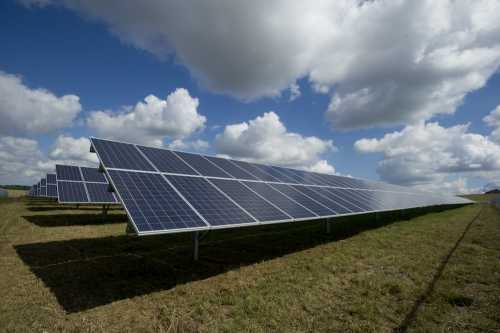
The Sun Power Rules Change
Imagine you have a magical lemonade stand in your front yard. You make so much lemonade that you cannot drink it all. In the old days, the government had a wonderful rule called Net Metering. They promised to trade your extra lemonade cup-for-cup for regular lemonade later. If you gave them one cup of your solar lemonade, they gave you one cup of grid lemonade when the sun went down. It was a perfect, fair, one-to-one trade. This rule made almost everyone in Pakistan want to buy solar panels. It was like finding money in your old winter coats. However, in 2026, the government has changed the rules of the game. The new policy is called Net Billing. Under this new system, they still take your extra lemonade, but they pay you in "coins" instead of trading it directly. And the number of coins they give you is much lower than what it costs to buy a cup from them later. So, while you still get paid for your extra lemonade, it takes a lot more extra lemonade to earn enough coins to buy a cup when you need it. This is the fundamental shift that has shocked the solar market in Pakistan beyondgreensolar.com .
The Great Solar Boom and the Grid's Breaking Point
To understand why this massive policy change happened, we have to look at what happened over the last few years. Pakistan experienced a solar revolution. Millions of homes and businesses put panels on their roofs because electricity from the main grid was becoming too expensive and unreliable. At its peak, rooftop solar was generating thousands of megawatts of power during the day. This was fantastic for the people saving money, but it created a gigantic headache for the power companies, known as DISCOs. Imagine the national electricity grid as a giant highway. During the day, millions of solar panels are suddenly dumping cars onto the highway all at once. The highway was not built to handle that much traffic in one direction. The DISCOs were losing their best customers—the people who used the most electricity during the day—while still having to maintain the expensive highway for everyone else. This led to a massive financial hole called circular debt, where the power companies were bleeding money and could not pay the fuel providers www.facebook.com .
Enter the Prosumer Regulations 2026
To fix this financial emergency, the National Electric Power Regulatory Authority (NEPRA) had to make a tough choice. They officially ended the unit-for-unit net metering regime and introduced a new framework called the Prosumer Regulations 2026 enggpost.com . A "prosumer" is a fancy word for someone who both produces and consumes electricity. Under the new net billing system, the electricity you export to the grid is no longer treated as a direct swap for units you import. Instead, it is treated as a sale. You are selling your extra power to the government, and they are paying you a wholesale rate. This wholesale rate is significantly lower than the retail rate you pay when you buy power from them. The export rate is now linked to the fuel charges adjustment and the average cost of power generation, which means you get paid much less for your solar energy than you did under the old net metering rules solarbytes.info .
Official Announcement from Cosmos Energies
New Net Billing Policy 2026 for Solar Users! NEPRA updates are here. Pakistan's solar policy is entering a new phase. With NEPRA's AMI transition, Net-Billing is gradually replacing Net-Metering, changing how solar users are credited for exported electricity. The unit-for-unit system has been discontinued.
- Cosmos Energies PK Official Facebook
Read the full official post here: View Official Facebook Post
The Math: How This Hits Your Wallet
Let us do the math like a five-year-old, but with real money. Under the old net metering, if you paid 50 rupees for a unit of electricity, and you sent a unit to the grid, you got a 50-rupee credit. It was a perfect wash. Under the new net billing, if you send a unit to the grid, the government might only pay you 25 or 30 rupees for it. But when the sun goes down and you need to buy a unit from the grid, you still have to pay the full 50 rupees or more. This means your electricity bill will never be zero again. You will always have to pay for the difference. For a middle-class family, this means the "payback time"—the time it takes for your solar panels to pay for themselves through savings—has jumped from a magical 3 or 4 years to a much longer 5 to 7 years. Furthermore, if you generate more power than your contracted limit, the new rules state that electricity generated beyond the approved units will not be credited to your account at all solarbytes.info . You literally give it away for free if you exceed your limit.
The Smart Meter Revolution (AMI Transition)
To make this new financial system work, the government needs to know exactly how much power you are sending and receiving at every single second of the day. This is where the Advanced Metering Infrastructure (AMI) comes in. NEPRA is forcing all DISCOs to install bi-directional smart meters for every solar user www.facebook.com . These are not the old dials that a guy on a motorcycle reads once a month. These are digital brains that talk directly to the power company's computers. They track your import and export in real-time, allowing the billing system to apply the complex net billing tariffs accurately. While this sounds like a technological upgrade, many consumers are worried about the accuracy of these smart meters and whether they will be billed correctly if the system glitches.
The Master Plan: Solar Manufacturing Policy 2026-2035
You might be wondering, "If they are making solar harder for regular people, do they hate the sun?" The answer is no. The government is actually trying to build a massive solar industry inside Pakistan. Alongside the net billing changes, they have introduced the Pakistan Solar Panels and Allied Equipment Manufacturing Policy 2026-2035 www.scribd.com . The goal is to stop importing every single solar panel from China and start making them in Pakistan. They want to build factories that can produce 25,000 megawatts of solar capacity by 2035. By making solar panels locally, they hope to create thousands of jobs, reduce the import bill that is destroying the country's economy, and eventually make solar panels so cheap that everyone can afford them, even with the new net billing rules. It is a painful transition today for a self-reliant tomorrow.
What Should Solar Owners Do Now?
If you already have solar panels, or if you are thinking about getting them, you need to change your strategy. The new rules reward you for using your own solar power directly, not for sending it to the grid. The best thing you can do is shift your heavy electricity usage to the daytime. Run your washing machines, iron clothes, and charge your electric vehicles when the sun is shining brightest. If you have the money, investing in solar batteries is now much more important. Batteries allow you to store your extra daytime lemonade in a giant jug in your basement, so you can drink it at night instead of selling it to the government for pennies. The era of the "zero bill" is over, but the era of smart, self-sufficient energy management has just begun. Pakistan's solar policy has grown up, and now the consumers must grow up with it.
Related Articles
The Policy Paradox: Navigating Industrial Subsidies, Carbon Border Adjustments, and Fiscal Constraints
Aug 22, 2026
The Redrawn Regulatory Seascape: Navigating the Convergence of Global Policy Faultlines
Aug 22, 2026
Comments (0)
No comments yet. Be the first to share your thoughts!
Want to join the discussion?
Please log in to post a comment.
Login NoworCreate an Account