
Reaching for the Stars: NASA Proves Spacecraft Can Switch Satellite Networks and Tests Fiery New Rocket

The Invisible Web Around the Earth
Imagine you are walking in a big park with your friends, and you are all talking on walkie-talkies. As long as you are close to each other, you can hear each other clearly. But if one friend walks too far away, the signal gets fuzzy and then disappears. Now, imagine you are in a spaceship, millions of miles away from Earth, traveling past Mars. How do you talk to the scientists back home? You cannot use a regular cell phone tower because there are no towers in space! NASA has built a giant, invisible web around the Earth and the solar system called the Deep Space Network and the Near Earth Network. These are giant dish antennas that listen to the whispers of the spacecraft. But here is the problem: if the spacecraft flies out of the view of one dish, it loses its connection. In June 2026, NASA did something magical. They proved that a spacecraft can automatically switch between different satellite networks without losing its signal, just like your phone switches from WiFi to 5G when you walk out of your house. Let us learn about this brilliant technology and the fiery new rockets that are pushing us further into the stars.
The PExT Terminal: The Smart Switcher
The magic device that made this possible is called the PExT terminal. PExT stands for Polaris Experimental Terminal. Think of the PExT terminal as a very smart, tiny robot brain inside the spacecraft. In the past, if a satellite wanted to talk to Earth, the scientists on the ground had to manually tell it which antenna to connect to. It was like having to call the telephone operator every time you wanted to make a call. But the PExT terminal is autonomous. It looks around, sees all the different satellite networks flying above it—like NASA's networks, or even commercial networks like Starlink—and it decides which one has the best signal. Then, it switches to that network automatically, in a fraction of a second. In June 2026, NASA announced that the PExT terminal had successfully proven it can switch between multiple satellite networks seamlessly. This is a game-changer because it means spacecraft can send back data continuously, without any blackouts. It is like giving the spacecraft a permanent, unbreakable connection to home, no matter where it travels in the solar system.
The Fiery New Rocket: Testing in the Utah Desert
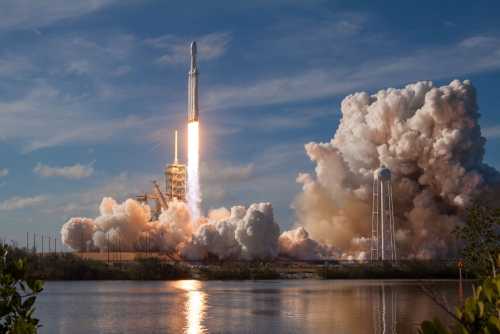
While the PExT terminal is the brain, the rocket is the muscle. To go to space, you need a lot of power. You need to throw a giant metal tube so hard and so fast that it escapes the Earth's gravity. In 2026, NASA went to the vast, empty Utah desert to test a brand-new, fiery rocket engine. Imagine a giant campfire, but instead of wood, it burns special chemicals that create a massive, controlled explosion. The fire shoots out of the bottom of the rocket at incredible speeds, pushing the rocket up into the sky. This new engine is designed to be more powerful, more efficient, and safer than the old ones. The tests in the Utah desert were crucial. The engineers watched as the engine roared to life, shaking the ground and lighting up the desert sky. They measured the temperature, the pressure, and the thrust to make sure it was perfect. These fiery tests are the first steps toward building the giant rockets that will one day carry humans to Mars and beyond. It is a dangerous, loud, and incredibly exciting part of space exploration.
Public-Private Partnerships: Teamwork in Space
NASA does not build everything by itself anymore. In a major announcement in 2026, NASA revealed a new public-private partnership to advance Mars science. This means that NASA is teaming up with commercial companies—businesses that build rockets and satellites for profit. In the past, the government did everything. But now, companies like SpaceX, Blue Origin, and many others are building their own rockets. NASA says, You guys build the trucks to carry the cargo to space, and we will focus on the science and the exploration. This partnership is like a relay race. The commercial companies run the first leg, getting the materials and astronauts into orbit safely and cheaply. Then, they hand the baton to NASA, who runs the next leg, going to the Moon and Mars. This teamwork is saving billions of dollars and speeding up our journey to the stars. It is a new era where space is open for business and open for exploration.
The Ultimate Goal: Humans on Mars
Why are we building these smart terminals and fiery rockets? What is the ultimate goal? The answer is Mars. Mars is the red planet, the fourth rock from the sun. It is cold, dusty, and has no breathable air. But billions of years ago, it had rivers, lakes, and maybe even life. Scientists want to go to Mars to find out if we are alone in the universe. They want to dig into the red dirt and look for fossils of ancient Martian bacteria. But Mars is very far away. It takes seven months to fly there! To keep astronauts safe and connected during that long journey, we need the PExT terminal to keep them in touch with Earth. To get them there and back, we need the fiery new rockets. Every test, every switch, and every partnership is a stepping stone on the long road to Mars. The people working at NASA today are the same people who will see the first human footprints in the Martian dust. It is the greatest adventure in the history of our species.
How This Helps Us on Earth
You might think all this space stuff has nothing to do with your daily life, but it actually helps us a lot! The technology used to make the PExT terminal switch networks automatically is the same technology that makes your internet faster and more reliable. The materials used to protect the fiery rocket engines from melting are being used to make better fireproof clothing for firefighters and better insulation for our homes. The cameras on the space telescopes were adapted to make the tiny cameras in your cell phone. When we push the boundaries of what is possible in space, we create inventions that solve problems on Earth. The money spent on NASA is an investment in our own future. It creates high-tech jobs, inspires students to study math and engineering, and gives us the tools to monitor our own climate and natural disasters from above. Space exploration is not an escape from Earth; it is a way to take better care of our home.
The Endless Frontier
The universe is an endless frontier, a vast ocean of darkness dotted with islands of light. For thousands of years, humans could only look at the stars and wonder. But in the 21st century, we are finally building the ships to sail that ocean. The successful test of the PExT terminal and the fiery rockets in the Utah desert are not just news stories; they are the sound of humanity growing up. We are no longer just inhabitants of Earth; we are becoming a space-faring civilization. Every time a rocket launches, it carries the dreams of every child who has ever looked up at the night sky and wished to fly. The future is bright, the engines are fiery, and the invisible web is ready. The stars are calling, and we are finally answering.
Related Articles

The Healthcare Quadruple Bypass: Navigating Price Controls, Workforce Attrition, and Rural Desertification
Aug 22, 2026
The Fractured Laboratory: How Geopolitical Friction is Rewiring Global Science Economics
Aug 19, 2026
Comments (0)
No comments yet. Be the first to share your thoughts!
Want to join the discussion?
Please log in to post a comment.
Login NoworCreate an Account