
Replacing Smoky Dragons with Silent Horses: Pakistan's National Electric Vehicle Policy 2026

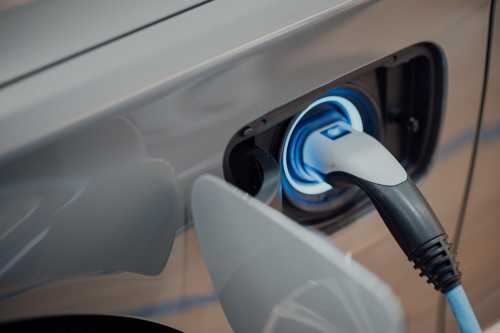
Imagine your city is being guarded by hundreds of loud, smoky dragons. Every time they fly over your house, they cough out thick, black, smelly smoke that makes it hard to breathe and turns the sky gray. These dragons are the millions of old, petrol-powered cars, motorcycles, and trucks that clog the streets of Lahore, Karachi, and Islamabad. For years, the government just watched the dragons fly. But in 2026, the Ministry of Climate Change and Environmental Coordination, in collaboration with the Ministry of Industries, launched a fiercely updated National Electric Vehicle (NEV) Policy . The goal is simple but monumental: replace the smoky dragons with silent, clean, electric horses, and literally clear the air we breathe.
The biggest reason people do not buy electric vehicles (EVs) is that they are too expensive to buy upfront. It is like being offered a magical, healthy salad for the same price as a greasy, delicious burger; most people will still buy the burger because it is cheaper right now. The 2026 NEV Policy attacks this problem head-on by slashing import duties and taxes on completely built-up (CBU) electric cars and motorcycles by up to 50% for the first three years . Furthermore, for companies that want to manufacture EVs locally inside the country, the government has reduced the customs duty on the import of EV parts to near zero. This dual-pronged approach ensures that whether you buy an imported Tesla or a locally assembled electric Suzuki, the price tag is suddenly much closer to that of a traditional petrol car.
But an electric horse is useless if there are no stables to feed it. In the EV world, the "stables" are charging stations. A major failure of previous policies was that they encouraged people to buy EVs without building the chargers, leading to "range anxiety"—the fear that your car will die in the middle of the highway. The 2026 policy mandates that all major highways, motorways, and public parking lots must install fast-charging infrastructure . More importantly, it allows private companies to import and install chargers without any special licensing fees, and it classifies charging stations as "critical infrastructure," meaning they get the same subsidized, cheap electricity rate as the agricultural sector. This makes it highly profitable for businesses to build chargers everywhere.
The policy also recognizes a harsh reality of Pakistani traffic: the real polluters are not the luxury cars; they are the millions of small, two-stroke motorcycles and the rickshaws that emit thick blue smoke. The NEV 2026 policy introduces a massive "scrappage scheme." If you hand over your old, polluting, 20-year-old motorcycle or rickshaw to a certified recycling center, the government will give you a direct cash voucher worth up to 100,000 rupees, which can only be used as a down payment for a brand-new electric motorcycle or rickshaw . This actively removes the smokiest dragons from the sky and replaces them with silent, zero-emission electric alternatives.
Public transport is the backbone of any city, and the policy mandates that by 2028, 30% of all new public buses purchased by city transport corporations must be fully electric . The government is providing low-interest, long-term loans to private transport operators to help them make this switch. An electric bus costs much more to buy than a diesel bus, but it costs almost nothing to "fuel" and maintain. The policy includes a detailed financial model showing transport operators how they will actually make more profit over five years by switching to electric, turning environmental policy into a smart business decision.
Perhaps the most brilliant part of the 2026 policy is its integration with renewable energy. If we just charge millions of EVs using electricity generated from burning imported oil or coal, we are just moving the pollution from the streets to the power plants. To prevent this, the policy requires that all new public charging stations must source at least 30% of their energy from on-site solar panels or wind turbines . It also introduces a smart-grid policy where EV owners can sell the battery power in their cars back to the national grid during peak evening hours when electricity is expensive, and charge their cars at night when electricity is cheap and abundant. This turns every parked EV into a giant, rolling power bank that stabilizes the entire country's electricity network.
The transition to electric mobility is not just about saving the environment; it is about national security. Pakistan spends billions of dollars every year importing oil to burn in car engines. Every time the global price of oil goes up, the Pakistani rupee goes down, and inflation skyrockets. By switching to EVs, we can power our vehicles using our own domestic resources: hydro, solar, wind, and nuclear energy. The NEV 2026 policy is essentially an energy independence strategy disguised as a transportation plan. It is a bold, comprehensive blueprint to clear the skies, save the economy, and drag the country's transport infrastructure into the 21st century.
Official Policy Launch
The Ministry of Climate Change officially unveiled the National Electric Vehicle Policy 2026, outlining the roadmap for a zero-emission transport sector and the integration of renewable energy charging grids.
Clearing our skies and securing our energy future. The National Electric Vehicle Policy 2026 is here! From tax slashes to solar-charging mandates, Pakistan is driving towards a green revolution. #NEVP2026 #GreenPakistan
Related Articles
The Policy Paradox: Navigating Industrial Subsidies, Carbon Border Adjustments, and Fiscal Constraints
Aug 22, 2026
The Redrawn Regulatory Seascape: Navigating the Convergence of Global Policy Faultlines
Aug 22, 2026
Comments (0)
No comments yet. Be the first to share your thoughts!
Want to join the discussion?
Please log in to post a comment.
Login NoworCreate an Account