
Ricult Leverages Satellite AI and Micro-Insurance to Protect Smallholder Farmers from Climate Shocks

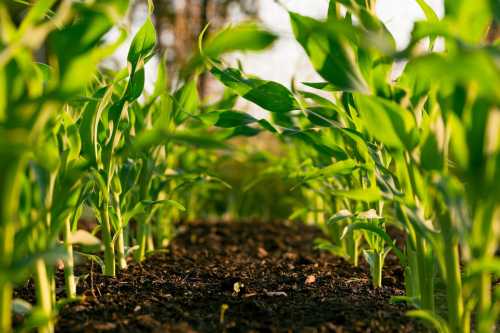
Imagine you are planting a beautiful garden. You spend weeks preparing the soil, buying the best seeds, and watering them every day. You are counting on this garden to provide food for your family for the whole year. But, you have no control over the weather. One night, a massive, unexpected storm hits and washes all your seeds away. You lose everything. In the real world, this is the daily reality for millions of farmers in Pakistan. Agriculture is the backbone of the country's economy, employing nearly 40 percent of the workforce. But these farmers, especially the smallholders who own less than five acres of land, are incredibly vulnerable to climate change. Unpredictable floods, devastating droughts, and sudden pest attacks can wipe out an entire season's crop in hours. When this happens, the farmer not only loses their income but often falls into a trap of crippling debt. To solve this, a brilliant AgriTech startup called Ricult has launched a revolutionary service in June 2026. They are using satellites in space and Artificial Intelligence to provide "micro-insurance" and crop loans to the smallest farmers. By looking at the farm from the sky, Ricult can assess risk, monitor crop health, and automatically pay out insurance claims when disaster strikes, bringing financial security to the most vulnerable people in the country. Let us explore how this technology is literally saving livelihoods from the ground up.
The Vulnerability of the Smallholder Farmer
To understand the magnitude of Ricult's innovation, we must first understand the precarious life of a smallholder farmer in Pakistan. These farmers operate on razor-thin margins. They do not have large savings or assets to fall back on. At the beginning of the planting season, they need money to buy high-quality seeds, fertilizer, and pesticides. Since they have no collateral (like a house or a car) to offer to a formal bank, they are forced to borrow money from local landowners or informal moneylenders. These moneylenders charge astronomical interest rates, sometimes as high as 50 to 60 percent per year. The farmer takes this loan, plants the crop, and prays for a good harvest. If the weather is good and the yield is high, they can pay back the loan and maybe have a little left over to feed their family. But if a flood hits, or a heatwave destroys the crop, they cannot pay back the loan. The debt compounds, and they are forced to sell their land or pull their children out of school to work as laborers. It is a vicious, intergenerational cycle of poverty. Traditional insurance companies refuse to serve these farmers because the cost of sending an agent to physically inspect a tiny, remote farm to verify a claim is higher than the value of the insurance payout itself. The market had completely failed these farmers, leaving them entirely exposed to the increasing volatility of climate change.
The Ricult Solution: Eyes in the Sky
Ricult looked at this problem and realized that the solution was not on the ground; it was in the sky. They built a platform that uses high-resolution satellite imagery combined with advanced machine learning algorithms. When a farmer signs up for Ricult's service via a simple USSD code or a basic smartphone app, they map the exact boundaries of their farm. From that moment on, Ricult's AI is watching over that specific patch of land. The satellites capture multi-spectral images of the farm. This means the satellites do not just take regular photos; they capture light in wavelengths that the human eye cannot see, such as near-infrared. This allows the AI to see things that are invisible to us. It can measure the "chlorophyll content" of the plants, which tells the AI exactly how healthy the crop is, how much water it contains, and even if it is suffering from a specific nutrient deficiency or a pest infestation, weeks before the human eye could see any yellowing or wilting. The AI analyzes this satellite data alongside weather data, soil maps, and historical yield data to create a "digital twin" of the farm. It can predict the expected yield of that specific farm with incredible accuracy, down to the kilogram.
This remote sensing technology completely eliminates the need for physical inspections. Ricult knows exactly what is happening on millions of acres of farmland without ever sending a single agent to the field. This drastic reduction in operational costs is what makes the business model viable. Because it costs Ricult almost nothing to monitor an additional farm, they can offer services to smallholders that were previously only available to massive, corporate farming operations. The satellite data is the foundation for two critical financial products: precision crop loans and parametric micro-insurance.
Empowering the backbone of Pakistan's economy. Ricult's satellite AI and parametric insurance are now protecting 1 million smallholder farmers from climate shocks. We are turning data into dignity for our farmers.
— Ricult (@RicultOfficial) June 20, 2026
Parametric Micro-Insurance: Automatic Payouts
The most groundbreaking product Ricult offers is parametric micro-insurance. Traditional insurance is "indemnity-based." This means if your house burns down, you file a claim, an adjuster comes to look at the damage, argues with you about the value, and eventually writes a check months later. Parametric insurance is completely different. It is based on "triggers." When the farmer buys the insurance (which is incredibly cheap, often subsidized by the government or international climate funds), they agree on a specific trigger. For example, the trigger might be: "If the satellite data shows that the soil moisture in my specific farm drops below a critical level for more than 15 consecutive days (indicating a severe drought), or if the local weather station records more than 200mm of rain in 24 hours (indicating a flood)." The magic is that the payout is automatic. If the satellite or weather data hits that trigger, the smart contract automatically releases the insurance payout directly to the farmer's mobile money account. There is no claims adjuster, no paperwork, no arguing, and no waiting. The money arrives in minutes. This immediate liquidity is crucial. It allows the farmer to immediately buy food for their family and purchase seeds for the next planting season, preventing them from falling into the debt trap. The AI ensures that the triggers are hyper-local. It does not just look at the average rainfall for the whole district; it looks at the exact conditions on that specific farmer's plot of land.
Precision Credit: Unlocking Capital for the Unbanked
In addition to insurance, Ricult uses its satellite data to de-risk agricultural lending for formal banks. Banks want to lend to farmers because it is a huge market, but they are terrified of the risk. Ricult acts as a bridge. They provide the banks with a "credit score" for the farm. Based on the satellite history of the land, the AI can tell the bank: "This specific plot of land has consistently yielded 2 tons of wheat per acre for the last five years. The farmer has a high probability of repaying a 50,000 rupee loan for seeds." The bank then lends the money directly to the farmer's digital wallet, which can only be spent at Ricult's partner network of agro-dealers to buy verified, high-quality inputs. This ensures the money is actually used for farming and not diverted for other purposes. Because Ricult's AI is continuously monitoring the crop, the bank has real-time visibility into the health of their collateral (the growing crop). If the AI detects a disease outbreak early, it alerts the bank and the farmer, allowing for timely intervention. This drastic reduction in risk has convinced major commercial banks and microfinance institutions to partner with Ricult, unlocking billions of rupees in formal credit for farmers who were previously entirely excluded from the banking system.
Advisory Services: Increasing Yield and Sustainability
Ricult is not just a financial services company; it is also an agronomy advisor. The same satellite data used for insurance and loans is used to provide actionable advice to the farmer. Through SMS or voice calls in their local language, the AI sends personalized recommendations. For example, the AI might notice that a specific section of a farmer's field is showing signs of nitrogen deficiency. It will send a voice message: "The crops in the north corner of your field need urea fertilizer this week. Apply 2 bags." Or, if the AI predicts a high risk of a specific pest attack based on temperature and humidity trends, it will warn the farmer to apply a specific preventative spray. This "precision agriculture" allows farmers to optimize their use of water, fertilizer, and pesticides. They only apply inputs where and when they are needed, which saves them money and significantly reduces the environmental impact of farming. By increasing the yield and reducing the cost of inputs, Ricult is directly increasing the net profit of the farmer. A more profitable farmer is a more resilient farmer, better able to withstand the shocks of climate change.
The Macro Impact: Climate Resilience and Food Security
The impact of Ricult's work extends far beyond the individual farmer; it is a critical component of Pakistan's national climate resilience and food security strategy. As climate change accelerates, the frequency and severity of extreme weather events will only increase. Without tools like parametric insurance, the agricultural sector will face catastrophic losses that the government will have to bail out, straining the national budget. By transferring this risk to the international reinsurance market (global companies that insure insurance companies), Ricult is protecting the national economy from climate shocks. Furthermore, by providing the data and financial incentives for farmers to adopt sustainable practices, Ricult is helping to preserve the soil and water resources for future generations. International organizations like the World Bank, the United Nations Development Programme (UNDP), and the Green Climate Fund have recognized Ricult's model as a highly scalable solution for climate adaptation in the Global South. They are providing grant funding to subsidize the insurance premiums for the poorest farmers, ensuring that the most vulnerable populations are protected. Ricult is proving that technology can be a powerful equalizer, giving smallholder farmers the same tools and financial safety nets that large corporate farms have enjoyed for decades.
Challenges and the Future of AgriTech
Despite the incredible impact, scaling this model across the entire country faces significant hurdles. The biggest challenge is digital and financial literacy. Many smallholder farmers are elderly and have never used a smartphone or a bank account. Ricult has had to build a massive network of "village agents"—young, tech-savvy locals who are trained to help the farmers onboard, map their farms, and understand the insurance products. Building and managing this human network is expensive and operationally complex. Furthermore, the accuracy of the satellite AI, while incredibly high, is not 100 percent. There are edge cases where the satellite might misinterpret cloud cover as crop damage, or where a micro-climate event damages a crop but does not trigger the broader weather parameter. Handling these edge cases and maintaining the trust of the farmers requires a robust, empathetic customer support system. Looking to the future, Ricult is expanding beyond just wheat and cotton. They are developing specific models for high-value crops like mangoes, citrus, and olives, which are critical for Pakistan's export potential. They are also integrating Internet of Things (IoT) soil sensors on the ground to calibrate and improve the accuracy of the satellite data. The ultimate vision is to create a complete "operating system" for agriculture in emerging markets, connecting every input, every acre, and every farmer into a single, data-driven ecosystem.
In conclusion, Ricult's deployment of satellite AI and parametric micro-insurance in June 2026 is a triumph of local innovation solving a deeply rooted, systemic problem. It is a beautiful example of how cutting-edge space technology can be brought down to earth to serve the most marginalized members of society. By turning the vast, complex data from satellites into simple, actionable financial products, Ricult is breaking the cycle of debt for millions of smallholder farmers. They are providing a safety net that allows farmers to take risks, invest in their land, and sleep a little easier at night, knowing that if the sky falls, they will not be crushed by it. As climate change continues to threaten global food security, the model pioneered by Ricult in Pakistan offers a beacon of hope and a scalable blueprint for the rest of the agricultural world. They are not just protecting crops; they are protecting livelihoods, preserving dignity, and securing the future of Pakistan's most vital industry. The eyes in the sky are watching over the fields, and for the first time in history, the smallholder farmer is not facing the storm alone. Read the full feature on Pakistan Today.
Related Articles

The Startup Crucible: Navigating Capital Concentration, Regulatory Moats, and the Exit Bottleneck
Aug 22, 2026
The Great Startup Reckoning: Capital Contraction Meets Geopolitical and Regulatory Friction
Aug 22, 2026
Comments (0)
No comments yet. Be the first to share your thoughts!
Want to join the discussion?
Please log in to post a comment.
Login NoworCreate an Account