
Rocket Lab Successfully Launches Reusable 'Neutron' Rocket, Breaking SpaceX's Monopoly

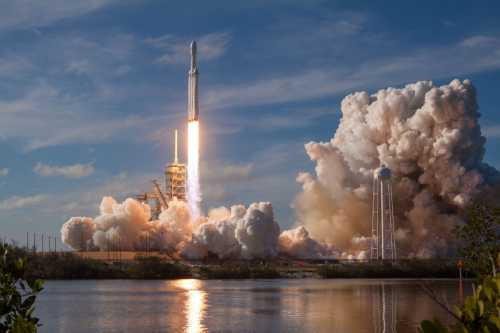
Imagine you have a really expensive, incredibly cool toy airplane. Every time you want to fly it, you throw it as hard as you can into the sky. It flies beautifully, but then it crashes into the ground and breaks into a million pieces. The next time you want to fly it, you have to buy a brand new toy airplane and throw it away again. This would be incredibly expensive, right? Now, imagine if you could throw the airplane into the sky, and then it magically flew back to your hand, completely intact, so you could throw it again and again. This is the concept of a "reusable rocket," and it is the holy grail of space travel. For years, one company, SpaceX, has been the only master of this magic trick. But in June 2026, a brilliant startup called Rocket Lab finally pulled off the impossible. They successfully launched their new, medium-lift rocket called "Neutron," and, in a breathtaking maneuver, caught the first-stage booster as it returned to Earth. This historic achievement not only proves that Rocket Lab is a true powerhouse in the space industry but also breaks SpaceX's long-standing monopoly on reusable rocketry, promising a new era of cheaper, more frequent access to space for everyone. Let us explore the engineering marvel behind Neutron and what it means for the future of humanity in the cosmos.
The Background: From Electron to Neutron
To understand the magnitude of the Neutron launch, we have to look at Rocket Lab's journey. The company was founded by Peter Beck, a visionary engineer from New Zealand, who started by building small rockets in a shed. Their first rocket, the "Electron," was a tiny, carbon-composite vehicle designed to launch small satellites (about the size of a microwave oven) into low Earth orbit. The Electron was revolutionary because it brought the cost of launching a small satellite down from tens of millions of dollars to just a few million. It was the "FedEx of space," providing dedicated, frequent rides for small payloads. However, the space industry was changing. The new mega-constellations of satellites (like Starlink and Kuiper) required launching hundreds of large satellites at a time. The Electron was simply too small. Furthermore, the Electron was not reusable; it splashed down in the ocean and was not recovered. Rocket Lab realized that to survive and thrive in the 2020s and beyond, they needed a bigger, reusable rocket that could compete directly with SpaceX's workhorse, the Falcon 9. Thus, the Neutron project was born. It was a massive, multi-billion dollar gamble. If it failed, it could bankrupt the company. If it succeeded, it would secure their place as the number two space launch provider in the world.
The Engineering Marvel: How Neutron Works
The Neutron rocket is a masterpiece of modern aerospace engineering. It stands about 40 meters tall (roughly a 12-story building) and is designed to lift up to 13,000 kilograms to low Earth orbit. But its most unique feature is its design. Unlike the traditional, cylindrical rockets we are used to seeing, Neutron is wide and squat, often described as looking like a "flying trash can" or a "bullet." This unusual shape is not for aesthetics; it is purely functional. The wide base allows it to house seven of Rocket Lab's advanced "Archimedes" engines. These engines are unique because they are built entirely using 3D printing (additive manufacturing). 3D printing allows Rocket Lab to create complex engine parts with internal cooling channels that would be impossible to machine traditionally. This makes the engines lighter, cheaper, and more efficient. The rocket is made from a novel carbon-ceramic composite material that is incredibly strong but can withstand the intense heat of re-entry without needing heavy, traditional heat shields. But the real magic is in the landing system. Instead of landing vertically on its tail like the Falcon 9, Neutron is designed to land horizontally. As the first stage returns from space, it deploys massive, bat-like wings and a set of landing gear, gliding down and touching down on a runway like an airplane. This "smart reuse" design means the engine section is protected from the saltwater corrosion of an ocean splashdown, allowing for much faster turnaround times between flights.
HISTORY MADE. Neutron has reached orbit, and Booster 1 has successfully returned and landed. We are officially a reusable, medium-lift launch provider. The future of space is open for business. #NeutronLaunch
— Rocket Lab (@RocketLab) June 21, 2026
The Mission: Delivering the 'Starlab' Space Station Module
For its maiden voyage, Rocket Lab did not just launch a dummy payload; they secured a massive, high-profile commercial contract. The Neutron rocket was tasked with launching the first major component of the "Starlab" commercial space station. Starlab is a joint venture between Airbus, Lockheed Martin, and Voyager Space, designed to be the successor to the International Space Station (ISS) once the ISS is decommissioned later this decade. The module, a massive habitat and airlock segment weighing over 10,000 kilograms, needed a reliable, heavy-lift rocket to get it into orbit. By winning this contract, Rocket Lab proved to the world that their new rocket was not just a prototype; it was a commercial workhorse ready for prime time. The launch sequence was flawless. The seven Archimedes engines ignited, filling the Florida sky with a deafening roar and a blinding flash of light. The rocket ascended perfectly through the atmosphere. About two and a half minutes after liftoff, the first stage separated and began its flip maneuver to orient itself for the return journey. The second stage continued on to orbit, successfully deploying the Starlab module into its precise orbital slot. But all eyes were on the first stage. It fired its engines to slow down, deployed its wings, and glided gracefully toward the landing zone at the Kennedy Space Center. Touchdown was perfect. The crowd at the launch site erupted in cheers. It was a flawless debut.
The Economics of Reusability: Breaking the Cost Barrier
Why is this reuse thing such a big deal? It all comes down to economics. Building a single Falcon 9 or Neutron rocket costs tens of millions of dollars. If you throw it away after one use, the cost of launching a satellite is incredibly high because you have to pay for the entire rocket every single time. It is like buying a 747 airplane, flying from New York to London, and then throwing the airplane into the ocean. The ticket price would be astronomical. But if you can fly the same airplane 100 times, the cost of the airplane per flight becomes negligible. You only have to pay for the jet fuel. Rockets are the same. The fuel for a Neutron launch costs only a few hundred thousand dollars. If Rocket Lab can fly the same booster 20, 30, or 50 times, the cost to launch a kilogram of payload to orbit drops from thousands of dollars to just a few hundred. This dramatic reduction in launch costs unlocks entirely new business models. It makes it economically viable to launch large constellations of internet satellites, to send manufacturing facilities into space, to build massive solar power stations in orbit that beam energy back to Earth, and to eventually send humans to the Moon and Mars. Reusability is not just a cool trick; it is the fundamental key to opening up space as a domain for economic activity, rather than just a place for government exploration.
The Competition: A Duopoly in Space
With the successful launch of Neutron, the global launch market has fundamentally shifted. For the past decade, SpaceX has been the undisputed king of commercial launch. They launch almost every week, and their monopoly on reusability has allowed them to undercut every competitor on price. This monopoly has been a concern for many governments and commercial customers. If SpaceX has a technical issue and their fleet is grounded, the entire global space industry grinds to a halt. We saw this in the past when a Falcon 9 explosion grounded the fleet for months. The entry of Rocket Lab as a fully reusable, medium-lift provider creates a healthy "duopoly." Commercial customers now have a real alternative. If they do not like SpaceX's price or schedule, they can go to Rocket Lab. This competition is incredibly good for the industry. It drives innovation, lowers prices, and increases launch cadence. Furthermore, the US Department of Defense and NASA are thrilled. They have a strict policy of not relying on a single provider for critical national security launches. Rocket Lab's success means the US government now has two fully domestic, commercially viable providers for heavy-lift missions, ensuring national security access to space is guaranteed. The rivalry between Peter Beck and Elon Musk is now the defining narrative of the commercial space age, pushing both companies to achieve the impossible at a breathtaking pace.
Beyond Launch: Rocket Lab's Vertical Integration
What makes Rocket Lab truly unique, and perhaps more successful in the long run than some of its competitors, is its "end-to-end" space company model. They do not just build rockets; they build the satellites too. Rocket Lab has a massive space systems division that manufactures satellite components, solar panels, reaction wheels, and even complete satellite buses (the "Photon" platform). When a customer hires Rocket Lab to launch a satellite, Rocket Lab can also build the satellite, provide the software to operate it, and even manage the on-orbit servicing. This vertical integration is a massive strategic advantage. It means they capture revenue at every stage of the space value chain. If the launch market experiences a downturn, their space systems division keeps the company profitable. It also gives them deep, intimate knowledge of what satellite builders actually need from a launch provider, allowing them to design rockets that are perfectly optimized for their payloads. The success of Neutron is not just a win for their launch division; it is a massive catalyst for their entire ecosystem. Customers can now say, "Rocket Lab, build me a satellite, launch it on Neutron, and manage it in orbit," creating a seamless, one-stop-shop for space access.
The Future: Lunar Logistics and Mars
With the maiden flight of Neutron successfully behind them, Rocket Lab is now looking to the future. The immediate goal is to increase the launch cadence. They plan to build a second launch pad for Neutron and aim to launch it every two weeks by 2027. But their ambitions go far beyond low Earth orbit. Rocket Lab has been awarded lucrative contracts by NASA and the US Space Force to develop lunar logistics capabilities. They are designing a variant of Neutron, potentially with additional upper stages, to deliver cargo directly to the surface of the Moon in support of the Artemis program. They are also developing advanced in-space propulsion systems and orbital transfer vehicles that can take payloads from low Earth orbit to the Moon, or even to Mars. Peter Beck has always been clear that his ultimate goal is to make humanity a space-faring civilization. The success of Neutron is the critical stepping stone to that vision. It provides the heavy-lift capacity needed to launch the massive infrastructure required for a permanent lunar base and, eventually, a human mission to Mars. The era of space exploration being solely the domain of massive, slow, government agencies is over. The commercial space age has truly arrived, and it is reusable, frequent, and driven by the relentless innovation of startups like Rocket Lab.
In summary, the successful launch and landing of the Neutron rocket in June 2026 is a monumental achievement for Rocket Lab and a watershed moment for the global space industry. It shatters the myth that SpaceX is the only company capable of mastering reusable orbital-class rocketry. By combining innovative engineering, 3D-printed engines, and a unique horizontal landing design, Rocket Lab has created a vehicle that is not just a competitor, but a potential game-changer for the economics of space access. This success ensures a competitive, robust, and resilient launch market, which is essential for the next giant leaps in space exploration, from commercial space stations to lunar bases and beyond. Peter Beck and his team have proven that with enough vision, engineering brilliance, and sheer determination, the impossible is just another problem to be solved. The skies are no longer the limit; they are just the beginning. As Neutron prepares for its next flight, the world watches with bated breath, knowing that every time one of these rockets touches down safely, humanity takes another giant leap towards the stars. Read the full coverage on The Guardian.
Related Articles

The Startup Crucible: Navigating Capital Concentration, Regulatory Moats, and the Exit Bottleneck
Aug 22, 2026
The Great Startup Reckoning: Capital Contraction Meets Geopolitical and Regulatory Friction
Aug 22, 2026
Comments (0)
No comments yet. Be the first to share your thoughts!
Want to join the discussion?
Please log in to post a comment.
Login NoworCreate an Account