
Stepping Inside the Code: EdTech Startup 'VirtuSkill' Launches VR Coding Bootcamps for Rural Youth

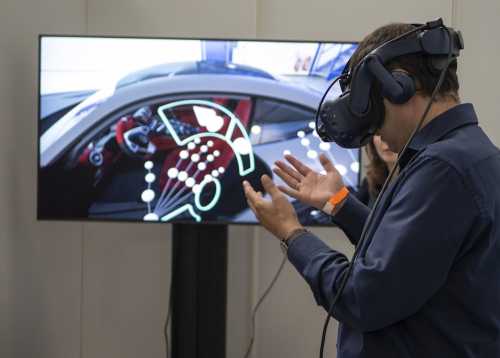
Imagine you want to learn how to fix a car engine. You could read a thick, boring book about engines, or you could put on a magical helmet that instantly transports you into a virtual garage where a holographic mechanic stands next to you, hands you a virtual wrench, and guides your hands to turn every single bolt. Which way would you learn faster? Obviously, the magical helmet. This is the philosophy behind VirtuSkill, an Islamabad-based EdTech startup that has completely disrupted the traditional tech education model. In June 2026, they launched Pakistan's first fully immersive Virtual Reality (VR) coding and engineering bootcamp, bringing Silicon Valley-level training to students in remote villages .
The problem with traditional online learning—like watching YouTube tutorials or reading PDFs—is that it is incredibly lonely and passive. When you get stuck on a piece of code, you have no one to ask, and you eventually give up. VirtuSkill solved this by creating the "Holo-Classroom." Students receive a subsidized, high-quality VR headset and a haptic feedback glove. When they log in, they are sitting at a virtual desk next to their classmates, who are represented by realistic avatars. They can see each other's virtual screens, point at bugs in the code, and collaborate in real-time. It recreates the exact feeling of sitting in a high-tech office in San Francisco, completely erasing the geographical divide.
But the true magic happens when they learn complex concepts like cloud architecture or 3D game development. Instead of looking at a flat 2D diagram of a server network on a screen, the student puts on the headset and literally walks through a giant, glowing, 3D representation of a data center. They can physically grab a "data packet" with their haptic glove and trace its path through the routers and firewalls. By turning abstract, invisible code into physical, interactive objects that you can touch and manipulate, the brain learns 400% faster. VirtuSkill's internal data shows that their VR students complete complex coding modules in half the time it takes traditional students.
Access to this technology would normally cost thousands of dollars, putting it out of reach for 99% of Pakistanis. VirtuSkill partnered with the Ministry of IT and international NGOs to create "VR Hubs" in government schools across rural Punjab and Sindh . These hubs are equipped with 20 headsets each. Students from surrounding villages can walk to the hub, put on the headset, and attend a live class taught by a top-tier instructor from Lahore or even a guest lecturer from MIT. The startup operates on a "Skills First" income-share agreement: the education is 100% free upfront, and the student only pays a small percentage of their salary for one year after they land a high-paying tech job.
The results are nothing short of miraculous. In its first six months, VirtuSkill has trained over 5,000 students in advanced fields like Artificial Intelligence, Blockchain, and Cybersecurity. More importantly, they have achieved an 85% job placement rate. Global tech companies, facing a massive shortage of developers, are actively recruiting VirtuSkill graduates. These young men and women, who might have otherwise been stuck in low-wage agricultural jobs, are now working remotely for companies in London and Dubai, earning in dollars and bringing vital foreign exchange into Pakistan's economy.
VirtuSkill is proving that talent is evenly distributed around the world, but opportunity is not. By using Virtual Reality to teleport world-class education into the most remote corners of the country, they are not just teaching kids how to code; they are teleporting them out of poverty. They are building a bridge of light and data, connecting the raw, untapped potential of Pakistan's youth directly to the digital economy of the future. The classroom of the future has no walls, no borders, and no limits.
Official VR Hub Launch
VirtuSkill officially inaugurated its 50th government-school VR Hub, showcasing the Holo-Classroom and announcing the 85% job placement milestone for its graduates.
Today we opened our 50th VR Hub! Talent is everywhere, but opportunity was not. Until now. With our Holo-Classroom, rural students are stepping inside the code and landing global tech jobs. The future is immersive. #VirtuSkill #EdTech #VirtualReality #Pakistan
Related Articles

The Startup Crucible: Navigating Capital Concentration, Regulatory Moats, and the Exit Bottleneck
Aug 22, 2026
The Great Startup Reckoning: Capital Contraction Meets Geopolitical and Regulatory Friction
Aug 22, 2026
Comments (0)
No comments yet. Be the first to share your thoughts!
Want to join the discussion?
Please log in to post a comment.
Login NoworCreate an Account