
The 2026 Policy Trilemma: How Tariffs, Fed Friction, and Regulatory Paralysis Are Rewiring the U.S. Economy

The Fracture Point: An Analogy for 2026
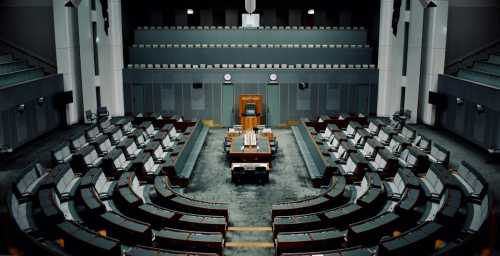
Managing the current U.S. macroeconomic and geopolitical landscape is akin to performing open-heart surgery on a patient who is simultaneously running a marathon. The body is moving forward, but the internal systems are under catastrophic, compounding stress. As of late August 2026, the convergence of aggressive trade tariffs, mounting pressure on Federal Reserve independence, legislative paralysis on artificial intelligence, and emergency executive actions on the national power grid has created a perfect storm of policy friction siepr.stanford.edu .
The Catalyst: A Convergence of Policy Shocks
In the second quarter of 2026, U.S. economic growth decelerated to 1.5% amid escalating trade disputes with Canada and a federal court ruling declaring certain administration tariffs unlawful www.nrca.net , www.facebook.com . Concurrently, the White House has invoked the Defense Production Act to secure the bulk-power system, while the 119th Congress remains deadlocked on foundational AI governance, leaving the Federal Reserve to navigate inflationary pressures amid unprecedented political scrutiny over its institutional independence www.intereconomics.eu , iapp.org , www.whitehouse.gov .
Capital Markets and Supply Chain Fragmentation
Mainstream narratives fixate on headline inflation and tariff rhetoric, but they ignore the structural fragmentation occurring in North American supply chains. The proposed 60% tariffs on Chinese goods and reciprocal measures against traditional allies like Canada are not merely diplomatic posturing; they are actively rewiring corporate capital expenditure. Multinational firms are now pricing in a permanent geopolitical risk premium, diverting billions from productivity-enhancing AI investments into redundant, near-shored inventory buffers. This bifurcation of global trade forces multinational corporations to operate dual supply chains, effectively doubling operational overhead. The proposed tariffs could cost Washington families over $2,600 annually, threatening 40% of state jobs tied to international trade, a statistic that underscores the domestic collateral damage of macroeconomic brinkmanship wcit.org . This capital misallocation will silently depress long-term GDP potential, a factor largely absent from current Wall Street consensus models www.project-syndicate.org .
Furthermore, the executive mandate forcing U.S. utilities to replace foreign power equipment under the guise of national security introduces a massive, unfunded liability to the energy sector. Grid modernization was already capital-intensive; layering on forced supply chain decoupling will inevitably trigger localized rate hikes. These costs will be passed directly to industrial consumers, eroding the competitive advantage of U.S. manufacturing just as the administration claims to be revitalizing it www.foxbusiness.com .
Finally, the legislative vacuum in AI regulation is creating a fragmented state-level compliance regime. With only 33 shared working days remaining for the 119th Congress to act on digital policy, the absence of a federal framework means tech firms must navigate a patchwork of contradictory state laws iapp.org . This regulatory uncertainty stifles domestic innovation, inadvertently ceding long-term technological hegemony to jurisdictions with clearer, albeit stricter, centralized AI governance frameworks.
The Sovereignty Imperative: A Necessary Counterweight
Critics of this analysis often argue that decoupling and aggressive tariff regimes are economically self-defeating. However, this perspective underestimates the Sovereignty Imperative. From a strategic standpoint, the short-term economic friction is a calculated cost of reducing critical vulnerabilities. As noted by trade policy analysts, relying on adversarial nations for bulk-power infrastructure or critical minerals poses an existential risk that outweighs quarterly earnings disruptions. The administration’s actions, while economically blunt, are rooted in a legitimate national security calculus that pure free-market models fail to capture www.coface.com .
Echoes of 1971: The Nixon Shock and Monetary Friction
The current tension between the executive branch and the Federal Reserve mirrors the fraught dynamics of 1971. Then, President Nixon pressured the Fed to maintain accommodative policy to boost his reelection prospects, while simultaneously imposing wage-price controls and a 10% import surcharge. The subsequent appointment of Paul Volcker was required to brutally reset market expectations. Today, with a new Fed chair nominee facing intense partisan scrutiny, the central bank’s ability to act preemptively against inflation is compromised. If political pressure dictates monetary policy, we risk repeating the error of prioritizing short-term electoral cycles over long-term currency stability, risking a similar feedback loop of artificially suppressed rates masking tariff-induced inflation www.intereconomics.eu , www.cnbc.com .
The Compliance Theater Trap
Conversely, one must acknowledge the risk of compliance theater in the administration’s energy and trade directives. Mandating the replacement of foreign grid equipment sounds robust, but domestic manufacturing capacity for high-voltage transformers is currently insufficient to meet demand without severe delays. As a result, utilities may engage in superficial compliance, such as relabeling or minor modifications, rather than genuine supply chain resilience. This creates an illusion of security while the underlying systemic vulnerability remains intact, wasting capital that could have been deployed toward actual grid hardening www.foxbusiness.com .
Strategic Imperatives for Market Participants
Local businesses and institutional investors must immediately pivot from passive exposure to active hedging. First, corporate treasurers should audit their supply chains for single points of failure, particularly in energy infrastructure and cross-border logistics, and diversify suppliers across friendly jurisdictions. For the agricultural sector, which relies heavily on cross-border logistics, securing alternative freight corridors and locking in forward contracts for inputs is no longer optional. Second, investors should overweight sectors that benefit from regulatory arbitrage, such as domestic grid-security contractors and compliance-software providers, while underweighting highly leveraged retail firms vulnerable to consumer cost-of-living squeezes. Technology firms must allocate legal budgets toward state-level compliance navigation, as the federal vacuum leaves them exposed to a patchwork of 50 different regulatory regimes. Finally, citizens should lock in fixed-rate debt now, as the eventual monetary correction to tariff-driven inflation will likely push borrowing costs higher in the near term.
The Six-Month Horizon: Stagflationary Drift
Looking six months ahead, the landscape will likely deteriorate into a mild stagflationary drift. The legal challenges to tariff policies will create episodic market volatility, but the underlying protectionist trajectory will remain intact. The Federal Reserve will face an impossible trilemma: fight tariff-induced inflation, support a slowing 1.5% growth economy, or maintain institutional credibility www.nrca.net . Expect the Fed to hold rates higher for longer, prioritizing credibility over growth, which will keep capital costs elevated and continue to pressure mid-cap equities and housing markets through early 2027.
In 2026 Donald Trump's chosen replacement for chair of the Federal Reserve will indicate whether central bank independence can hold in America.
— The Economist (@TheEconomist) August 27, 2026
Related Articles
The Institutional Fault Line: How Judicial Overreach and Trade Wars Are Reshaping U.S. Markets
Aug 23, 2026
The Fractured Consensus: How Trade Volatility and Institutional Strain Are Rewiring U.S. Macroeconomics
Aug 22, 2026
Comments (0)
No comments yet. Be the first to share your thoughts!
Want to join the discussion?
Please log in to post a comment.
Login NoworCreate an Account