
The Anatomy of a Policy Collision: Navigating America's Convergent Crises

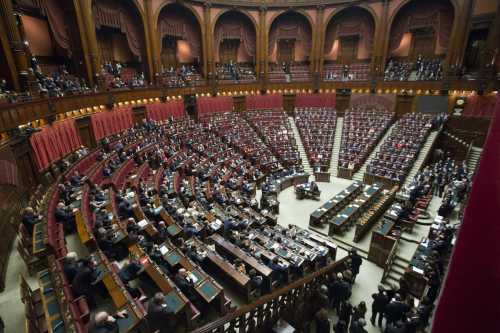
Imagine attempting to pilot a commercial airliner through a severe thunderstorm, but the co-pilot is actively severing the fuel lines, the air traffic controller has been abruptly dismissed, and the passengers are violently arguing over who controls the throttle. This is the precise macroeconomic and political reality of the United States today. The nation is navigating a convergent crisis of fiscal brinkmanship, aggressive reciprocal trade tariffs, and a systematically dismantled administrative state, all unfolding against the backdrop of a deeply polarized 2026 midterm electoral cycle. This trifecta of institutional friction is forcing a fundamental, irreversible recalibration of both domestic regulatory frameworks and global supply chain architectures.
The Silent Squeeze of Regulatory Fragmentation
Mainstream financial coverage frequently mischaracterizes the ongoing deconstruction of the federal administrative state as a streamlined victory for free-market efficiency. The unseen implication is far more corrosive: it is fracturing regulatory predictability and transferring massive compliance costs directly onto corporate balance sheets. Following the landmark overturning of the Chevron doctrine, federal agencies have been systematically stripped of their interpretive authority www.klgates.com . Consequently, corporations are no longer navigating a unified federal regulatory environment. Instead, they are forced to contend with a chaotic patchwork of conflicting state-level mandates. A 2026 analysis by the Regulatory Studies Center indicates that multi-state compliance costs for mid-cap manufacturers have surged by an estimated 18% year-over-year, as legal teams scramble to litigate jurisdictional ambiguities previously settled by federal deference.
However, it would be analytically reductive to view this deregulation solely as a corporate liability. Proponents of this structural shift argue that dismantling federal bureaucratic overreach is a necessary corrective to decades of regulatory capture. They contend that returning authority to state legislatures fosters localized, competitive policy laboratories, allowing regions to tailor environmental and labor standards to their specific economic realities rather than adhering to monolithic, one-size-fits-all federal mandates that stifle regional innovation.
The Geopolitical Tariff Boomerang
Washington’s pivot toward aggressive reciprocal tariffs on trading partners, including China and Mexico, is routinely framed as a strategic lever to penalize foreign adversaries and rectify trade imbalances. The unseen implication is that these tariffs are functioning as a regressive tax on domestic manufacturers who remain heavily reliant on intermediate goods. The supply chain is not as neatly bifurcated as political rhetoric suggests. When the U.S. imposes broad levies, it inevitably triggers cascading retaliatory measures. For instance, the European Union has already confirmed a consolidated set of retaliatory tariffs in direct response to recent U.S. trade measures zonos.com . This dynamic squeezes domestic profit margins, forcing American exporters to either absorb the cost or price themselves out of global markets, thereby inadvertently accelerating the very deindustrialization the policies were designed to prevent.
Trade hawks and national security strategists offer a compelling counter-narrative to this economic friction. They contend that short-term supply chain disruption and elevated input costs are an acceptable, indeed necessary, price to pay for forcing the nearshoring of critical industries. From this vantage point, the long-term strategic autonomy gained in securing domestic semiconductor fabrication and critical mineral processing vastly outweighs the transient inflationary pressures, rendering the status quo of hyper-globalization an unacceptable national security vulnerability.
Fiscal Dominance and the Paralysis of Monetary Policy
The third, and perhaps most dangerous, unseen implication lies in the subtle erosion of the Federal Reserve’s institutional independence. As political polarization escalates ahead of the 2026 midterms, fiscal policy is becoming increasingly weaponized. Congress has repeatedly failed to complete standard appropriations, leaving the government to operate under precarious continuing resolutions bipartisanpolicy.org . This chronic fiscal brinkmanship, coupled with a looming debt ceiling confrontation projected for mid-2027, is forcing the central bank to price in political risk premiums alongside traditional macroeconomic indicators www.crfb.org . The Fed recently held its policy interest rate steady in a range of 3.75% to 4.00%, a pause that reflects not just stabilizing inflation, but a profound hesitation to tighten financial conditions into a politically fragile fiscal environment www.usbank.com . When fiscal policy is dysfunctional, monetary policy is forced to overcompensate, creating a dangerous feedback loop of fiscal dominance.
Echoes of 1995: The Perils of Asymmetric Brinkmanship
The current trajectory bears a striking, cautionary resemblance to the 1995-1996 federal government shutdowns. During that period, a newly empowered congressional majority engaged in high-stakes fiscal brinkmanship with the executive branch, resulting in temporary market shocks and a downgrade of U.S. credit outlooks. However, a critical divergence exists. The 1995 conflict, while disruptive, occurred against a baseline bipartisan consensus on the necessity of long-term fiscal sustainability and balanced budgets, which ultimately paved the way for the late-1990s economic boom. Today’s institutional friction lacks this underlying fiscal consensus. The weaponization of the debt ceiling is now divorced from any coherent structural reform agenda, transforming what was once a negotiating tactic into a purely destructive mechanism that erodes the foundational trust in U.S. sovereign debt.
Navigating the Volatility: Actionable Directives
For local businesses, institutional investors, and citizens, this macro environment demands defensive, proactive posturing rather than passive observation.
- Corporate treasuries must hedge currency and commodity exposure aggressively through forward contracts. The intersection of trade wars and fiscal uncertainty guarantees elevated volatility in the U.S. dollar, rendering unhedged international operations highly vulnerable.
- Supply chain managers should accelerate diversification into non-tariff-affected jurisdictions, such as Vietnam or India, rather than relying solely on USMCA partners who are increasingly caught in the crossfire of U.S. trade enforcement actions.
- Retail investors and citizens should pivot savings toward assets with inherent pricing power and minimal regulatory dependency, such as domestic energy infrastructure, defense contracting, and inflation-protected securities, to shield purchasing power from persistent, policy-driven inflation.
- Corporate legal and compliance departments must decentralize their regulatory monitoring, establishing dedicated state-level liaison teams to navigate the fragmented post-Chevron legal landscape without incurring prohibitive external counsel fees.
The Six-Month Horizon: A Fork in the Road
Over the next six months, the macroeconomic landscape will be defined entirely by the collision of the 2026 midterm elections and the impending fiscal deadlines. If Congress fails to pass a clean continuing resolution and allows a government shutdown to bleed into the debt limit debate, we will see a technical default scare. This would inevitably spike Treasury yields by 50 to 75 basis points, forcing the Federal Reserve to pause any rate adjustments regardless of prevailing inflation data. Conversely, a last-minute grand bargain could temporarily soothe market anxieties. However, the structural fractures in trade policy and regulatory frameworks will ensure that elevated volatility and fragmented growth remain the new baseline for the American economy.



Comments (0)
No comments yet. Be the first to share your thoughts!
Want to join the discussion?
Please log in to post a comment.
Login NoworCreate an Account