
The Concrete Comeback: Inside the $562 Billion Commercial Real Estate Rebound and the Office Conversion Myth

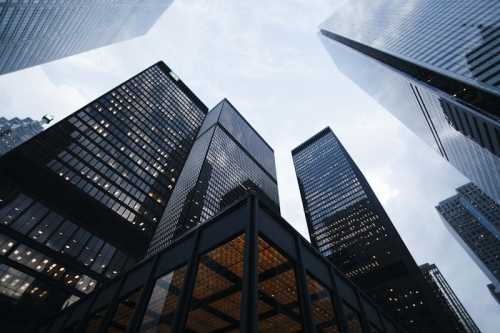
For the past three years, the prevailing narrative in the business world regarding Commercial Real Estate (CRE) has been one of unrelenting doom and gloom. Headlines have screamed about the "death of the office," the "commercial real estate apocalypse," and the impending collapse of regional banks tied to toxic office loans. The image of the empty downtown skyline, with darkened glass towers and weeping municipal bondholders, has become a staple of financial journalism. However, as we navigate the middle of 2026, a fascinating and counterintuitive reality is emerging from the data: the CRE market is not dying; it is violently mutating. According to the latest U.S. Real Estate Market Outlook from CBRE, despite the well-documented challenges in the office sector, overall commercial real estate investment activity is actually expected to increase by a robust 16% in 2026, reaching a massive $562 billion. To understand this paradox, imagine a massive, ancient forest that has just been struck by a devastating wildfire. From a distance, it looks like everything is destroyed and dead. But if you look closely at the forest floor, the ashes are providing incredibly rich nutrients, and a completely new, more resilient ecosystem of different plant species is already sprouting from the ground. This is exactly what is happening in commercial real estate. The old guard of the traditional Class A office building is indeed burning, but the capital is not disappearing; it is aggressively flowing into new asset classes like data centers, industrial logistics, and specialized residential, creating a $562 billion rebound that is fundamentally reshaping the physical landscape of the American economy.
The Headwinds: Uncertainty, Tech Shifts, and Portfolio Risk
Before celebrating the rebound, it is crucial to understand the severe headwinds that are still battering the sector. The National Association of Realtors (NAR) has clearly outlined the top issues defining the commercial real estate market in 2026: profound economic uncertainty, rapid technological shifts, slower population growth in key urban centers, and rising portfolio risk. Let us break down what this means in plain English. Economic uncertainty means that interest rates, while stabilizing, remain high enough to make borrowing incredibly expensive, squeezing the cash flow of property owners. Technological shifts refer to the permanent adoption of remote and hybrid work models, which have structurally reduced the demand for square footage per employee. Slower population growth in the dense urban cores means there is less organic demand for new housing and retail space to absorb the excess inventory. Finally, rising portfolio risk means that the financial models used to value these buildings are breaking down. A building that was valued at $100 million in 2019 based on 95% occupancy and $80 per square foot in rent might now be worth $40 million because it is only 60% occupied and rents have dropped to $55. When the value of the building drops below the amount owed on the mortgage, the owner faces a "negative equity" scenario, leading to a wave of strategic defaults and distressed sales. This is the dark cloud hanging over the market, and it is the reason why the rebound is so uneven and highly concentrated in specific, non-office sectors.
The Office Conversion Myth and the Math of Reality
The most persistent myth in the CRE discourse is that the solution to the empty office crisis is simple: just convert the offices into apartments. Politicians love this idea, offering tax incentives and fast-tracked permits to encourage developers to transform dark office towers into vibrant residential communities. However, the math and the physical reality of office conversions tell a vastly different, much more depressing story. An office building is designed for a completely different purpose than a residential apartment. Offices have massive, deep floor plates designed to maximize desk density, meaning the center of the building is hundreds of feet away from any exterior windows. If you try to put apartments in that space, the interior bedrooms and living rooms will have no natural light and no ventilation, creating unlivable, depressing boxes that no one wants to rent. Furthermore, apartments require extensive plumbing for kitchens and bathrooms on every single unit. Office buildings only have plumbing concentrated in specific core areas for restrooms. Retrofitting a 40-story office tower with the plumbing, gas lines, and electrical upgrades required for hundreds of individual apartments is astronomically expensive, often costing more than the final value of the residential building once completed. Because of this brutal physical and financial reality, the vast majority of office conversions are economically unfeasible. The $562 billion in new CRE investment is not flowing into saving old office buildings; it is flowing into building the assets that the new economy actually demands.
The New Capital: Data Centers and the Industrial Renaissance
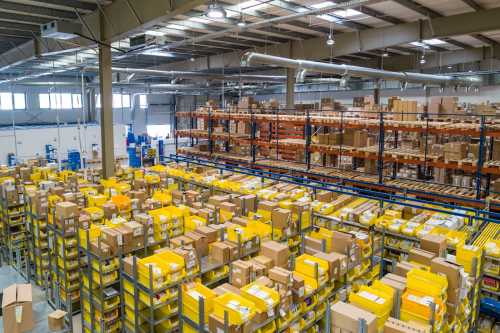
So, if the money isn't going into offices, where is the $562 billion going? The answer lies in the physical infrastructure of the digital and logistical economy. The lion's share of new CRE capital is flooding into data centers, industrial logistics facilities, and specialized manufacturing plants. As the AI boom continues to accelerate, the demand for compute power requires massive, specialized buildings with reinforced floors, advanced cooling systems, and, most critically, access to enormous amounts of electrical power. These data centers are the new office buildings of the 21st century, commanding premium rents and attracting long-term leases from the wealthiest technology companies on the planet. Similarly, the industrial sector is experiencing a renaissance driven by the nearshoring of supply chains and the demands of e-commerce. Companies are no longer content to rely on a single, massive distribution center in the middle of the country; they need a network of smaller, highly automated "last-mile" fulfillment centers located as close to major urban populations as possible. This shift is creating immense value for landowners and developers who can secure zoned land with the necessary power infrastructure near major highways and ports. The capital is following the utility, and in 2026, the utility is found in the physical processing of data and goods, not in the physical housing of corporate middle managers.
The Municipal Tax Bomb and the Future of the CBD
The most tragic casualty of this CRE mutation is not the private equity firm or the regional bank; it is the municipal budget of the major American cities. The Central Business District (CBD) model was built on the premise of a massive concentration of high-income office workers who pay property taxes, buy lunches, take the subway, and support the local service economy. As office values plummet and occupancy remains stubbornly low, the property tax assessments that fund the city's schools, police, and sanitation departments are collapsing. Cities are facing a "fiscal doom loop" where reduced tax revenue leads to reduced services, which leads to fewer people wanting to come to the office, which further reduces tax revenue. While the national CRE investment rebound is a positive sign for the broader economy, it does nothing to solve the localized fiscal crisis in downtown Manhattan, Chicago, or San Francisco. The solution will require a painful, generational restructuring of the urban core. We will likely see the demolition of the lowest-quality Class C and D office buildings to make way for mixed-use developments that combine residential, manufacturing, and green space. The city of the future will not be a monolith of glass offices; it will be a diverse, messy, and vibrant ecosystem of living, making, and computing. The concrete comeback is real, but it is building a completely new world on the ashes of the old one, and the transition will be as painful as it is profitable.
Comments (0)
No comments yet. Be the first to share your thoughts!
Want to join the discussion?
Please log in to post a comment.
Login NoworCreate an Account