
The Dollar Hegemony Trap: How Washington is Rewiring Pakistan's Economic Sovereignty

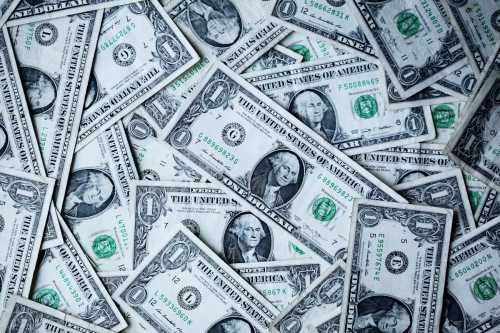
EXECUTIVE BRIEFING: US-PAKISTAN ECONOMIC STATECRAFT
Think of a sovereign liquidity crisis not as a sinking vessel, but as a patient on life support where the hospital administrator holds the power cord and demands the patient’s deed to the house as a co-pay. In a synchronized maneuver of economic statecraft, Washington has effectively weaponized bilateral liquidity and trade policy to force Islamabad into a structural corner. The United States is currently entertaining Pakistan’s request for a $10 billion Bilateral Exchange Stabilisation Support Facility while simultaneously wielding reciprocal tariffs and executing a 16% reduction in FY 2026 foreign assistance.
The Architecture of Coercion
The request for a $10 billion exchange stabilization facility from the US Treasury is fundamentally misunderstood by mainstream financial desks as a standard liquidity buffer. In reality, it operates as a shadow currency peg. By accepting dollar-denominated stabilization funds directly from the US Treasury—bypassing the multilateral neutrality of the IMF—the State Bank of Pakistan effectively cedes veto power over its monetary policy. This facility will require Islamabad to maintain specific foreign exchange reserve thresholds that align with US dollar strength, neutralizing any independent capacity to competitively devalue the rupee to boost exports.
Market Intelligence: "Pakistan has reportedly requested a $10 billion Bilateral Exchange Stabilisation Support Facility from the US Treasury in a move aimed at stabilizing its currency." View Primary Source.
Concurrently, the trade architecture is being aggressively restructured. Pakistan was initially targeted with a 29% reciprocal tariff under Section 301 of the Trade Act of 1974 because its own average import duties sit at a staggering 58 percent. While last-minute negotiations in Washington reduced this penalty to 19%, the structural damage is already priced into the market. This tariff regime acts as a regressive tax on indigenous manufacturers in Sialkot and Faisalabad, who lack the offshore balance sheets required to absorb the margin compression, while simultaneously protecting multinational supply chains that can route goods through third-party jurisdictions.
The intersection of this bilateral pressure with Pakistan’s ongoing $7 billion IMF Extended Fund Facility creates a dual-sovereignty trap. Islamabad is now forced to satisfy the macroeconomic austerity models of the IMF while simultaneously passing the fiscal transparency audits of the US State Department. The latest US fiscal transparency report explicitly flagged "major gaps in Pakistan's public financial system," specifically targeting opaque military and defense expenditures. This means that future IMF tranches are implicitly contingent upon Washington’s security establishment being satisfied with Islamabad's domestic budgetary allocations.
The Protectionism Paradox
Apologists for aggressive US trade enforcement argue that the Section 301 tariffs are merely a necessary market correction to cure Pakistan’s chronic protectionism. The prevailing narrative in Washington suggests that forcing open Pakistan’s domestic market will eventually catalyze foreign direct investment and integrate the country into higher-value global supply chains. However, this assumes a level of elasticity in Pakistan’s industrial base that simply does not exist. Punitive tariffs exceeding 15% on developing economies historically do not spur immediate domestic reform; they trigger capital flight. The additional 10% and 12.5% tariffs recently imposed on Pakistani goods over forced labor allegations further compound this compliance theater, forcing local exporters to spend millions on Western auditing firms rather than upgrading manufacturing capacity.
Echoes of 1997: Asset Acquisition via Austerity
The current macroeconomic squeeze mirrors the mechanics of the 1997 Asian Financial Crisis, specifically the US-backed IMF conditionality imposed on South Korea. In December 1997, Seoul was forced to accept a $58 billion bailout package that required the immediate liberalization of its financial markets, the breaking of the chaebol monopolies, and the opening of domestic equities to hostile foreign takeovers—an event seared into the national psyche as the "Day of National Humiliation." The lesson from 1997 is that sovereign debt crises engineered by external creditors are rarely about financial recovery; they are vehicles for structural asset acquisition. Washington’s current posture toward Islamabad suggests a similar endgame: using the $10 billion stabilization facility and the threat of 29% tariffs to force the privatization of Pakistan’s state-owned enterprises (SOEs) and the deregulation of its agricultural sector, allowing US agribusiness and private equity to acquire distressed national assets at a steep discount.
Geopolitical Leverage vs. Financial Reality
Conversely, geopolitical realists argue that Washington’s leverage is overstated and that Pakistan retains ultimate sovereignty due to its nuclear arsenal and strategic geography. Proponents of this view point out that the US still requires Pakistani cooperation for regional stability, noting that historical US assistance has heavily prioritized security over economic development. They argue that the recent 16% cut in US foreign assistance is a temporary legislative maneuver rather than a permanent strategic decoupling. However, this counter-argument ignores the evolution of modern economic statecraft. In a high-interest-rate environment, military relevance does not pay for dollar-denominated external debt servicing. The US no longer needs to deploy troops or traditional aid to exert control; it simply relies on the clearinghouse power of the Federal Reserve and the US Treasury to dictate terms, rendering traditional geopolitical leverage obsolete in the face of a balance of payments crisis.
Hedging the Rupee
For local enterprises and institutional investors, the immediate mandate is aggressive jurisdictional arbitrage. Export-oriented conglomerates must immediately pivot their supply chain financing away from USD-denominated letters of credit and explore cross-border settlement mechanisms in RMB or Dirhams to bypass the US tariff dragnet. Small and medium enterprises (SMEs) in the textile sector must immediately renegotiate contracts to include currency escalation clauses, shifting the FX risk onto foreign buyers wherever possible. For retail investors and citizens, the implicit guarantee of a managed currency devaluation means that holding fiat rupees is a guaranteed loss of purchasing power. Capital must be rotated into hard assets, specifically dollar-pegged stablecoins, physical gold, and offshore equities, to insulate household wealth from the impending inflationary shock of the stabilization facility's conditionality.
Six-Month Horizon
Over the next two quarters, the $10 billion US exchange stabilization facility will likely materialize not as a cash injection, but as a series of short-term, high-interest rollovers tied to strict quarterly benchmarks. By Q1 2027, we will see a managed, stepped depreciation of the Pakistani rupee, engineered to satisfy US demands for export competitiveness while preventing a sovereign default. Simultaneously, the US will utilize the threat of reverting to the 29% tariff rate to force the Pakistani parliament to pass legislation granting operational autonomy to the State Bank and privatizing the energy sector. The landscape in six months will not be one of recovery, but of managed capitulation, where Islamabad retains the flag, but Washington holds the ledger.
Related Articles
The Institutional Fault Line: How Judicial Overreach and Trade Wars Are Reshaping U.S. Markets
Aug 23, 2026
The Fractured Consensus: How Trade Volatility and Institutional Strain Are Rewiring U.S. Macroeconomics
Aug 22, 2026
Comments (0)
No comments yet. Be the first to share your thoughts!
Want to join the discussion?
Please log in to post a comment.
Login NoworCreate an Account