
The Fed's June 2026 Standoff: Kevin Warsh Holds Rates Steady Amid Inflation Fears

The Federal Reserve, often simply called the Fed, is the central banking system of the United States. You can think of it as the bank for banks, but its most important job is to keep the economy stable. It does this by managing two main things: keeping prices stable (which means controlling inflation) and maximizing employment (making sure people have jobs). The primary tool the Fed uses to achieve these goals is the federal funds rate. This is the interest rate at which banks lend money to each other overnight. While this sounds like a highly technical banking detail, it actually has a massive, direct impact on your daily life. When the Fed raises this rate, it becomes more expensive for banks to borrow money. To compensate, banks raise the interest rates they charge to consumers and businesses. This means your mortgage, car loan, and credit card bills become more expensive. Because borrowing is more expensive, people and businesses spend less. This decrease in spending cools down the economy and brings inflation—the rate at which prices for goods and services rise—under control. Conversely, when the Fed lowers the rate, borrowing becomes cheaper, people spend more, and the economy speeds up.
The Decision: Holding Rates Steady
On Wednesday, June 17, 2026, the Federal Open Market Committee (FOMC), the policymaking body of the Federal Reserve, concluded its highly anticipated two-day meeting. The decision, which was widely expected by financial markets, was to keep the federal funds rate unchanged at a target range of 3.50% to 3.75%. This marks a significant pause in the Fed's monetary policy adjustments. The decision comes at a critical juncture for the U.S. economy, which has been navigating a complex landscape of resurgent inflation and shifting global dynamics. For the average consumer, this means that the interest rates on new loans, credit cards, and adjustable-rate mortgages will remain at their current, relatively high levels for the time being. There will be no immediate relief in borrowing costs, but there will also be no sudden spikes.
This meeting was particularly notable because it was the first FOMC meeting chaired by the new Federal Reserve Chair, Kevin Warsh. Chair Warsh, who recently took the helm, has been closely watched by investors and economists alike for clues about his monetary policy philosophy. Historically, Warsh has been known for a cautious approach to inflation, often favoring proactive measures to ensure that price increases do not become entrenched in the economy. During his first press conference following the decision, Warsh emphasized that while the economy remains resilient, the recent uptick in inflation data is a concern that the committee cannot ignore. He noted that while the labor market remains strong, the "last mile" of bringing inflation down to the Fed's 2% target is proving to be more challenging than initially anticipated. By holding rates steady, the committee is taking a "wait and see" approach, gathering more data to determine if the recent inflationary pressures are a temporary blip or a persistent trend that requires further rate hikes.
By holding rates steady, the committee is taking a "wait and see" approach, gathering more data to determine if the recent inflationary pressures are a temporary blip or a persistent trend.
Market Reaction and the "Hawkish" Tilt
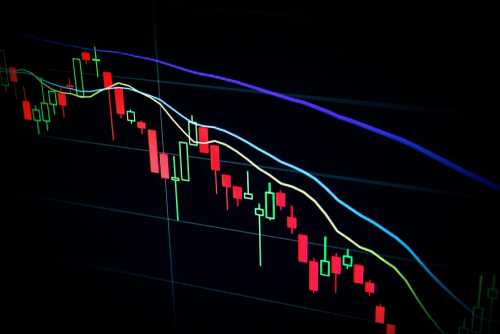
The reaction from the stock market was swift and decidedly negative, reflecting investor anxiety about the Fed's stance. Following the announcement and Chair Warsh's comments, Wall Street experienced a significant sell-off. The S&P 500 Index, which tracks the performance of 500 large companies listed on stock exchanges in the United States, briefly turned positive early in the trading session before reversing course. It ultimately closed near the low for the day, losing 1.6%. The tech-heavy Nasdaq Composite also suffered substantial losses. This market reaction is a classic example of how interest rate expectations drive investor behavior. When interest rates are high, the "risk-free" return on safe investments like government bonds becomes more attractive. Investors ask themselves: why take a risk on a volatile stock when I can get a guaranteed, solid return from a bond? Consequently, money flows out of the stock market and into the bond market, driving stock prices down. Furthermore, higher interest rates increase borrowing costs for corporations, which can eat into their profit margins and reduce their future earnings potential, making their stocks less valuable.
Despite the steady rate decision, the language used in the Fed's official statement leaned more "hawkish" than many had hoped. In central banking terminology, a "hawkish" stance means the policymakers are more concerned about inflation and are willing to keep interest rates high, or even raise them, to fight it. A "dove," on the other hand, is more concerned about employment and economic growth, favoring lower interest rates to stimulate the economy. The recent statement indicated that nearly half of the policymakers see the risks of inflation as being tilted to the upside. This means that while they held rates steady this time, the door is still very much open for a rate hike later this year if the inflation data does not improve. This hawkish tilt is what spooked the markets, as investors had been hoping for a clear signal that the rate-hiking cycle was definitively over and that rate cuts might be on the horizon.
What This Means for Your Wallet
So, what does all of this macroeconomic maneuvering mean for you, the everyday person? If you are carrying debt, particularly high-interest debt like credit card balances or variable-rate personal loans, the Fed's decision means your interest charges will not be decreasing anytime soon. It is a strong reminder of the importance of paying down high-interest debt as aggressively as possible. If you are looking to buy a house, the mortgage rates, which are influenced by the Fed's policies and the broader bond market, will likely remain elevated. This keeps housing affordability a major challenge for many prospective buyers, as the combination of high home prices and high mortgage rates stretches monthly budgets to the limit. However, there is a silver lining for savers. The high-interest-rate environment means that savings accounts, certificates of deposit (CDs), and money market accounts are offering much better yields than they have in over a decade. If you have cash sitting in a traditional, low-interest checking account, you are essentially leaving free money on the table. Moving your emergency fund or short-term savings into a high-yield savings account can provide a safe, guaranteed return on your money while you wait for the economic landscape to stabilize.
- Mortgages and Loans: Interest rates will remain at their current, relatively high levels, keeping borrowing expensive.
- Savings Accounts: High-yield savings accounts continue to offer excellent, safe returns for your cash reserves.
- Credit Cards: Carrying a balance remains expensive, emphasizing the critical need to pay down debt aggressively.
Looking ahead, the Federal Reserve faces a delicate balancing act. They must keep interest rates high enough to crush inflation and prevent it from becoming a permanent feature of the economy, but not so high that they choke off economic growth and trigger a recession. This is often described as trying to achieve a "soft landing"—bringing inflation down without causing a massive spike in unemployment. Chair Warsh and the FOMC will be relying heavily on incoming data, including monthly jobs reports, consumer price indexes, and personal consumption expenditures, to guide their next moves. The global economic environment also plays a crucial role. Disruptions in global supply chains, geopolitical conflicts, and fluctuating energy prices can all import inflation into the U.S. economy, complicating the Fed's efforts. As we move through the second half of 2026, the watchword from the Federal Reserve will be "data dependence." They will not act on assumptions or predictions; they will act on the hard economic data as it is released. For consumers and investors alike, this means expecting continued volatility and preparing for a financial environment where the cost of borrowing remains a significant factor in economic decision-making for the foreseeable future.
Related Articles
The Macroeconomic Inflection Point: Navigating Sovereign Debt, Labor Recalibration, and Trade Fragmentation
Aug 22, 2026
The Macroeconomic Reckoning: Navigating the Convergence of Debt, Trade, and Technological Shifts
Aug 22, 2026
Comments (0)
No comments yet. Be the first to share your thoughts!
Want to join the discussion?
Please log in to post a comment.
Login NoworCreate an Account