
The Great EV Stall: Why Hybrid Sales Are Surging as Legacy Automakers Brace for a Flood of Chinese Exports

The global automotive industry, long considered the ultimate bellwether of global manufacturing prowess and consumer confidence, is currently navigating a period of unprecedented turbulence and strategic paralysis. For the past five years, the narrative was singular and absolute: the internal combustion engine was dead, and the battery electric vehicle (BEV) was the undisputed future. However, as we move through 2026, that narrative has violently fractured. According to the latest forecasts from Cox Automotive, new-vehicle sales are projected to hit just 15.8 million this year, a noticeable decline that reflects a market struggling under the weight of high interest rates, persistent affordability issues, and a profound consumer identity crisis regarding electrification. To understand the current state of the auto industry, imagine a massive fleet of ships that were all ordered to sail in one specific direction toward an island called "Full Electrification." But halfway across the ocean, the captains suddenly realize the island is much further away than promised, the fuel they were given is incredibly expensive, and a massive storm is brewing on the horizon. So, instead of sailing blindly into the storm, the captains are turning the ships around and heading toward a much closer, safer harbor called "Hybrids." This is exactly what is happening in the auto market. The BEV adoption is stalling, hybrid sales are surging, and legacy automakers are desperately trying to figure out how to compete with a flood of incredibly cheap, highly advanced electric vehicles pouring out of China.
The BEV Stall and the Hybrid Renaissance
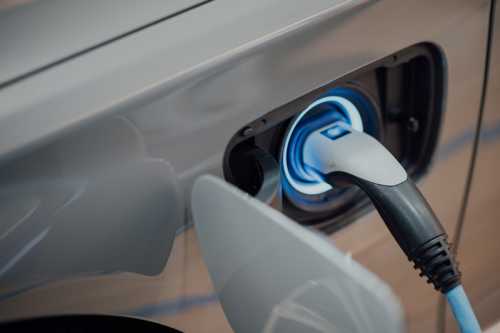
The most significant shift in the automotive landscape this year is the stark divergence between consumer rhetoric and consumer wallets. For years, surveys showed that a vast majority of consumers intended to buy an electric vehicle for their next car. But when it came time to actually sign the lease or the loan, the reality of the BEV experience set in. Range anxiety, the patchy and often unreliable public charging infrastructure, and the still-premium price tag of large battery packs caused a massive wave of buyers to pivot. Industry outlooks from major consulting firms like PwC confirm this trend: battery electric vehicle adoption has officially stalled, while hybrid and plug-in hybrid sales are experiencing a massive renaissance. The hybrid vehicle is the perfect compromise for the pragmatic consumer. It offers the smooth, quiet acceleration and the fuel savings of an electric car for daily commuting, but it retains the gas engine as a safety net for long road trips, completely eliminating the fear of being stranded at a broken charging station in the middle of nowhere. For the automakers, this pivot is a financial nightmare. They have spent hundreds of billions of dollars retooling factories, building battery gigafactories, and signing long-term lithium mining contracts based on the assumption of exponential BEV growth. Now, they are stuck with massive fixed costs and a sudden shift in demand toward vehicles that require complex dual-powertrain engineering, which is often more expensive to manufacture than a pure gas car or a pure electric car.
The Chinese Export Tsunami and the Tariff Wall
While legacy automakers in the US and Europe are struggling to recalibrate their powertrain strategies, they are simultaneously facing an existential threat from the East: the Chinese automotive export tsunami. Chinese manufacturers, led by giants like BYD, have achieved a level of vertical integration and supply chain dominance that is simply unmatched in the rest of the world. They control the mining of the raw materials, the refining of the battery components, the manufacturing of the cells, and the final assembly of the vehicle. This allows them to produce incredibly advanced, software-defined electric vehicles at a cost that legacy automakers cannot even comprehend, let alone match. As these companies look to expand beyond their saturated domestic market, they are flooding global export channels with vehicles that are priced 30% to 40% lower than their Western equivalents. The industry outlook clearly notes that China's auto exports are growing at an exponential rate, forcing a panicked response from Western governments. We are now seeing a sea of regulatory changes and aggressive tariff implementations designed to build a protective wall around the domestic auto industry. However, this protectionism comes at a steep cost. By shielding domestic automakers from Chinese competition, governments are effectively forcing their own citizens to pay a premium for vehicles, exacerbating the affordability crisis that is already keeping new-vehicle sales depressed at 15.8 million units. It is a delicate geopolitical tightrope: save the domestic auto manufacturing base, or provide affordable transportation to the masses.
The Software-Defined Vehicle and the Dealership Siege
Beyond the powertrain and the geopolitical trade wars, the fundamental nature of the vehicle itself is changing, creating a massive rift between the automakers and their traditional retail partners: the franchised dealerships. The modern car is no longer just a mechanical assembly of steel and glass; it is a rolling computer, a software-defined vehicle that generates massive amounts of data and requires continuous over-the-air updates. The value of the car is increasingly shifting from the hardware to the software. This creates a profound conflict with the traditional dealership model, which makes the vast majority of its profit from service, maintenance, and repairs. If an electric or hybrid vehicle requires significantly less mechanical maintenance, and the software can be updated remotely without a trip to the service bay, the dealership's economic foundation crumbles. Furthermore, automakers are looking at the direct-to-consumer model pioneered by Tesla and the digital retail platforms like Carvana, realizing that they could capture the entire margin of the vehicle sale if they could just bypass the franchised middleman. The state franchise laws that protect dealerships are being fiercely contested in courts and legislatures across the country. The automakers want to own the customer relationship and the recurring software subscription revenue; the dealerships are fighting for their very survival. This internal civil war within the auto industry is distracting leadership from the external threats and slowing down the innovation needed to compete with the agile, tech-first Chinese manufacturers.
Navigating the Road Ahead
As the industry looks toward the end of 2026 and beyond, the path forward is fraught with peril. The automakers that survive this reckoning will be the ones that can successfully manage the complex transition to a hybrid-heavy portfolio while simultaneously investing in the software architecture required for the future. They must navigate the treacherous waters of global trade tariffs, secure their supply chains against geopolitical shocks, and fundamentally renegotiate their century-old relationship with the franchised dealer network. The era of easy money and predictable product cycles in the automotive industry is definitively over. The companies that view the car merely as a hardware product will be crushed by the sheer manufacturing efficiency of the Chinese exporters. The companies that understand the car is now a software platform, and that the consumer demands practical, affordable electrification rather than ideological purity, will emerge as the leaders of the new mobility landscape. The great EV stall is not the end of electrification; it is the painful, necessary correction of an industry that moved too fast, promised too much, and forgot to listen to the actual needs of the driver. The road ahead is long, the harbor is crowded, and only the most adaptable captains will successfully navigate the storm.


Comments (0)
No comments yet. Be the first to share your thoughts!
Want to join the discussion?
Please log in to post a comment.
Login NoworCreate an Account