
The Great Lego Factory Wall: China's Semiconductor Self-Reliance Policy in 2026

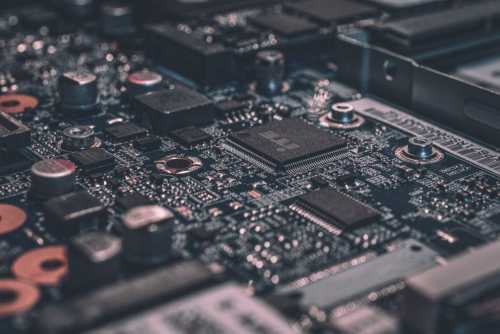
Imagine you and your friends are building the most amazing, gigantic Lego castle. But there is a problem: the only store that sells the most important, rare, golden Lego bricks is owned by a kid who does not like you. Every time you try to buy the golden bricks to finish your castle's towers, that kid blocks the door and says, "No, you cannot have them." You realize that as long as you rely on his store, your castle will never be finished. So, you make a decision. You are going to build your own factory to make the golden bricks yourself, no matter how much it costs or how long it takes. This is exactly the policy driving the People's Republic of China in 2026 .
The "golden Lego bricks" are advanced semiconductors, the tiny computer chips that power everything from smartphones to military missiles, and most importantly, Artificial Intelligence. For years, China relied heavily on imports from the US, Taiwan, and South Korea for these advanced chips. But when the US government started aggressively blocking the sale of the most advanced AI chips and the machines that make them (EUV lithography) to China, Beijing realized its supply chain was critically vulnerable . In response, the Chinese government unleashed a massive, state-directed policy of semiconductor self-reliance, pouring hundreds of billions of dollars into what is known as the "Big Fund" (National Integrated Circuit Industry Investment Fund).
The third phase of the Big Fund, launched with a record $47 billion in capital in 2024 and fully operational in 2026, is the financial engine of this policy . Unlike previous phases that focused on chip design and manufacturing, Phase 3 is heavily targeted at the "choke points"—the specific materials, chemicals, and equipment needed to make chips. The policy provides massive subsidies, cheap land, and zero-interest loans to any Chinese company that can figure out how to make photoresists, silicon wafers, or etching machines domestically. The government is essentially saying: we do not care if your first attempts are expensive or slightly lower quality; we will buy everything you make to help you learn and improve.
Alongside the money, the policy includes a massive overhaul of the education system. China's Ministry of Education has mandated that "Integrated Circuit Science and Engineering" be established as a primary, first-level discipline in all major universities . They are recruiting top-tier engineers from around the world, offering them massive salaries and state-of-the-art labs to come to China and teach the next generation. The policy aims to graduate over 100,000 specialized semiconductor engineers every year, creating a human wall of talent that can sustain the industry for decades. It is a long-term play, recognizing that you cannot build a chip industry without the brains to run it.
The policy is also heavily focused on "mature nodes." While the US blocks China from getting the absolute newest, smallest chips (like 3-nanometer), the vast majority of the world's cars, weapons, appliances, and industrial machines use older, larger chips (like 28-nanometer and above). China's policy is to completely dominate the global market for these mature chips . By building massive, state-subsidized factories that produce these older chips at incredibly low prices, China is flooding the global market. This creates a strategic dilemma for the West: they are blocking China from the cutting edge, but China is capturing the foundation of the entire global electronics supply chain.
Perhaps the most fascinating aspect of China's 2026 policy is its approach to "legacy" workarounds. Since they cannot buy the extreme ultraviolet (EUV) machines from the Dutch company ASML, Chinese engineers at companies like SMIC are using older, less precise deep ultraviolet (DUV) machines and applying a technique called "multi-patterning" . It is like using a thick marker to draw a very thin line by carefully going over it multiple times. It is slower, more expensive, and has a lower yield, but the government policy subsidizes the extra cost, allowing them to produce 7-nanometer and even 5-nanometer chips for their domestic smartphones and AI servers. It is a brilliant, if brute-force, application of national policy to bypass technological blockades.
China's semiconductor self-reliance policy is the most significant industrial policy of the 21st century. It is a direct response to geopolitical containment, driven by the belief that technological independence is a matter of national survival. By combining massive state capital, educational reform, and a focus on both mature node dominance and legacy workarounds, China is building a Great Wall of Lego factories. Whether this wall can eventually produce the absolute cutting-edge chips without foreign help remains to be seen, but the sheer scale of the effort is permanently altering the global technology landscape.
Official Policy Insight
Industry analysis from the Chinese Academy of Sciences and the Ministry of Industry and Information Technology (MIIT) highlights the strategic deployment of Big Fund Phase 3 and the focus on semiconductor equipment and materials self-sufficiency.
China's Big Fund Phase 3 accelerates semiconductor self-reliance. With $47B focused on equipment, materials, and legacy workarounds, China is building an unbreakable chip supply chain. #ChinaTech #Semiconductors #BigFund
Related Articles
The Policy Paradox: Navigating Industrial Subsidies, Carbon Border Adjustments, and Fiscal Constraints
Aug 22, 2026
The Redrawn Regulatory Seascape: Navigating the Convergence of Global Policy Faultlines
Aug 22, 2026
Comments (0)
No comments yet. Be the first to share your thoughts!
Want to join the discussion?
Please log in to post a comment.
Login NoworCreate an Account