
The Hard Tech Renaissance: How Climate Startups and the AI Energy Crisis are Reshaping Venture Capital

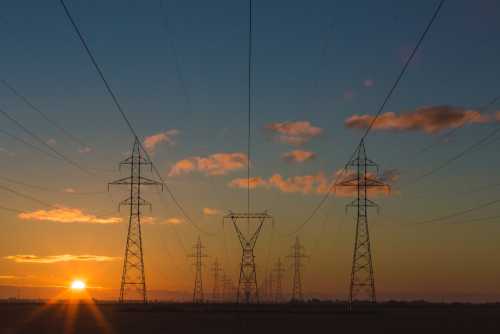
For the better part of two decades, the defining characteristic of the Silicon Valley startup ecosystem was its obsession with pure software. The most coveted companies were those that could achieve massive scale with zero marginal cost of reproduction—social networks, SaaS platforms, and mobile applications. Physical atoms were considered messy, expensive, and best left to legacy industrial corporations. However, as of mid-2026, a profound and irreversible shift has occurred. We are witnessing the "Hard Tech Renaissance," a massive reallocation of capital and talent toward startups that build physical infrastructure, advanced materials, and climate technology. This renaissance is not driven by idealism or a sudden desire to save the planet, though that is a beneficial byproduct. It is driven by the most pragmatic, urgent economic force of our time: the insatiable, physics-defying energy demands of the artificial intelligence boom. The digital revolution has hit a physical wall, and the startups that are building the bricks to scale that wall are capturing the attention of the world's most sophisticated investors.
The Catalyst: AI's Thirst for Electrons
To understand why venture capitalists are suddenly funding geothermal drilling and battery chemistry, we must look at the physical reality of the AI boom. Training a single, frontier-level large language model requires thousands of specialized graphics processing units (GPUs) running at maximum capacity for months. But training is just the beginning; the real energy crisis is "inference," the process of the AI actually answering your prompts in real-time. Every time you ask an AI agent to write code, analyze a document, or book a flight, a massive data center lights up, consuming a staggering amount of electricity. Industry analysts project that by the end of 2026, data centers will consume nearly ten percent of the total electricity generated in the United States. The existing power grid is simply not built to handle this load. The wait times to get a new data center connected to the traditional power grid are now stretching into five or even seven years in key hubs like Northern Virginia and Texas. This physical bottleneck is threatening to stall the entire AI revolution. Tech giants like Microsoft, Amazon, and Google are no longer just software companies; they are the largest commercial energy buyers in the world, and they are desperate for new, reliable, clean power sources. This desperation has created a massive, guaranteed market for any startup that can generate or store electrons.
The Breakthroughs: Enhanced Geothermal and Long-Duration Storage
Enter the climate tech startups of 2026, which are deploying technologies that were considered science fiction just five years ago. The star of the show is "Enhanced Geothermal Systems" (EGS). Traditional geothermal energy only works in specific locations like Iceland or California, where volcanic activity naturally heats water near the surface. EGS startups, however, have perfected advanced drilling techniques—borrowed from the oil and gas fracking industry—to inject water deep into dry, hot rock anywhere on the planet, creating artificial geothermal reservoirs. This provides a massive, continuous, 24/7 baseline power source that does not depend on the sun shining or the wind blowing. Data centers are signing decade-long power purchase agreements with these EGS startups, providing the predictable revenue streams that venture capitalists love. Simultaneously, another cohort of startups is solving the storage problem. While lithium-ion batteries are great for storing power for four hours, they are far too expensive for multi-day storage. Startups focusing on "long-duration energy storage" are building massive facilities using iron-air batteries, gravity-based storage, and advanced thermal sand batteries. These technologies can store renewable energy for days or even weeks at a fraction of the cost of lithium, ensuring that the grid remains stable even during prolonged periods of low renewable generation.
The digital revolution has hit a physical wall, and the startups that are building the physical infrastructure to scale that wall are capturing the attention of the world's most sophisticated investors.
ELI5: The Software vs. Hard Tech Analogy
Let us break down the difference between the old software startup model and the new Hard Tech model using a simple analogy. Imagine you want to start a transportation company. The software startup approach is to build an app that connects people who have cars with people who need rides. It is cheap to build, it scales globally in a few years, and you do not own a single vehicle. This was the Uber model, and it dominated the 2010s. The Hard Tech approach, however, is to invent a completely new type of engine that runs on water instead of gas, and then you have to build the factories to manufacture the engines, secure the supply chains for the raw materials, and physically install them in the cars. It takes ten years, it costs billions of dollars, and it is incredibly difficult. But if you succeed, you own the fundamental physical infrastructure of the future. You are not just an app on a phone; you are the reason the cars move. In 2026, the most valuable startups are no longer building the ride-hailing apps; they are inventing the new engines and building the power plants that fuel the entire digital economy.
The Evolution of "Patient Capital" and Corporate Venture
Because Hard Tech startups require massive upfront capital and take years to build physical infrastructure, the traditional venture capital model of a five-to-seven-year fund lifecycle does not work. You cannot force a geothermal drilling company to go public in three years just because a VC fund needs to return money to its investors. This has led to the rise of "Patient Capital." We are seeing the emergence of massive, specialized growth equity firms, sovereign wealth funds, and heavily capitalized Corporate Venture Capital (CVC) arms that are willing to wait ten to fifteen years for a return. Furthermore, the role of the government has become inseparable from the startup ecosystem. The massive influx of non-dilutive government grants and loan guarantees, stemming from the lingering effects of the Inflation Reduction Act and subsequent 2025 infrastructure bills, acts as a de-risking mechanism for private investors. When the government agrees to backstop the debt for a first-of-its-kind direct air capture plant, private venture capitalists are much more willing to fund the equity. This public-private synergy is creating a moat around the American Hard Tech ecosystem, making it incredibly difficult for international competitors to replicate the speed and scale of innovation happening in the US.
- The Physical Bottleneck: The AI boom is constrained by a lack of electricity; data centers are consuming unprecedented amounts of power, straining the grid.
- Enhanced Geothermal: Startups are using advanced drilling to create baseline, 24/7 clean energy anywhere on the planet, signing massive deals with tech giants.
- Long-Duration Storage: New iron-air and thermal battery technologies are solving the multi-day energy storage problem, stabilizing the renewable grid.
- Patient Capital: The funding model has shifted from traditional 5-year VC funds to long-term corporate, sovereign, and government-backed capital.
The Economic Impact: A Renaissance for Blue-Collar and White-Collar Jobs
The implications of this Hard Tech renaissance extend far beyond the stock market; they are fundamentally reshaping the American labor market and the geographic distribution of wealth. For the past twenty years, the high-paying jobs in the tech sector were heavily concentrated in a few coastal cities, and they were almost exclusively white-collar software engineering roles. The Hard Tech boom is reversing both of these trends. Building geothermal plants, manufacturing advanced batteries, and constructing new transmission lines requires a massive workforce of skilled tradespeople, electricians, drillers, and manufacturing technicians. These are high-paying, blue-collar jobs that cannot be outsourced overseas and do not require a four-year computer science degree. Simultaneously, these physical projects require armies of white-collar engineers, material scientists, and project managers. We are seeing a revitalization of the American industrial heartland and rural areas, where land is cheap, the sun and wind are abundant, and these massive physical facilities are being built. This is creating a new, more inclusive economic geography, bridging the divide between the coastal tech elite and the interior working class.
In conclusion, the startup ecosystem of June 2026 is defined by a return to physical reality. The digital world of bits and bytes has grown so massive that it is now constrained by the physical world of atoms and electrons. The startups that are capturing the most capital, the most talent, and the most attention are those that are solving these physical constraints. By building the energy infrastructure required to power the AI revolution, these Hard Tech and climate startups are doing much more than just generating financial returns. They are rebuilding the American industrial base, creating millions of high-quality jobs, and laying the physical foundation for a sustainable, electrified future. The era of the pure software startup is not dead, but it is no longer the sole protagonist of the innovation story. The future belongs to the builders, the drillers, and the engineers who are turning the lights on for the next century of human progress.
Related Articles
The Startup Crucible: Navigating Capital Concentration, Regulatory Moats, and the Exit Bottleneck
Aug 22, 2026
The Great Startup Reckoning: Capital Contraction Meets Geopolitical and Regulatory Friction
Aug 22, 2026
Comments (0)
No comments yet. Be the first to share your thoughts!
Want to join the discussion?
Please log in to post a comment.
Login NoworCreate an Account