
The Invisible Security Guard: NUST and LUMS Join Forces to Create a Painless, AI-Powered Blood Sugar Monitor That Reads Your Skin

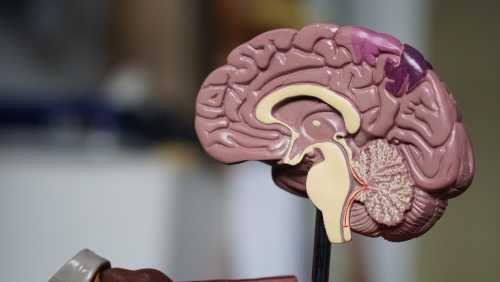
Imagine you have a highly secure vault filled with precious jewels, but the vault is wrapped in thick, opaque paper. To check if the jewels are still inside and in good condition, you currently have to cut a tiny hole in the paper every single day, peek inside, and then put a bandage over the hole. This is painful, annoying, and leaves the vault vulnerable to infection. Now, imagine you hire a magical security guard who can look at the outside of the paper and instantly tell you exactly how many jewels are inside, what shape they are, and if they are damaged, without ever touching the paper. This is the exact problem that brilliant engineers from the National University of Sciences and Technology (NUST) and the Lahore University of Management Sciences (LUMS) have solved for millions of diabetes patients in Pakistan.
Pakistan is often referred to as the diabetes capital of the world. Recent epidemiological studies suggest that nearly 30 to 40 percent of the adult population in Pakistan is suffering from Type 2 diabetes, and an even larger percentage is pre-diabetic. For these millions of citizens, managing the disease requires strict monitoring of blood glucose levels. The traditional method involves a glucometer, which requires the patient to prick their finger with a tiny lancet, squeeze out a drop of blood, and place it on a chemical test strip. For a patient who needs to check their sugar four times a day, that is over 1,400 painful finger pricks a year. Over a decade, this causes severe callousing, nerve damage, and immense psychological distress, leading many patients to simply stop monitoring their sugar, which can result in blindness, kidney failure, or amputations.
The joint research team from NUST and LUMS has spent the last five years developing a non-invasive, continuous glucose monitoring system that requires absolutely no needles. The secret lies in a branch of physics called near-infrared (NIR) spectroscopy, combined with advanced machine learning. Let us explain this simply. Light is made up of different colors, and some colors are invisible to the human eye, like infrared. When you shine a specific wavelength of near-infrared light onto human skin, the light penetrates the tissue and interacts with the molecules in the blood flowing just beneath the surface. Glucose molecules have a very unique physical shape; they absorb and scatter this specific infrared light in a highly predictable pattern. By shining this safe, invisible light through the fingertip or the earlobe, the device measures exactly how much light bounces back. If there is a lot of sugar in the blood, less light bounces back because the sugar absorbs it. If the sugar is low, more light bounces back.
However, measuring the light is only half the battle. The human body is incredibly complex. Sweat, skin thickness, body temperature, and even the amount of water in the skin can distort the light signal, making a simple optical sensor inaccurate. This is where the LUMS computer science team stepped in. They developed a highly sophisticated Artificial Intelligence algorithm, specifically a deep neural network. To train this AI, the team collected millions of data points. They took optical light readings from thousands of Pakistani patients and simultaneously took traditional finger-prick blood tests. The AI studied the relationship between the distorted light signals and the actual blood sugar levels. Over time, the AI learned to filter out the 'noise' caused by sweat and skin thickness, isolating only the pure signal caused by the glucose molecules. Today, the AI can look at the messy, distorted light bouncing off your skin and calculate your exact blood sugar level with an accuracy rate that rivals traditional medical-grade glucometers.
The physical prototype of this device looks like a sleek, oversized smartwatch. The patient wears it on their wrist, and a tiny, painless LED light continuously shines into the skin every five minutes. The data is processed by a microchip inside the watch and sent via Bluetooth to the patient's smartphone. The app not only displays the current sugar level but uses predictive algorithms to warn the patient if their sugar is trending too high or too low, giving them a two-hour window to eat a snack or take their medication before a dangerous event occurs. For elderly patients or children who are terrified of needles, this device is nothing short of a miracle. It transforms diabetes management from a painful, scary chore into a seamless, invisible part of daily life.
The medical and tech communities are buzzing about this local innovation. Here is the official reaction from the tech sector on social media:
The commercial potential for this device is astronomical. Currently, the global market for continuous glucose monitors is dominated by a few Western companies, and their devices cost hundreds of dollars, making them unaffordable for the average Pakistani. The NUST-LUMS device is designed to be manufactured locally using indigenous components, which will drive the cost down to a fraction of the imported alternatives. The team is currently in the final stages of clinical trials and is in discussions with local medical device manufacturers to begin mass production by late 2026. This project is a shining example of how interdisciplinary collaboration—combining the hardware engineering prowess of NUST with the software and AI brilliance of LUMS—can solve massive national health crises while creating a product with massive export potential. To follow the progress of this clinical trial, you can visit the official project page at nust.edu.pk.
Related Articles
The Biopharma Bottleneck: How Supply Chains and Regulatory Reality Are Restraining Medical Innovation
Aug 22, 2026
The Structural Faultlines of Modern Medicine: Navigating the Convergence of Capital, Compute, and Geopolitics
Aug 22, 2026
Comments (0)
No comments yet. Be the first to share your thoughts!
Want to join the discussion?
Please log in to post a comment.
Login NoworCreate an Account