
The Omnichannel Illusion: How Walmart and Target Are Rewiring the Backend to Survive the 2026 Retail Reckoning


The American retail landscape is currently undergoing a seismic transformation that is largely invisible to the average consumer walking down the brightly lit aisles of their local supercenter. While the frontend experience of shopping at giants like Walmart and Target appears seamless, with shiny apps, same-day delivery promises, and beautifully curated end-cap displays, the backend infrastructure supporting these operations is a chaotic warzone of legacy systems, fragmented data, and desperate scrambling. To understand the current state of the retail industry, imagine a world-class restaurant where the dining room is elegant, the waiters are polite, and the menu is exquisite, but the kitchen is entirely on fire, the chefs are shouting over each other, and the inventory system is just a guy named Steve writing orders on a napkin. This is the reality of modern retail. The industry is currently grappling with the profound realization that the much-touted "omnichannel" revolution is, in many cases, mostly a frontend illusion because the backends are still deeply fragmented and incapable of handling the complexity of modern consumer demands. This disconnect is forcing the biggest retailers on the planet to spend billions of dollars not on new stores, but on completely rewiring their digital and logistical nervous systems just to keep the lights on and the shelves stocked.
The Demographic Pivot and the Consumer Spending Shift
One of the most fascinating and underreported business stories of 2026 is the subtle but significant shift in consumer demographics and how major brands are responding to it. Recent industry surveys have highlighted a notable trend: major retailers, including Target and Walmart, are among the brands losing LGBTQ+ consumer spending. This is not merely a cultural talking point; it is a massive financial reality that directly impacts the bottom line of these corporate giants. For decades, the LGBTQ+ demographic has been a highly lucrative segment for retailers, characterized by higher-than-average disposable income, strong brand loyalty, and a willingness to pay a premium for inclusive marketing and curated product assortments. When a retailer loses this demographic, it is not just losing a few sales; it is losing a highly influential, trend-setting cohort that drives broader cultural purchasing patterns. In response, we are seeing a strategic pivot among these retail behemoths. Rather than engaging in costly culture wars, the business decision is being made quietly in the boardroom: double down on the core, high-volume demographics that drive the bulk of the revenue. This means optimizing the product mix for suburban families, focusing aggressively on price competitiveness in essential goods, and streamlining the supply chain to protect margins on the items that actually move in massive volume. It is a ruthless, pragmatic calculation that prioritizes mathematical certainty over cultural signaling, reflecting a broader trend in corporate America where profitability is once again the only metric that truly matters.
Shattering the Omnichannel Illusion
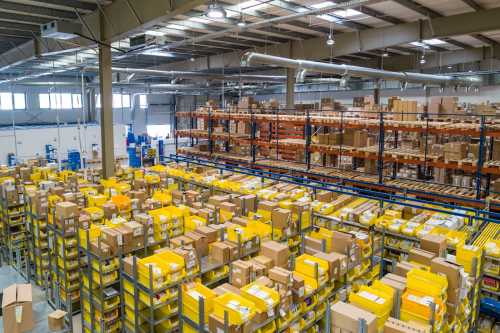
To truly grasp the magnitude of the backend crisis, we must dissect what the "omnichannel illusion" actually means in practice. When a customer buys a shirt on a retailer's mobile app and chooses to pick it up in-store, the frontend experience is flawless. The app confirms the item is available, the payment is processed, and a barcode is generated. But behind the scenes, a minor miracle of logistical coordination is supposed to occur. The store's inventory system must instantly communicate with the central warehouse, the e-commerce fulfillment engine, and the point-of-sale system to ensure that the physical shirt is actually on the shelf, reserved for that specific customer, and not accidentally sold to a walk-in buyer five minutes earlier. In reality, for many retailers, these systems do not talk to each other in real-time. They operate on batch updates, meaning the store's inventory might only sync with the central database every few hours. This leads to the infamous "ghost inventory" problem, where a customer drives to the store to pick up an item that the app said was in stock, only to find an empty hook and an apologetic employee. Fixing this requires ripping out decades-old ERP (Enterprise Resource Planning) systems and replacing them with cloud-native, microservices-based architectures that can process millions of inventory updates per second. It is the equivalent of replacing the engine of a commercial airliner while it is flying at 30,000 feet, and it is costing these companies tens of billions of dollars in capital expenditure.
The Disruption of the Secondary Market
Adding to the complexity of the retail landscape is the aggressive evolution of the secondary market, perfectly exemplified by Carvana's new vehicle strategy. While Carvana is primarily an automotive retailer, its business model is a masterclass in how digital-first companies are fundamentally breaking the traditional retail paradigm. By completely eliminating the physical dealership lot, centralizing reconditioning, and utilizing a nationwide logistics network to deliver a single product directly to the consumer's driveway, Carvana has forced traditional retailers across all sectors to rethink their physical footprint. The lesson here is that the physical store is no longer a necessity for the transaction; it is only necessary for the experience or the immediate fulfillment. Traditional retailers are now scrambling to emulate this efficiency. We are seeing a massive reduction in the square footage of backroom storage in new store designs, as retailers realize that every square foot not dedicated to selling is a square foot of wasted capital. The goal is to turn every physical store into a micro-fulfillment center, a node in a vast, decentralized logistics network that can ship to a customer's house faster than a centralized warehouse ever could. This shift is devastating for commercial real estate developers who built massive big-box stores based on the old paradigm, but it is creating immense value for retailers who can successfully execute the pivot.
The Financial Imperative of the Backend Rewire
The financial implications of this backend rewiring are staggering and will define the winners and losers of the next decade in retail. The companies that fail to modernize their supply chain and inventory systems will inevitably suffer from margin compression. They will be forced to offer deeper discounts to clear out dead inventory, they will lose customers to out-of-stock frustrations, and they will bleed money on inefficient shipping routes. Conversely, the retailers that successfully build a unified, real-time backend will achieve a level of operational efficiency that was previously impossible. They will be able to predict consumer demand with AI-driven accuracy, automatically routing inventory to the exact stores where it will be needed before the customers even know they want it. This is not just a technological upgrade; it is a fundamental restructuring of the retail business model. The era of the retailer as a simple buyer and seller of goods is over. The retailers of 2026 and beyond are, in essence, massive data and logistics companies that happen to sell products. The frontend may look the same, but the backend is where the empire is won or lost. As Walmart and Target continue to pour billions into this invisible infrastructure, the gap between the digital haves and have-nots will only widen, leaving the consumer with a smoother experience, entirely unaware of the fiery kitchen that has been meticulously rebuilt to serve them.


Comments (0)
No comments yet. Be the first to share your thoughts!
Want to join the discussion?
Please log in to post a comment.
Login NoworCreate an Account