
The Paper Compass: Aga Khan University's Brilliant Low-Cost Diagnostic is Hunting Down Hepatitis C in Pakistan's Most Remote Villages

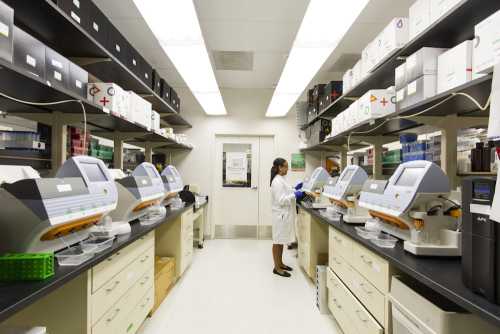
Imagine you are trying to find a hidden treasure buried somewhere in a massive, sprawling maze. In the past, the only way to find this treasure was to bring in giant, expensive digging machines that cost a fortune to operate, meaning you could only afford to dig in a few places. But now, imagine a scientist hands you a magical, inexpensive paper compass that instantly points to the treasure without any digging at all. This is exactly the kind of medical miracle that researchers at the Aga Khan University (AKU) in Pakistan have developed to fight one of the country's most silent and deadly enemies: the Hepatitis C virus.
To understand why this is such a monumental achievement, we first need to understand the sheer scale of the Hepatitis C crisis in Pakistan. For decades, Pakistan has had one of the highest prevalence rates of Hepatitis C in the entire world. This virus is a stealthy invader; it sneaks into the liver and quietly causes damage over many years. Most people do not even know they have it until their liver is severely scarred, a condition called cirrhosis, or until it develops into liver cancer. The tragedy is that while the virus is highly destructive, it is also completely curable today with modern antiviral medications. The real problem is not the cure; the problem is finding the people who need it. In a country of over 240 million people, millions are walking around unaware they are carrying the virus, simply because traditional blood tests are too expensive, require highly trained laboratory technicians, and need electricity-heavy centrifuges and refrigerators that rural clinics simply do not have.
Enter the brilliant minds at the Aga Khan University's Department of Biological and Biomedical Sciences. They realized that to win this war, they could not rely on Western, high-tech laboratory equipment. They needed to invent something entirely new, something that works in the dusty, off-grid reality of rural Sindh or southern Punjab. After years of relentless research, they have perfected a paper-based microfluidic diagnostic device. Let us break down what that means in simple terms. Think of a piece of high-tech filter paper that has been printed with invisible, water-repellent walls, creating tiny, microscopic highways. When a healthcare worker pricks a patient's finger and places a single drop of blood on this paper, the blood naturally wicks through these tiny highways, much like how a sponge soaks up a spilled drink. As the blood travels, it passes through specific chemical zones embedded in the paper. If the Hepatitis C virus is present, the blood interacts with these chemicals and produces a visible color change, much like a home pregnancy test. It is that simple, and it requires absolutely no electricity.
The science behind this is a beautiful marriage of ancient principles and cutting-edge nanotechnology. The researchers have functionalized the paper with specific antibodies—these are like microscopic Y-shaped magnets that are designed to grab onto only one thing: the outer shell proteins of the Hepatitis C virus. When the blood flows over these antibodies, the virus gets trapped. A secondary antibody then binds to the trapped virus, and this final connection triggers a chemical reaction that produces a bright, unmistakable colored line. The entire process takes less than twenty minutes. But the AKU team did not stop there. They knew that human eyes can sometimes misinterpret faint colors, so they integrated this paper test with a tiny, battery-operated, smartphone-based optical reader. The smartphone's camera takes a picture of the paper, and a custom-built artificial intelligence algorithm analyzes the exact shade and intensity of the color, providing a definitive positive or negative result on the screen. This removes all human error and provides a laboratory-grade diagnosis in the middle of a field.
The economic and social implications of this invention are staggering. Traditional Hepatitis C diagnostic tests, like the PCR (Polymerase Chain Reaction) test, can cost thousands of rupees and require the patient to travel to a major city, take a day off work, and wait a week for results. This AKU paper test costs a fraction of that amount. By decentralizing the testing process, community health workers, lady health workers, and even pharmacists in remote villages can now test hundreds of people in a single day. This means the government and NGOs can screen entire villages in a matter of weeks rather than years. When you find the patients early, you can treat them early. Curing a patient early prevents the catastrophic liver damage that leads to liver transplants, which cost tens of thousands of dollars and devastate families financially. By shifting the focus from expensive late-stage treatment to ultra-cheap early detection, this innovation is projected to save the Pakistani healthcare system billions of rupees over the next decade.
The global medical community has taken notice of this Pakistani ingenuity. Here is how the research community is discussing this breakthrough on social media:
Incredible breakthrough from Pakistan! Researchers at Aga Khan University have developed a low-cost, paper-based microfluidic diagnostic for Hepatitis C. This point-of-care test requires no electricity and delivers lab-grade results in minutes, potentially revolutionizing screening in rural and low-resource settings globally. A massive step towards eliminating Hep C! ???????????????? #MedicalResearch#HepatitisC#GlobalHealth
— Global Health Insights (@GlobalHealthNow) June 26, 2026
Furthermore, this technology is not just a local solution; it is a global game-changer. The same paper-based platform can be rapidly adapted to detect other blood-borne pathogens like HIV, Hepatitis B, and even emerging infectious diseases. The researchers at AKU are already in talks with international health organizations to manufacture these tests at a massive scale for distribution across Sub-Saharan Africa and Southeast Asia. This is a proud moment for Pakistan's scientific community, proving that the most profound innovations often come not from the wealthiest laboratories, but from those who deeply understand the urgent, real-world problems of their communities. To read the full peer-reviewed study published by the AKU team, you can visit the official research portal at akunews.org.
Related Articles
The Biopharma Bottleneck: How Supply Chains and Regulatory Reality Are Restraining Medical Innovation
Aug 22, 2026
The Structural Faultlines of Modern Medicine: Navigating the Convergence of Capital, Compute, and Geopolitics
Aug 22, 2026
Comments (0)
No comments yet. Be the first to share your thoughts!
Want to join the discussion?
Please log in to post a comment.
Login NoworCreate an Account