
Traffic Lights for Robot Brains: The Global AI Policy Landscape in 2026

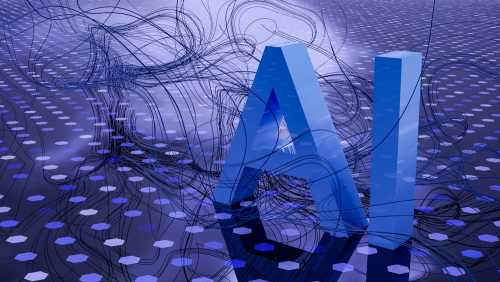
Imagine you invent a super-fast, incredibly powerful race car. It can go 500 miles per hour, but it has no steering wheel and no brakes. If you let it loose on the highway, it will win the race, but it will also crash into everything and cause a massive disaster. This is exactly what Artificial Intelligence was a few years ago. It was a super-fast engine with no rules. But in 2026, the world's governments have finally realized that you cannot let a 500-mph robot brain run wild. They are building traffic lights, speed limits, and steering wheels for AI. This is the story of the global AI policy landscape in 2026, a complex web of rules designed to keep the magic safe .
The most comprehensive set of traffic lights was built by the European Union. The EU AI Act, which was passed a couple of years ago, is now in full, aggressive enforcement mode in 2026 . The EU policy categorizes AI into different risk levels. If an AI is used to recommend a movie on Netflix, it is "minimal risk" and needs almost no rules. But if an AI is used to grade a student's college application, approve a bank loan, or assist a surgeon in an operation, it is "high risk." For high-risk AI, the policy mandates strict transparency, human oversight, and rigorous testing before it can be sold to the public. If a company builds a "general purpose" AI that can do anything, they must publish a detailed report of all the copyrighted data it was trained on. The EU is essentially saying: you can build the super-car, but you must install a seatbelt, a horn, and a black box.
While the EU focuses on how AI is used, the United States focuses on who gets to build the super-car's engine. In 2026, the US government has drastically expanded its export control policies on advanced semiconductors and AI hardware . The logic is simple: AI requires massive computing power, and the most powerful chips are made by a few companies in the US and its allies. The US policy strictly bans the sale of these top-tier AI chips to countries it considers geopolitical rivals, like China and Russia. They have also implemented the "AI Diffusion Rule," which limits how many chips can be shipped to any single country, even friendly ones, to prevent them from being secretly smuggled to adversaries. It is a policy of technological containment, ensuring that the US and its allies maintain a massive, unbridgeable lead in AI computational power.
The biggest fear in 2026 is not just that AI will take jobs, but that it will create "deepfakes" so perfect that no one can tell what is real and what is fake. Imagine a fake video of a world leader declaring war, or a fake audio clip of a CEO ordering a massive bank transfer. To combat this, a coalition of over 40 countries, led by the US and UK, has signed the "Digital Provenance and Content Authenticity Treaty" . This policy mandates that all major tech companies must embed invisible, cryptographic watermarks into any AI-generated text, image, audio, or video. When you look at a news photo on your phone in 2026, your browser automatically checks for this watermark. If it is missing, a giant red warning flashes: "AI Generated - Unverified." It is a global policy of digital truth.
However, not everyone agrees on how to build these traffic lights. The "Global South" nations, including India, Brazil, and many African countries, have formed a coalition arguing that the strict EU and US rules are actually a trap . They argue that if you force every AI startup to spend millions of dollars on compliance, safety testing, and legal paperwork, only the giant, rich tech monopolies will be able to afford it. The small startups in developing nations will be crushed by the red tape. They are pushing for a "Right to Develop" policy at the United Nations, demanding that international AI governance must include technology transfer and open-source access, so that poor countries are not left permanently behind in the AI revolution.
Another massive policy battleground is copyright. Artists, musicians, and writers have been furious that AI companies scraped their work to train their models without paying them. In 2026, a landmark ruling by the World Intellectual Property Organization (WIPO) has established a global "Machine Learning Licensing Framework" . This policy requires AI companies to pay a micro-royalty every time their model generates a piece of content that is substantially similar to a copyrighted work in its training data. These royalties are pooled into a global fund that is distributed to the original human creators. It is a complex, imperfect system, but it is the first time global policy has forced the robot brains to pay the humans who taught them.
The global AI policy landscape in 2026 is a chaotic, beautiful, and terrifying mess of competing interests. It is a race between the speed of innovation and the slowness of bureaucracy. Governments are trying to write rules for a technology that changes every single week. But one thing is certain: the era of the unregulated, wild-west AI is over. The traffic lights are installed, the speed limits are set, and the global community is finally trying to steer the super-car away from the cliff and toward a future where the robot brains serve humanity, rather than the other way around.
Global Policy Update
The OECD and the UN's High-Level Advisory Body on AI released their joint 2026 report on the global implementation of AI safety standards, copyright frameworks, and international governance treaties.
The 2026 Global AI Governance Report is live. From the EU AI Act enforcement to the WIPO copyright framework, see how nations are building traffic lights for the AI revolution. #AIPolicy #GlobalAI #OECD
Related Articles
The Policy Paradox: Navigating Industrial Subsidies, Carbon Border Adjustments, and Fiscal Constraints
Aug 22, 2026
The Redrawn Regulatory Seascape: Navigating the Convergence of Global Policy Faultlines
Aug 22, 2026
Comments (0)
No comments yet. Be the first to share your thoughts!
Want to join the discussion?
Please log in to post a comment.
Login NoworCreate an Account