
Unilever Reaffirms Long-Term Commitment to Pakistan, Bets on Local Manufacturing Amidst Multinational Exodus


KARACHI — In a striking volatility-defying move, consumer goods giant Unilever has reaffirmed its long-term commitment to Pakistan as a premier manufacturing and growth market, despite the macroeconomic turbulence that has prompted other multinational entities to scale back or entirely withdraw their operations.
"Pakistan is definitely one of them," stated Adil Hussain, General Manager for Beauty & Wellbeing at Unilever Pakistan, in an exclusive interview, referring to the company’s priority emerging markets.
The remarks arrive at a pivotal juncture. In recent years, several multinational corporations have reassessed their operational footprint in Pakistan amidst persistent currency devaluation and high costs of doing business. Notably, Shell Pakistan announced its exit in 2023, while Procter & Gamble (P&G) and software titan Microsoft discontinued their direct physical operations in 2025.
The Localization Imperative
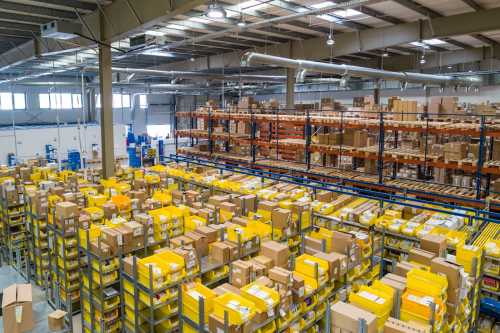
Hussain, a marketing expert with two decades of leadership spanning the GCC, Europe, and global FMCG giants, posits that Unilever’s long-standing manufacturing footprint distinguishes it from companies heavily reliant on imports. "Most of the products across the categories are actually manufactured in Pakistan," he elucidated, noting that the company is actively collaborating with local vendors to reduce dependence on imported raw materials.
Key Critical Takeaways:
- Unilever reaffirms its long-term commitment to Pakistan as a manufacturing hub.
- The company is actively localizing its supply chain to curb import dependence.
- Greater localization requires a more stable policy environment and stronger industrial incentives.
- Pakistan's demographics and resilient consumers make it a lucrative market.
However, Hussain cautioned that greater localization would require a more stable policy environment. He advocated for a strategic approach to import substitution, arguing that incentives should be linked to tangible value creation—such as quality production, technology transfer, and exports—rather than merely establishing facilities.
Despite the challenges, the country remains a lucrative market due to its demographics and consumption-driven economy. "A population of around 250 million is difficult to ignore," Hussain observed, describing Pakistani consumers as remarkably resilient and receptive to innovation, having remained loyal to trusted brands even during the acute inflationary periods of 2023-24.
Note on Official Social Media: No official supporting social media post from Unilever specifically for this July 7, 2026 interview was found. As an alternative, readers are directed to the original Business Recorder coverage and Unilever Pakistan's official website.


Comments (0)
No comments yet. Be the first to share your thoughts!
Want to join the discussion?
Please log in to post a comment.
Login NoworCreate an Account