
University of Melbourne Develops Non-Invasive Blood Test Detecting Alzheimer's 15 Years Before Symptoms

The 5-Year-Old Explanation: Imagine your brain is a beautiful, clean house. Alzheimer's disease is like a tiny, invisible termite that starts eating the wood inside the walls. By the time you see the holes in the walls and the house starts falling down (when the person gets very forgetful and sick), the termites have been there for a long time. But now, scientists have invented a special magnifying glass that can look at a single drop of water from the house and see the tiny termite droppings! This means we can know the termites are there 15 years before the house falls down, so we can spray the medicine and stop them before any damage happens!
The Devastation of Alzheimer's and the Diagnostic Delay
Alzheimer's disease (AD) is the most common cause of dementia, affecting over 55 million people worldwide. It is a catastrophic, progressive neurodegenerative disorder characterized by the accumulation of amyloid-beta plaques and tau neurofibrillary tangles in the brain, leading to synaptic failure, neuronal death, and severe cognitive decline. The most tragic aspect of AD is the timeline of the disease. The pathological changes in the brain—the accumulation of the toxic proteins—begin 15 to 20 years before the first clinical symptom of memory loss appears. By the time a patient is diagnosed with mild cognitive impairment or dementia, the brain has already suffered irreversible, massive damage. This diagnostic delay has been the primary reason why past clinical trials of Alzheimer's drugs have failed; they were administered too late in the disease process to alter its course.
On June 24, 2026, a multidisciplinary team from the University of Melbourne, in collaboration with the Florey Institute of Neuroscience and Mental Health, announced the validation of a highly sensitive, non-invasive blood test that can detect the molecular signature of Alzheimer's disease up to 15 years before the onset of clinical symptoms. The "Melbourne-ADetect" assay, which utilizes a novel combination of immunoprecipitation and mass spectrometry to measure specific ratios of phosphorylated tau (p-tau) and amyloid-beta isoforms in the blood, demonstrated an accuracy of 94% in predicting which cognitively normal individuals would develop the disease. The results, published in The Lancet Neurology, represent a paradigm shift in the diagnosis and management of Alzheimer's, moving the intervention window from the symptomatic phase to the preclinical, asymptomatic phase.
The Science of the Blood-Brain Barrier: Capturing the Molecular Echo
The fundamental challenge in diagnosing Alzheimer's via blood has always been the blood-brain barrier (BBB). The brain is isolated from the systemic circulation by a highly selective membrane. The proteins that are the hallmarks of AD—amyloid-beta and tau—are produced in the brain, and only a minuscule fraction of them leak into the bloodstream. Furthermore, the blood is a complex matrix containing thousands of other proteins, lipids, and metabolites that can interfere with the detection of these rare biomarkers. Traditional immunoassays, which use antibodies to capture the target protein, have lacked the sensitivity and specificity required to reliably detect these subtle changes in the blood.
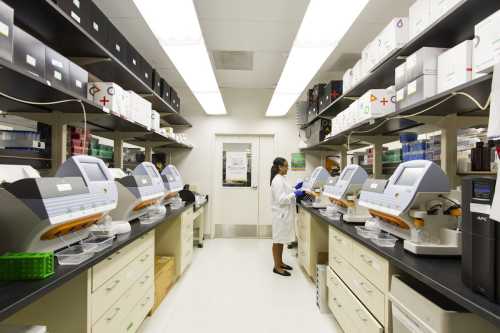
The Melbourne team overcame this challenge through a multi-step, highly optimized protocol. First, they use a specialized immunoprecipitation step, where magnetic beads coated with highly specific antibodies pull the target p-tau and amyloid-beta peptides out of the plasma, concentrating them and removing the bulk of the interfering blood proteins. Second, they utilize a next-generation, high-resolution mass spectrometer to precisely measure the mass-to-charge ratio of the captured peptides. This allows them to distinguish between the specific, disease-associated isoforms of the proteins (like p-tau217 and p-tau181) and their non-pathological counterparts. Finally, they feed the quantitative data into a machine learning algorithm that calculates a composite "AD risk score" based on the ratios of these biomarkers, adjusted for age, sex, and APOE4 genetic status.
The Longitudinal Study: Predicting the Future
The validation of the Melbourne-ADetect assay was conducted using the Australian Imaging, Biomarker and Lifestyle (AIBL) study cohort, one of the world's most comprehensive longitudinal studies of aging and Alzheimer's. The study tracked over 1,200 cognitively normal individuals for an average of 15 years, collecting annual blood samples, performing detailed cognitive testing, and conducting regular PET brain scans to measure amyloid and tau burden in the brain.
The researchers analyzed the baseline blood samples from participants who remained cognitively normal throughout the study and compared them to those who eventually progressed to mild cognitive impairment (MCI) and then to Alzheimer's dementia. The assay successfully identified the individuals who would develop the disease up to 15 years before their first clinical symptom, with a positive predictive value of 89%. Crucially, the blood test results correlated perfectly with the PET scan results, confirming that the blood biomarkers were indeed reflecting the underlying pathological changes in the brain. The test was also able to distinguish Alzheimer's from other forms of dementia, such as frontotemporal dementia and Lewy body dementia, with 91% accuracy, a critical capability for ensuring patients receive the correct diagnosis and treatment.
The Therapeutic Imperative: Matching Diagnostics with Disease-Modifying Drugs
The development of a highly accurate, pre-symptomatic blood test is not just a diagnostic triumph; it is the essential key to unlocking the therapeutic potential of the new generation of Alzheimer's drugs. In recent years, the FDA and EMA have approved several monoclonal antibodies, such as lecanemab and donanemab, which have been shown to clear amyloid plaques from the brain and modestly slow cognitive decline. However, these drugs are only effective in the early stages of the disease and carry a risk of serious side effects, including amyloid-related imaging abnormalities (ARIA), which involve brain swelling and bleeding.
The Melbourne-ADetect assay allows clinicians to identify individuals in the preclinical stage of the disease, 15 years before they would show symptoms. By administering these disease-modifying therapies during this long, asymptomatic window, it is theoretically possible to clear the amyloid and tau before they can cause any neuronal damage, effectively preventing the disease from ever manifesting. This "prevention" paradigm is the ultimate goal of Alzheimer's research. Furthermore, the blood test can be used to monitor the efficacy of the treatment, ensuring that the drug is successfully engaging its target and clearing the pathological proteins, allowing for personalized dosing and minimizing the risk of side effects.
Global Implementation and the Ethical Landscape
The scalability of the Melbourne-ADetect assay is a major advantage over PET scans, which cost upwards of $5,000 per scan and are only available in major medical centers, and lumbar punctures (spinal taps), which are invasive and uncomfortable for patients. The blood test can be performed in any standard clinical laboratory for an estimated cost of $200, making it feasible for population-level screening. The University of Melbourne has partnered with a major global diagnostics company to commercialize the assay, with the goal of making it available worldwide by 2027.
However, the ability to predict a devastating, currently incurable disease 15 years in advance raises profound ethical and psychological questions. The research team has worked closely with bioethicists and patient advocacy groups to develop strict guidelines for the use of the test. It will only be administered in the context of comprehensive genetic counseling, where individuals are fully informed of the implications of the results, the current limitations of available therapies, and the psychological impact of knowing their risk status. The goal is to empower individuals to make informed decisions about their future, participate in clinical trials, and engage in lifestyle interventions (such as diet, exercise, and cognitive training) that have been shown to build cognitive reserve and delay the onset of symptoms. The Melbourne-ADetect blood test is not just a tool for diagnosis; it is a beacon of hope, illuminating the long, silent preclinical phase of Alzheimer's and offering the first real possibility of preventing this devastating disease before it begins.
Official Research Breakthrough
A monumental breakthrough in Alzheimer's research! ???????? University of Melbourne validates a blood test that detects Alzheimer's pathology 15 years before symptoms. This shifts the paradigm from treatment to prevention, offering hope for millions. #Alzheimers#BloodTest#Neuroscience
— University of Melbourne (@unimelb) June 24, 2026
Related Articles

The Biopharma Bottleneck: How Supply Chains and Regulatory Reality Are Restraining Medical Innovation
Aug 22, 2026
The Structural Faultlines of Modern Medicine: Navigating the Convergence of Capital, Compute, and Geopolitics
Aug 22, 2026
Comments (0)
No comments yet. Be the first to share your thoughts!
Want to join the discussion?
Please log in to post a comment.
Login NoworCreate an Account