
Unveiling the Cosmos: James Webb Space Telescope Captures Stunning Orion A Cloud and Weighs Early Universe Black Hole

The Ultimate Time Machine in the Sky
Imagine you have a magic window in your bedroom. When you look out of this window, you do not just see the street outside; you see back in time! You can see what the street looked like a million years ago. This magic window actually exists, and it is called the James Webb Space Telescope, or JWST for short. It is the biggest, most powerful, and most expensive space telescope ever built. It floats in space, far away from the blurry air of Earth, and it looks at the universe with golden, super-sensitive eyes. In June 2026, the JWST did two absolutely incredible things that made scientists all over the world jump for joy. It took the most beautiful, detailed picture ever of a giant star nursery called Orion A, and it managed to weigh a giant, sleeping black hole from the very beginning of time. Let us float into space and see what this golden eye discovered.
The Giant Star Nursery: Orion A
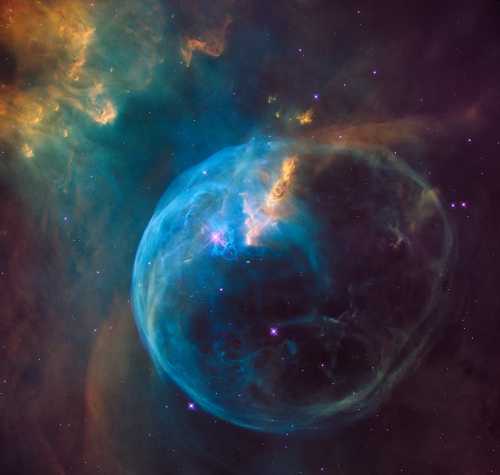
On June 22, 2026, NASA released a new image from the JWST that looked like a painting made by angels. It was a picture of Orion A. Orion A is not a person; it is a massive cloud of gas and dust floating in space. It is so big that if you could see it clearly with your naked eye from Earth, it would cover the whole sky! But Orion A is special because it is a star nursery. Imagine a giant, dark, cozy blanket made of gas. Inside this blanket, gravity is pulling the gas together into tight, hot balls. When the balls get hot enough, they ignite and become brand-new stars! The JWST looked through the dusty blanket with its infrared eyes and saw thousands of baby stars being born. Some of them are just tiny dots, and some of them are shooting jets of light into space like cosmic fireworks. The picture was so detailed that scientists could see the disks of dust around the baby stars, which are the places where planets like Earth might be forming. It is a picture of creation, showing us how the universe makes the ingredients for new worlds.
Weighing a Monster: The Dormant Black Hole
While the Orion A picture was beautiful, the second discovery was mind-blowing. A black hole is the scariest, most mysterious thing in the universe. It is a place where gravity is so strong that not even light can escape. If you get too close, you get stretched and swallowed forever. Most black holes are sleeping, which means they are not eating any stars or gas, so they are completely invisible. You cannot see them at all! But in June 2026, astronomers using the JWST found a way to weigh a sleeping black hole from the very early universe, just a few hundred million years after the Big Bang. How did they do it? They watched the stars that were orbiting around the black hole. Just like you can tell how heavy a person is by how fast they are swinging a ball on a string, scientists measured how fast the stars were moving around the invisible center. By doing the math, they calculated the exact mass of the black hole. This was the first time anyone had ever directly weighed a dormant black hole from the dawn of time!
Why Does This Early Black Hole Matter?
You might wonder, why do we care about a sleeping black hole that is billions of light-years away? This discovery solves a giant mystery. Scientists have always wondered how the supermassive black holes at the center of galaxies got so big, so fast. According to our old theories, the universe was too young for black holes to grow that large. It is like finding a fully grown oak tree in a garden that was planted yesterday! By weighing this early black hole, the JWST gave us a clue. It showed that these giant monsters might have been born big, perhaps from the collapse of giant clouds of gas in the early universe, rather than growing slowly over time. This changes our textbooks. It means we have to rewrite the story of how galaxies and black holes formed together in the cosmic dawn. The JWST is not just taking pretty pictures; it is breaking the rules of physics and forcing us to think in new ways.
The Magic of Infrared Light
How does the JWST see things that are invisible to us? The secret is infrared light. Your eyes can only see a tiny slice of light called visible light—the colors of the rainbow. But there is a lot of light we cannot see. Infrared light is the heat signature of the universe. When light travels through space for billions of years, the universe stretches it out. By the time it reaches us, the light from the very first stars has been stretched so much that it turns into infrared light. The JWST is designed with special golden mirrors and super-cold sensors to see this infrared light. It is like putting on a pair of night-vision goggles, but for the entire cosmos. This is why it can see through the thick dust of Orion A to the baby stars inside, and why it can see the faint, stretched light of the early universe. The JWST is literally seeing the invisible, opening a whole new chapter in human history.
A Global Team of Cosmic Detectives
The James Webb Space Telescope is not just an American project; it is a masterpiece of global cooperation. It was built by NASA, the European Space Agency (ESA), and the Canadian Space Agency (CSA). Thousands of engineers, scientists, and astronauts from all over the world worked together for decades to build this golden eye. When the JWST makes a discovery, it is not just one person who gets the credit; it is a global team of cosmic detectives. They share their data with astronomers all over the planet. A scientist in Pakistan, a student in Japan, and a researcher in Brazil can all look at the same picture of Orion A and find new secrets. The telescope belongs to all of humanity. It is a shining example of what we can achieve when we put aside our differences and work together to explore the great unknown. It is a beacon of peace and curiosity in the stars.
The Future of Space Exploration
The JWST is expected to keep working for at least 20 years. That means we have two more decades of amazing discoveries to look forward to. Scientists are using it to look at the atmospheres of planets outside our solar system, called exoplanets. They are looking for the chemical signs of life, like water and oxygen. They are mapping the dark matter that holds galaxies together. Every week, the JWST releases a new image that makes us say, Wow! It reminds us that the universe is vast, beautiful, and full of wonders that we are only just beginning to understand. As we look at the stunning clouds of Orion A and the invisible black holes of the early universe, we are filled with a sense of awe. We are tiny creatures on a small rock, but our minds are big enough to touch the stars. The James Webb Space Telescope is our golden window to the cosmos, and the view is absolutely spectacular.
Related Articles

The Healthcare Quadruple Bypass: Navigating Price Controls, Workforce Attrition, and Rural Desertification
Aug 22, 2026
The Fractured Laboratory: How Geopolitical Friction is Rewiring Global Science Economics
Aug 19, 2026
Comments (0)
No comments yet. Be the first to share your thoughts!
Want to join the discussion?
Please log in to post a comment.
Login NoworCreate an Account