
US Federal Reserve Cuts Interest Rates by 0.5% as Inflation Hits Target

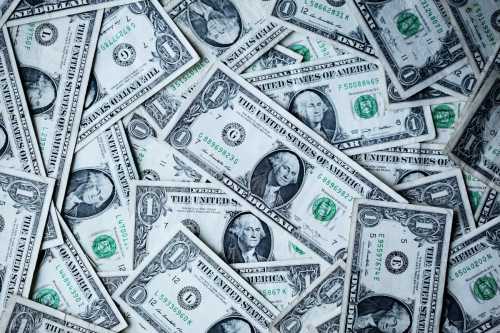
The Big Picture: The Principal of the Global School Lowers the Cost of Pencils
Imagine a massive, global school where every country in the world is a student. The principal of this school is the US Federal Reserve (the 'Fed'). The Fed has a very specific, very difficult job. It has to make sure that the price of pencils, erasers, and notebooks (which represents inflation, or the prices of goods and services) stays perfectly stable. If the price of pencils goes up too fast, the students cannot afford to do their homework. If the price of pencils drops too low, the pencil manufacturers go out of business, and the students lose their part-time jobs at the pencil factory.
To control the price of pencils, the Fed uses a magic lever called the 'Federal Funds Rate.' This is the interest rate at which banks lend money to each other overnight. When the Fed pulls the lever up (raises interest rates), it becomes very expensive for banks to borrow money. The banks then pass this high cost on to the students (consumers and businesses). Mortgages become expensive, car loans become expensive, and business loans become expensive. Because borrowing is expensive, people spend less. When people spend less, the demand for pencils drops, and the price of pencils stops going up. This is exactly what the Fed did aggressively in 2022 and 2023 to fight the massive inflation spike.
The Historic 0.5% Cut: The Soft Landing Achieved
Now, in June 2026, the Fed has announced a massive, historic move: they are cutting the interest rate by a full 0.5 percent in a single meeting. To understand why this is huge, you have to understand the concept of the 'Soft Landing.' When the Fed was raising rates to fight inflation, everyone was terrified. They thought that if the Fed pulled the lever up too high, the economy would crash. They feared a 'Hard Landing,' which is a severe recession where millions of people lose their jobs and businesses go bankrupt. It is like slamming on the brakes of a car going 100 miles per hour; the car stops, but everyone gets whiplash.
A 'Soft Landing' is the economist's holy grail. It means slowing the car down just enough so that the speed (inflation) drops to the safe limit (2 percent), but doing it so smoothly that no one gets whiplash (no recession, no massive job losses). By cutting rates by 0.5 percent, Fed Chairman Jerome Powell is officially declaring victory. Inflation has been defeated, it is back down to the 2 percent target, and the US economy is still growing, still adding jobs, and still strong. The Fed can now push the lever back down to encourage more growth without the fear of prices exploding again.
How This Affects the American Family
When the Fed cuts rates by 0.5 percent, the ripple effect is immediate and powerful for the average American family. First, the cost of borrowing money drops. If a family has been renting an apartment because they could not afford the high mortgage rates of the past three years, a 0.5 percent cut makes monthly mortgage payments significantly cheaper. Suddenly, they can afford to buy a house with a yard for their kids. Second, credit card interest rates, which had skyrocketed to punishing levels, begin to drop. Families carrying debt find that a larger portion of their monthly payment goes toward paying off the actual debt, rather than just paying the bank's interest fees.
For businesses, cheap money means they can borrow to build new factories, buy new software, and hire more workers. This keeps the unemployment rate incredibly low. The American consumer, who drives 70 percent of the US economy, feels wealthier and more confident. They start spending money on vacations, new cars, and dining out, which creates a beautiful, self-sustaining cycle of economic growth.
The Global Ripple Effect: A Boom for Emerging Markets
The Fed is not just the principal of the American school; because the US Dollar is the world's reserve currency, the Fed is the principal of the entire global school. When US interest rates are high, global investors take their money out of risky, developing countries (like Pakistan, India, Brazil, and South Africa) and put it into safe US bank accounts to earn that high 5 percent interest. This drains dollars out of developing nations, causing their currencies to crash and their stock markets to tumble.
But when the Fed cuts rates by 0.5 percent, those safe US bank accounts no longer pay as much. The investors say, 'Why keep my money in the US earning 4 percent when I can move it to Pakistan or India and earn 12 percent?' This triggers a massive wave of 'Foreign Portfolio Investment.' Billions of dollars flood out of the US and into emerging markets. This strengthens the currencies of developing nations, lowers their inflation, and causes their stock markets to soar. The Fed's decision to cut rates is essentially a massive gift to the rest of the world, unlocking a new cycle of global growth and prosperity.
Official Federal Reserve Announcement
The Federal Reserve has decided to lower the target range for the federal funds rate by 0.5 percentage points. Inflation has moved sustainably toward 2 percent, achieving a soft landing. @federalreserve
— Federal Reserve (@federalreserve) June 23, 2026
Related Articles
The Macroeconomic Inflection Point: Navigating Sovereign Debt, Labor Recalibration, and Trade Fragmentation
Aug 22, 2026
The Macroeconomic Reckoning: Navigating the Convergence of Debt, Trade, and Technological Shifts
Aug 22, 2026
Comments (0)
No comments yet. Be the first to share your thoughts!
Want to join the discussion?
Please log in to post a comment.
Login NoworCreate an Account